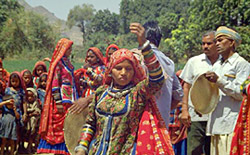
Koya tribes live in the hilly ranges in the northern portion of the Godavari district and Kerala. Kerala houses a multitude of tribal communities where they have settled down over the years. Koya tribes are located in the Malkangiri district. Koya tribes are also concentrated in areas like Kalimela, Podia, Malkangiri and Korukonda. They have settled down in numerous places of the Mathili and Manyamkonda districts.
Origin of Koya Tribe
The origin of Koya tribes is quite interesting. The popular saying is that these Koya tribes have a heritage of belonging to the famous family of the Gond tribe. The Koya tribes have convention that they were driven out by deprivation and disputes from the plateau in the Baster district about two hundred years ago.
People of Koya Tribe
Koya tribe has got the highest population among the tribal communities in India. These tribal people have the habit of building their houses in their own hands using several tools and techniques. Koya tribe reside in low level houses with thatched roofs. Their village comprises of near about thirty to forty Koya tribal families.
Rituals and customs are integrated to the lifestyle of Koya tribe. The is popular belief amongst the Koya tribe is that if they settle down at any area on a permanent basis, the local deity might get angry or some natural disaster might occur. Koya tribe is very fond of various animals like pigs, goats, cows and hens. In fact, Koya tribe used to house-train them with lots of care and concern. "Mahula" and "Salapa" are the favourite drinks of Koya tribe. They believe in worshipping Gods and Goddesses. Local medicines are used for curing several illnesses and diseases.
There are several qualities for which these Koya tribes have drawn the attention of the people. Unity, patriotism and several other values are there which Koya tribe use to hold in high esteem. The name of Koya tribe is also being mentioned in the history in golden letters. Interestingly, as early as 1880 under the leadership of the great Koya leader Tama Dora, a revolt occurred against the then British rule. This was known as "Koya Revolutiona" in dissolves of history of India.
A society is enriched by its cultural excellencies and this Koya tribal society also cannot be an exception. This is based on legends, folktales and the beliefs of the group of people. In the ancient period, the Kanamraju, Potraju and Balraju that are worshiped by Koya tribe, have got a close link with several deities like Lord Krishna, Bhima and Arjuna. Due to their long association with the Gonda community, this Koya tribe believe Bhima as their "forefather".
Festivals of Koya Tribe
Several festivals are celebrated by all the Koya tribal community. The major festival of Koya tribe is `Bijapandu` festival, which has been feted, in the month of Chaitra. Just like many other tribal communities of the Indian Territory, Koya tribe also have taken up the occupation of cultivation and farming. Koya tribe produce in ample amount things like tobacco leaf, Mandia, Maize, Bhatta Paddy.
Koya Tribe
Koya tribes are one of the scheduled tribes of Kerala state, residing in several districts like Malkangiri, Godavari etc. They are one of the few multi-lingual and multi-racial tribal communities living in India.