Maitraka Dynasty - Informative & researched article on Maitraka Dynasty
 Indianetzone: Largest Free Encyclopedia of India with thousand of articlesHistory of India


in  
 Art & Culture|Entertainment|Health|Reference|Sports|Society|Travel
Forum  | Free E-magazine  | RSS Feeds  
History of India : Sources of History of India |Ancient History of India |Medieval History of India |Modern History of India |Indian Historical Dynasties |Indian Battles |Sepoy Mutiny 1857 |Indian Rulers |History of India |Indian Freedom Struggle |Indian Governor- Generals |British Indian Acts |Post Independence India |Iron Age in India
Home > Reference > History of India > Ancient History of India > Maitraka Dynasty
Maitraka Dynasty
Maitraka Dynasty was established by Senapati Bhatarka who ruled in Gujarat from c. 475 to 767.
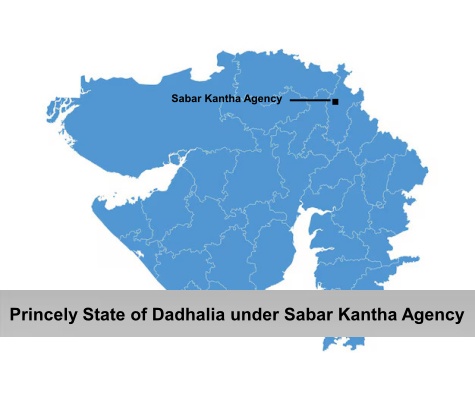
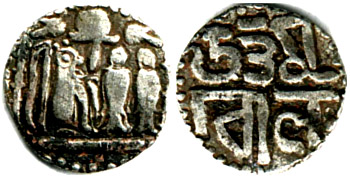
 The Maitraka dynasty chiefly ruled in Gujarat from c. 475 to 767. The Maitrakas ruled from their capital at Vallabhi. They were ruled by Harshavardhana in the mid-7th century, but retained local autonomy. The Maitraka dynasty however regained their independence after the death of Harsha. The name Maitraka is said to have been derived from Mithra, the Sun or Sun deity.
The Maitraka Dynasty was established by Senapati (general) Bhatarka. He was a military governor of Saurashtra peninsula under the Gupta Empire. In the fifth century he became an independent ruler of Gujarat. Bhatarka and Dharasena I were the first two rulers of the Maitraka Dynasty who employed the title of Senapati (general). The third ruler Dronasimha used the term Maharaja to denote himself. After these rulers the dynasty was ruled by Dharasena II, who used the title of Mahadhiraja. His son, the next ruler Siladitya I, Dharmaditya was denoted as a `monarch of great administrative ability and of rare kindness and compassion` by Hiuen Tsang. Siladitya I was succeeded by his younger brother Kharagraha I.

Dharasena III, the next king of the Maitraka dynasty included north Gujarat in his kingdom. Dharasena II was later succeeded by another son of Kharagraha I, Dhruvasena II, Baladitya. He had married the daughter of Harshavardhana. His son Dharasena IV used the title of Paramabhattaraka Mahrajadhiraja Parameshvara Chakravartin. Siladitya III was the next king who ascended the throne. During the reign of Siladitya V, the Arabs annexed the kingdom. The last known ruler of this dynasty was Siladitya VII. Maitraka rule thus ended with the sacking of Vallabhi by the barbarians in 524.

This article is a stub. You can enrich by adding more information to it. Send your Write Up to content@indianetzone.com

(Last Updated on : 08/07/2011)
 
 
Indus Valley Civilisation Vedic Civilisation in India Indian Races
Science In Ancient India Mehrgarh Pottery Sangam Age
Gana-Sanghas Ancient Indian Customs Food in Ancient India
Religion in Ancient India Legal System in Ancient India Economy in Ancient India
Battle of Hydaspes Ancient Culture in South India Yavana Kingdom
Rise of New States in North India Maukhari Empire Invasions in Ancient North India
Sources of Hindu History Shishunaga Dynasty Maukhari Dynasty
Solanki Dynasty Maitraka Dynasty Nayaka Dynasty in South India
Persian Invasion of India Ikshvaku Dynasty Arjunayanas
Yaudheya Bijjala II  
Recently Updated Articles in History of India
National Investigation Agency
National Investigation Agency (NIA) was created by the Indian Parliament to enable the detection, prevention, investigation and prosecution of terrorism-related incidents in India on a national scale.
Battle of Malpura
The crisis that developed in the relationship of Jaipur and Sindhia`s Government, nurtured the battle of Malpura.
Seige of Panhala fort
Seige of Panhala fort was undertaken by the joint forces of the Adil Shahi kingdom. Shivaji managed to successfully escape from this fort while it was still under siege by the Adil Shahi forces thus rendering the siege useless.
Purandhar Fort
Battle for Purandhar Fort saw a rather strong defence being provided by the Maratha forces. The battle ended in peaceful negotiations as it was realised by the offenders that they were merely losing their men and were nowhere near capturing the fort.
Battle in Poona
Battle in Poona saw a crushing defeat of the Mughals by the Maratha leader Shivaji. After the battle, the defeated Shaista Khan was transferred to the Bengal as punishment for embarrassing the Mughals with this defeat.
E-mail this Article | Post a Comment
Forum
Forum on History of India
Free E-magazine
Subscribe to Free E-Magazine on Reference
 
 
Maitraka Dynasty - Informative & researched article on Maitraka Dynasty
Sitemap
Contact Us   |   RSS Feeds
Copyright © 2008 Jupiter Infomedia Ltd. All rights reserved including the right to reproduce the contents in whole or in part in any form or medium without the express written permission of
Jupiter Infomedia Ltd.