
Origin of Devadasi System can be traced all the way back to the 5th century A.D. This was also known as "Daivi Nritya", meaning divine dance or ritualistic dance. Queen Kolavati, mother of Udyota Kesari (1040-1065 A.D.) built the temple of Brahmeswara in Bhubaneswar and employed some Devadasis in the service of that temple of Lord Shiva. Later, Anantavarman Chodaganga Deva (1077-1147 A.D.) reinforced the deteriorating system of temple dancing by bringing more Devadasis from the south. It was from here that his ancestors had come and established the Ganga dynasty in Odisha. He also settled these Telugu Maharis in separate Hastee (residential area) in Puri named after him.
Devadasi System in Skanda Purana
Various references in ancient literature give us an idea of the Devadasi tradition and their dance performances. Devadasi System also finds mention in the Skanda Purana. The Nritya Seva (dance service), meant for Lord Jagannath, is elaborately described in chapter 23 and 26 of "Purushottam Ksetra Mahamtya" in Skanda Purana. Again from "Bamadeva Samhita" (Chapter 17, Sloka 28) it is known that long before the reign of Anantavarman Chodaganga Deva, Devadasis used to dance on the Rathas during the car festival.
Division of Devadasi Practices
Based on the information available from the 17th and 18th chapters of Bamadeva Samhita, the ancient practice of the Devadasis can be divided into very ancient and less ancient practices. These fall within the two divisions of Pre-Ganga and Post-Ganga Practices, i.e., the practices followed prior to and after the Ganga dynasty was established in Odisha in the 11th-12th century A.D.
Pre-Ganga Practices
The Pre-Ganga Practices included five Sevas or services, known as "Angila" (ancient) practices. They are:
i. Hera Panchami: In this Festival the Devadasis invite the Daitapatis (a section of the priests) and accompany Goddess Laxmi.
ii. Niladri Bije Festival: There is quarrel between Laxmi and Narayan. In the controversy arising out of that quarrel, the Devadasis argue on behalf of Laxmi.
iii. Sakala Dhupa: This is the breakfast time of Lord Jagannath. The Devadasis dance near the Garuda Pillar.
iv. Chandan Jatra: The Devadasis sing near the Kalaghat door.
v. Sola Puja: During this ritual, the Devadasis dance in the precinct of Goddess Vimala"s temple.
Post-Ganga Practices
The Ganga kings introduced some more practices in the following manner:
i. Rukrnini Parinaya Festival: The festival to commemorate the marriage of Rukmini to the Lord. It is done in South Indian style and the Devadasis are employed to sing the Mangala Gana (auspicious songs) in this divine marriage festival.
ii. The practice of singing Mangala Gana during various auspicious festivals in the king"s palace.
iii. Chandan Festival: The practice of Devadasis dancing on the Chapa (boat-riding of the lord) during the Chandan festival.
Influence of Devadasi System
According to Abhinaya Chandrika, written by Maheswara Mahapatra in the 15th century A.D. Prince Attahasa was an expert in Udra Nritya or Odissi dance. Abhinaya Chandrika like all ancient scriptures traces the genesis of Udra Nritya to a mythic past. According to it Sangeet Vidya originated with Lord Shiva and through Lord Ganesha, divine danseuse Rambha, sage Bharata, Gargacharya, Vikata, Kumaracharya and Ranti Deva passed to prince Attahasa, who was `Udranritya Visarada`-one who specialised in Udra Nritya. Attahasa was the son of Anantavarman Chodaganga Deva. In fact, the northern practice of Udramagadhi style practised till the Bhaumakaras amalgamated with the southern style introduced by the Gangas and perfected by Attahasa. It was thus the Devadasi system which ultimately led to the establishment and structuring of the Odissi music and dance system.
Origin of Devadasi System
Origin of Devadasi System goes back a rather long way. In fact, it has even been mentioned in the Skanda Purana.
Recently updated articles in Women in India
Hill Stations in India
Hill Stations in India allure the tourist for the natural landscape, beautiful forests, mountain peaks and the mixed culture.

Origin of Devadasi System
Origin of Devadasi System goes back a rather long way. In fact, it has even been mentioned in the Skanda Purana.
Women`s Employment under British Rule
Women`s Employment under British rule saw a gradual rise in the number of working women alongside a fall in the number of women employed in the tradit...
Women in Post Independent India
Women in Post Independent India faced a major upheaval as regards their position, perception and role in society. In the period immediately following...
Women in Ancient India
Women in Ancient India had an equal position like that of a man as per the different literary sources such as a class of Sanskrit literature, Indian P...
Related articles in Women in India
Women in the Quit India Movement
Women in the Quit India Movement featured prominently, partaking of the movement in every way possible. There were a number of prominent women leaders...
Women in Ancient India
Women in Ancient India had an equal position like that of a man as per the different literary sources such as a class of Sanskrit literature, Indian P...
Devadasis
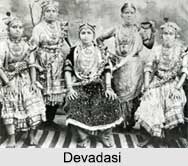
Devadasi is an ancient system of marrying young girls to Gods. This system persists even today in all parts of India but most prevalent in the south.