 Kinds of mantras, as per the lessons of Agni Purana, are various and completely scientific. Knowledge of these mantras grants enjoyment, happiness and prosperity, besides granting comforts in this life and salvation in the next. Agni Purana has mentioned that the mantras are usually reckoned as belonging to masculine, feminine, or to the neuter sex. Ancient sages had declared the significance of pronouncing every word in the Vedic mantras appropriately, in the accurate tone and the timely utterance of each word. Vedic mantras are of different types, depending upon the style of chanting them, specific Vedic gods they are addressed to or the purposes served by them.
Types of Vedic Mantras
Mala Mantras
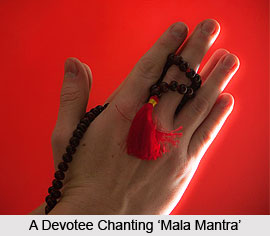
It has been said in the Indian Puranas that the `Mala mantras` consist of more than twenty letters. Mala should be chanted regularly by elderly people who are aged about 50 and above. These mantras are also known as `Rosary mantras`, as `Malas` or rosary beads are utilized while they are intoned. The beads can be of different objects like `rudraksha`, `padam beej`, gold, silver, tulsi, `shankha`, gemstones, pearls and others. The beads used should be unbroken and of uniform size. However, there is only a single bead which is bigger as compared to the others, which is called `Meru`. Meru is the main indicator of your completion of counting 108 beads, or one round of chanting Mala mantras. The practise of chanting this kind of mantra is known as `Japa`.
Bija Mantras
Agni Purana has referred to the existence of multiple types of `Beej Mantras` which are powerful are intended for worshipping several Hindu gods. It is said that reciters of different kinds of Beej mantra receive the blessings of all the Vedic gods and an abundance of positive vibes and emotions. These mantras are named so since they are the smallest of most of the other form of mantras. Similar to a tiny seed which develops into a mighty tree, beej mantras, when combined with various other mantras, produce a unique, strong and positive influence on the body and soul of the reciter. The Beej mantras which generally consist of less than ten letters, fructify at the middle of their enjoined time, i.e., at their youth. The Mantras containing of more than five and less than ten letters, may bear fruit at any time of their ordained period of repetition. `Om` or `Aum` is the basic Beej mantra. `Raksha beej` (`kleem`), `shanti beej` (`kreem`), `tejo beej` (`sreem`) and `yog beej` (`aeng hreem`)are the further classifications of the Om Beej mantra.
Arvak-Mantras
`Arvak mantras` must consist of more than ten letters. If Arvak mantras are constantly repeated, they bear fruits at heir old age, i.e., they grant salvation to their reciter at the lapse of the full period for which they are enjoined to be repeated. Since the Arvak mantras exceed 10 letters, they can be classified as a form of Beej mantras.
Male, Female and Neuter Gender Mantras
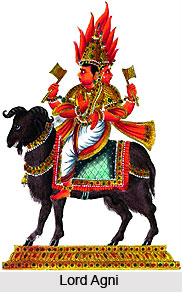
Agni Purana has mentioned that the mantras are usually reckoned as belonging to masculine, feminine, or to the neuter sex. The feminine mantra invariably ends with the term Swaha, the name of the wife of the Fire god, while those that are of the neuter sex, end with the term `Namas` (obeisance), the rest being held as masculine. The mantras of the male sex should be used in charms, or in those mystic practices which tend to distract the minds of one`s enemies. The feminine mantras should be made use of in acts of little moment, or in those which are undertaken with the sole object of bringing sound health on them on whose behalf they are practised. The mantras which are reckoned as belonging to the female sex should be used in all other sorts of charms.
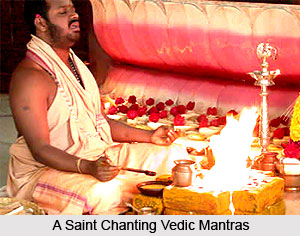 Soothing or `Soumya` Mantras and Fiery or `Agneya` Mantras
The mantras are again grouped under the two broader sub-divisions of Soumya, (soothing), and Agneya (fiery). The Beej known as the Tara should be appended to both the Soumya, and the Agneya mantras. The Agneya mantras usually end with a Tara Beej. The Soumya or the Agneya mantras should be used in an act which is of a nature quite in conformity with the meaning of either of them. An Agneya mantra may be converted into a Soumya one, by adding the term `Fut` (obeisance) to its end.
Other Kinds of Vedic Mantras
According to Agni Purana, a mantra which is asleep, or has been just aroused out of its state of slumber, does not bear fruit, though ardently repeated in rapid succession and for ages and ages together. The sleeping state of a mantra should be ascertained from the rapid and fluttered emission of breath through both the nostrils, while its waking should be judged from the calm and uniform passing of the wind through the left. An Agneya mantra may be converted into one of the Soumya class, by repeating its component letters in an inverse order. The state of waking of both these mantras should be carefully ascertained, and letters or Beej mantras which are presided over by baneful planets and asterisms, should be scrupulously excluded therefore. In acts of charm, practised for the acquisition of a kingdom, or for the benefit of an individual, the vowel letters which are inimical to the component letters of his name, should be first arranged in due order.
The mantras are to be ascertained from computations made on the table on which the Gopal mantras are calculated, or by means of a `Nakshatra Chakra`. The letters of the alphabet from A to AS excepting the two `Ris` and the two `Lis`, should be arranged under the different asterisms from `Ashvmi` to `Rohini`, or the different chambers of the former diagram should be marked as the `Siddha`, `Sadhya`, the `Susiddha` and the `Ari` and the character of each mantra in relation to the name of the individual to whom it should be imparted, should be calculated there from. A man, by simply repeating a `Siddha mantra`, attains salvation, while a `Sadhya mantra` requires the performance of the rites of `Homa` and worship, to be at all fruitful. A mere contemplation of a `Susiddha mantra` is enough for the salvation of its votary. A repetition of a hostile mantra is sure to lead its votaries to the grave. A mantra, full of forbidden or baneful letters of the alphabet, should be carefully avoided.
Agni Purana states that a man, having been duly initiated into the mysteries of a `Tantric` worship, and having been duly blest with the rite of final `Ablution` (`Abhisheka`) by his religious preceptor, should repeat the mantras, obtained from him. A Brahmana who is scrupulously truthful, pure, and intelligent, possessed of god-like fortitude, given to Japa and meditation, fully conversant with the books of Hindu Scripture, practises penances, and is capable of elevating or chastening his disciple, should be acknowledged as a Guru. A disciple, on the other hand, should live on a purely vegetable or `Havishya` diet, cultivate liberal sentiments, never allow his mind to be ruffled by any consideration of the world, practise self-control and live the highest intellectual life possible, and should be a man always eager to learn fresh spiritual laws, heartily devoted to the service of his Guru, whom he should help with money, if necessary. A Guru, having imparted a mantra to his disciple, should repeat it ten thousand times for its perfect fruition.
Technique of Chanting Vedic Mantras
.
It has been said that a mantra consisting of a single mantra, bears fruit after being repeated a million times A mantra consisting of a good many number of letters, should not be repeated so many times, while a mantra consisting of letters, numbering twice or three as much as its `Beej mantras`, should be repeated in the way of a `Rosary mantra`. A mantra should be repeated 108, or a 1000 times, where no definite number of repetition would be mentioned and in all cases, libations of clarified butter numbering a tenth part of the number of mantras repeated, should be poured on the sacrificial fire.
Libations should consist of clarified butter alone, where no particular substance would be enjoined in that behalf. A man, incapable of performing the rite of necessary Homa, should further repeat a tenth part of the number of the Mula mantras, originally recited. The presiding deity of each mantra, duly evoked, is pleased with the final ceremony of Homa, worship and meditation, and grants the wished-for boon to the votary.
Similarly it has also been stated in the Agni Purana that a mantra repeated in a small voice, should be deemed as ten times more meritorious than the one repeated in a loud tone, whereas the one repeated in a voice scarcely audible, but which is only judged from the constant movements of the tongue, is hundred times more efficacious than the latter, while a mental repetition of the mantra, should be deemed as a thousand times more fruitful than that.
According to Agni Purana, the votary should live on a Havishya diet for the absolute fruition of the mantra or take wheat cakes soaked in milk, on the day of its repetition. The concerned god of the mantra should be worshipped under the auspices of the eighth or the fourteenth day of the moon`s wane, or on the occasion of a solar or a lunar eclipse.
Vedic mantras are mainly meant for religious rituals and sacrificial rites, meditation or habitual chanting. Mantras which are categorised as `Vidyas` are available just inside the `Aranyakas` of Vedas. There are three distinct sections of the Vedas which contains mantras, the `Aranyaka`, `Samhita` and `Brahmana`. Samhita consists of mantras for worshipping Vedic gods, Brahmana guides one in the field of rituals, while Aranyaka comprises mantras which are based purely on philosophy.