


 Uttara Kannada district is one of the biggest districts in the state of Karnataka. It is a beautiful place that has been blessed with abundant natural resources. The district has varied geographical features with thick forest, perennial rivers, abundant flora and fauna and a long coastal line of about 140 Kms in length. Uttara Kannada district is bounded by the Belgaum district and the state of Goa in the North, Dharwar District in the East and by Shimoga and Udupi district in the south. The western border is formed by the Arabian Sea. Ranking high among the achievements of the state are the Kali Nadi Hydro Electric Project (KPCL) and the NPCL rank among the achievements of the district. Nuclear Power station established at Kaiga by Nuclear Power Corporation Ltd is one of very few in India. It was commissioned on March 5, 2000. This Pressurised Heavy Water Reactor (PHWR) at Kaiga is indigenously designed, meets the latest safety standards and has state-of-the-art technology including computerised controls. Uttara Kannada district is one of the biggest districts in the state of Karnataka. It is a beautiful place that has been blessed with abundant natural resources. The district has varied geographical features with thick forest, perennial rivers, abundant flora and fauna and a long coastal line of about 140 Kms in length. Uttara Kannada district is bounded by the Belgaum district and the state of Goa in the North, Dharwar District in the East and by Shimoga and Udupi district in the south. The western border is formed by the Arabian Sea. Ranking high among the achievements of the state are the Kali Nadi Hydro Electric Project (KPCL) and the NPCL rank among the achievements of the district. Nuclear Power station established at Kaiga by Nuclear Power Corporation Ltd is one of very few in India. It was commissioned on March 5, 2000. This Pressurised Heavy Water Reactor (PHWR) at Kaiga is indigenously designed, meets the latest safety standards and has state-of-the-art technology including computerised controls.
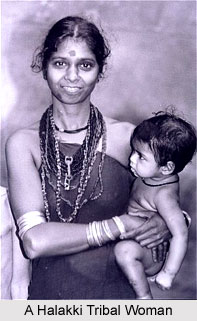
History of Uttara Kannada District The Kadamba rulers ruled over Uttara Kannada district, particularly the region of Banavasi. This area was reigned over by the kings of Vijayanagar empire, Hoysalas, Chalukyas, Rashtrakutas after the Kadambas were defeated. Remnants of a ruined mosque can be noticed in Honnavar town. The Marathas controlled this region during the 1750's, and later it was annexed by the Mysore kingdom. However, after the Fourth Mysore War in 1799, it was occupied by the British. In 1859, Uttara Kannada district was divided into South Kinara and North Kinara districts and in 1862 the district passed into the Bombay Presidency. In the year 1956, the southern part of Bombay state was included within Mysore, which was later renamed as Karnataka in 1972. This district was an important trade centre since it was visited by Portuguese, French, Arabs, Dutch and British. The famous traveller Ibn Batuta had passed through this place during one of his travels. Rabindranath Tagore, the Bengali poet and nobel laureate had paid a visit to this district during 1882, along with his brother Satyendranath Tagore, when he was 22 years old. Uttara Kannada district has been referred to in the Treaty of Mangalore which had been signed in the year 1784 between the East India Company and Tipu Sultan. Geography of Uttara Kannada District Geographical coordinates of Uttara Kannada district are 14.6 ° north 74.7 ° east. The climate of Uttara Kannada district is fairly well balanced. The average temperature is around 33 degree Celsius during summer and 20 degree Celsius during winter. Uttara Kannada District receives heavy rainfall during monsoon period. Bhatkal Taluk records highest average rainfall of 4015 mm where as Mundgod averages lowest at 1296 mm. The major rivers flowing through the district are the Kali River, Gangavali River (Bedti River), Aghanashini River, Sharavati River, Venkatapur River and the Varada River. The depth of flow of these rivers ranges from 9 feet to 10 feet and the riverbank height is about 12 feet to 15 feet. The cultivable land in the district is approximately 10 percent, as the forests dominate the total area. In its 10.25 lakh hectares of total land, 8.28 lakh hectares is forest land. Demography of Uttara Kannada District The 2011 census states that Uttara Kannada district possesses a population of 1,436,847 and a sex ratio of 975 females for 1000 males. It puts the literacy rate of the district to about 84.03%. Culture of Uttara Kannada District There is a quite a substantial tribal population found settled in the district. The main tribes of the district are Sidhi, Kunabi, Halakki Vokkaliga, Gonda and Gouli. As regards the culture and festivities typical to the place, folk arts like Suggikunitha, Holi Dance, Hulivesha, Siddi Dance are famous and traditional. Yakshagana is also famous in the district. The major regional languages spoken by the people of the Uttara Kannada district are Kannada language and Konkani language. The regional cuisine of Uttara Kannada district consists of delectable seafood and the staple diet of the local inhabitants of this region is rice. Coconuts and cashew nuts are also relished by the people of this district. Tea is also enjoyed by them and it is often flavoured with mint or cardamom. Diwali, Eid Ul Fitr and Eid-Ul-Adha are the other festivals celebrated here. 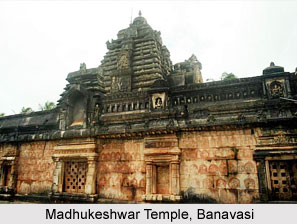 Education in Uttara Kannada District
There are a total of 2346 primary schools in the district, and 314 high schools. DDPI is responsible for the overall implementing and supervision of primary and secondary education in the district. At the Taluka level Block Educational Officer is responsible for supervision and administration of primary schools and high schools. Administration of Uttara Kannada District The administration of Uttara Kannada district is carried out by the Deputy Commissioner of the district. In the performance of his functions, the district commissioner has to execute a number of functions which include law and order and magisterial matters, land revenue, elections and citizenship matters, budget estimates etc. The deputy commissioner is helped in the exercise of his functions by a number of subsidiary officers. They include the Assistant Commissioner, tahsildar, Shristedar, revenue inspectors and village accountants. Zilla Panchayat is a body constituted under the Karnataka Panchayat Raj Act, 1993. The Zilla Panchayat is entrusted with execution of development schemes, providing civic functions in rural areas and looking after the duties of the government delegated in respect of certain department as per the schedule. The district consists of 11 Talukas. It has 35 Zilla Panchayat Constituencies, 123 Taluk Panchayat Constituencies, and 207 Gram Panchayats. Economy of Uttara Kannada District The major population lives in rural area undertaking agriculture as their main occupation. Though the district is located in coastal area, it is not so famous for its marine products. But activities connected with fisheries are carried out on large scales with the help of State Government as well as Central Government. The main traditional occupations are agriculture, fisheries, animal husbandry, sericulture, horticulture, beekeeping and leather works etc. Paddy and sugarcane are the main crops of the irrigated region. Ragi and horsegram are the major crops of dry land agriculture. Tourism in Uttara Kannada District There are a number of places of tourist interest located in the Uttara Kannada district. These include beaches, temples, forts, mountains, caves and a whole many other places of religious as well as historical interest. Attiveri Bird Sanctuary, Doeguling Tibetan Settlement, Tagore Beach at Karwar, Shanta Durga temple at Sadashivagad, Guddalli Peak, St. Francis Xavier Church at Chandavar, Basavaraja Durga Island and many more beautiful monuments, beaches and places abounding in natural beauty await the tourist in Uttara Kannada district. The Madhukeshwar Temple at Banavasi, Ulavi Channabasaveshwar Temple at Ulavi, Siddivinayaka Temple at Idagunji, Gokarna, Mahabaleshwar Temple, Mathobara Temple at Murdeshwar, Marikamba Temple in Sirsi are famous places of worship in the district. Among the monuments found here, Jain Basti and Swarnawalli Math, Sonda Fort etc. are famous for ancient monuments. Mosque at Bhatkal is also known for its marvellous designs. |
| |||



Home > Travel > States of India > Karnataka - Indian State > Districts of Karnataka > Uttara Kannada District
Uttara Kannada District
| Uttara Kannada District is among the biggest districts in Karnataka state; agriculture is the chief occupation of the people residing in the district. |
| ||||||||||||||||||||||||||||

