 Dhubri District of Assam is one of the administrative districts of the state. Interestingly, Assam starts with its south-western boundary with this district. Presently, Dhubri District is one of the three civil sub-divisions of former Goalpara district, formed in the year 1876 during British regime. In the year 1879, the district headquarters was shifted from Goalpara to Dhubri. Dhubri District is covering a total area of 2,838 sq kms including forests, hills, rivers, etc. This district has become one of the most densely populated districts of the country. Agriculture is the main livelihood for majority of the people of the district. The name Dhubri was derived from the tale of `Chand Sadagar`.
History of Dhubri District
In the year 1669 AD, Raja Ram Singh of Amber was deputed by one of the greatest Mughal Emperors in India, Aurangzeb to crush a rebellion by the Ahom king Chakradhwaj Singha. However, Raja Ram Singh requested Guru Tegh Bahadur to accompany him. Guru`s role was proved much more crucial than his mere presence. This operation was actually a punishment for Ram Singh because it was from his custody that the Maratha Emperor, Shivaji and his son had escaped, a few years earlier.
On arrival to Kamrup District early in February 1669 AD, Guru Tegh Bahadur camped at Dhubri while Raja Ram Singh with his army camped at Rangamati Fort. However, the Mughal Army was confident but still not sure whether the holy man with them would be able to destroy the evil effects of magic and witchcraft of the Assamese. Just across the river, the superior numbers of the Imperial Mughal Army unnerved the Assamese but they were confident that the supernatural powers of their magicians would keep the attackers at bay. From across the river the Assamese army hurled a 26-foot-long stone, which came arcing across the sky like a missile and struck the ground, near Guru`s camp, so hard that nearly half of its length was embedded in the ground. It can still be seen in the same position. Later the Government of British East India Company placed a historical brass tablet when they tried to dismantle the tilted stone in the heart of the city.
Geography of Dhubri District
 Geographically, Dhubri District is bounded both by inter-state and international border (West Bengal and Bangladesh) in the west, Goalpara District and Bongaigaon District of Assam and Garo Hills district of Meghalaya in the east, Kokrajhar district in the north, Bangladesh and Meghalaya in the south. This district is situated between 89.42 to 90.12 degree east longitude and 26.22 to 25.28 degree north latitude. The district is situated at 30 meters above the sea level. The general topography of Dhubri district is plain scattered with patches of small hillocks like Tokorabandha, Dudhnath, Chandardinga, Boukumari, Boropahar, Chakrasila, etc. All these are located in the north eastern part of the district. Brahmaputra River is flowing through this district from east to west with its tributaries like Champabati, Gourang, Gadadhar, Gangadhar, Tipkai, Sankosh,Silai, Jinjiram etc.
Demography of Dhubri District
According to the Population Census in 2011, Dhubri District had population of 1,948,632. Out of which the male and female were 998,346 and 950,286 respectively. Dhubri District`s population constituted 6.25 percent of total population of Assam.
The population density of Dhubri district is 1,171 people per sq. km. The average literacy rate of Dhubri was 59.36 percent. If things are looked out at gender wise, male and female literacy were 64.20 and 54.26 respectively. The total literates in Dhubri District were 943,680 of which male and female were 523,682 and 419,998 respectively.
Culture of Dhubri District
The rich culture of Dhubri District offers a glimpse of the traditional lifestyle of the common people of Dhubri. As far as the dress of the women folk of this region is concerned, Saree is commonly used by both urban and rural women folk. This is one of the finest Indian Sarees, famous in Assam and in other states. In the earlier days, rural women wore a piece of cloth that was called `Patani`. Interestingly, this style of clothing is still seen in some rural areas of the region. The most significant ingredient of the cultural built-up of Dhubri District is its rich and indigenous folksongs and dances which are very popular from ancient time.
Economy of Dhubri District
Economy of Dhubri District is principally dependent on agriculture and forest products. Main source of income of the people is paddy with extra production than its requirement. Jute and mustard seeds occupy the major share of cash crops produced in the region. From forest, mainly timber and bamboo add to the income. Fish, milk, meat and egg have small contribution to the economy. Land revenue collection is very small in amount whereas excise duty occupies a huge share. Devoid of any industrial production, Dhubri district is considered as a poor district. However, its rich natural wealth is yet to be explored fully that could boost up the economy. With the backwardness in literacy and in absence of rich-industrial infrastructure, the general socio-economic condition of the district is very poor. The economic growth rate of population is causing severe pressure on agricultural land holding.
Tourism in Dhubri District
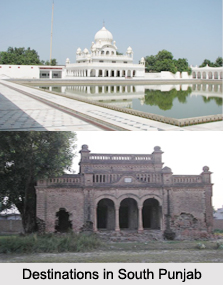
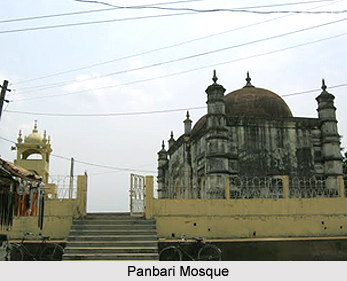
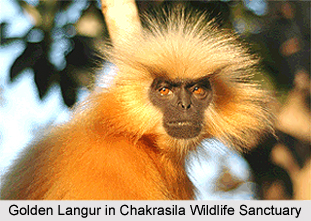
Tourism in Dhubri District includes several interesting places of interest as well as numerous sightseeing options. Some of the popular tourist attractions of this district are Rangamati or Panbari Mosque, Gurdwara of Sri Guru Tegh Bahadur Sahib, Chakrashila Wildlife Sanctuary, Mahamaya Dham, Florican Garden, Panchpeer Dargaha, etc.
Dhubri District can be easily reached by several modes like air and road. There are regular bus services that are plying between Guwahati and Dhubri regularly. It is only a six hours journey. Buses are available for day and night. Moreover, buses for Dhubri are also available from Siliguri (West Bengal). It takes around five and half hours.
Apart from all these infrastructures, Dhubri District has a well organized education system. There are several higher educational institutes in the district as well as technical institutes offering industrial training to the students.