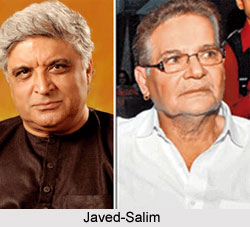
 Scriptwriting in Indian Cinema has taken a prime domain in the filmmaking industry over the decades. Scriptwriting in India is an essential factor required to make a film. It is the act of creating the story outline of the film from some disjointed ideas and thus contouring the skeleton of the film story. The script writer further develops the base or foundation into a well weaved story that is followed by the director and made into a film. The film therefore highly depends on both the flexibility and firmness of the script.
Scriptwriting has been a regular phenomenon and a promising field of employment in Indian film industry since the Silent Era. This era is considered to be the most productive era in Indian cinema, which produced abundance of musical films (The Indian films had a small orchestra of Indian music, usually consisting of traditional instruments as the `tabla`, `sarangi` and the `harmonium) with fabulous scripts. The first Indian fiction film was a religious film, Pundalik (1912) in this era. Literary subjects and traditional aspects of the living hood mostly inspired the scripts of these films. The scriptwriting process was essentially important in this age because the films and its actions depicted the entire story. There were hardly any dialogues and the only audible component was some musical chorus behind the camera. After the decline of Silent Era, The scripts in Indian cinema predominantly were based on history and tradition; then came the Talkies Era, where dialogues were included in film scripts. Scriptwriting in this age had the essence of Indian religion and Mythology.
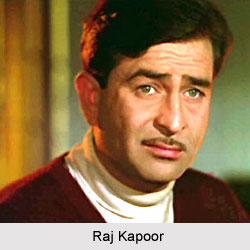
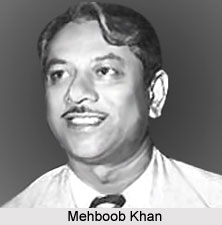 During the Golden Era in Indian Cinema, the directors like Mehboob, Bimal Roy, Guru Dutt and Raj Kapoor entered the film industry. These were the years between 1930s and `40s, when the Indian film scripts mainly revolved around fight for independence, famines, changing social mores, global fight against fascism and others. These themes mainly contributed to the scriptwriters` pack of ideas that gave birth to marvelous films and helped the directors to grow up. However, the 50`s saw the rise of these great directors, who changed the fate of Indian cinema. Then came the era of the Kapoors which brought films, based mainly on scripts revolving around the idea of romance and passion. In this era, films with various themes were made. The scripts of these films included themes of lost brothers, tear-jerking melodrama and emotional moments. Most of the films of this genre were intertwined with family dramas and romantic plots. Popular scripts of this era were found in films like Ganga Jammuna, Jis Desh Mein Ganga Behti Hai and Mujhe Jeena Do.
The Bachchan Era during the 1970s brought a massive change in the form of scriptwriting in Indian Cinema. The films shot during this period were heavily studded with action scenes. The scripts were mainly written in a dramatized version with abundance of action sequences and also melodramatic moments. This genre brought about a fresh air amidst the viewers; especially the youngsters who wanted to see something more than just family dramas. The best example during this period is the film `Sholay` that grossed immense success not only in its time, but the film also has a special place amidst the audience till date.
 These actions films also became monotonous after a while and during the mid 80s, a new pattern of scripts was introduced in the domain of filmmaking. Horror stories and stories related to black magic brought about a new air of suspense films. The audience accepted the thriller scripts and murder mysteries largely. Other than such films, actions, drama and comedy also brought innovation to the film scripts. Films like Jaane Bhi Do Yaaron, Who Saat Din, Masoom were indicative of a mixture culture of films in Bollywood.
With the passing years, the industry of Indian cinema witnessed the birth of the parallel cinema, which promoted realistic films. Several offbeat films were released. These films had scripts that closely showed the social stature of the nation. Stalwarts of the Indian film industry like Nabendu Ghosh, Satyajit Ray, Ritwik Ghatak, Basu Bhattacharya, Gulzar and Nasir Hussain are the names of some of the most prominent scriptwriters who further delineated Indian cinema to a great extent. Other than Bollywood, some of masterpiece scripts have been produced by the regional scriptwriters as well. Crazy Mohan and S. V. Shekher are the recognized Tamil scriptwriters, while Padmarajan and Sreekumaran Thampi are the renowned Malayalam writers. Some of the contemporary fames scriptwriters in India are Farhan Akhtar, Honey Irani, Mahesh Bhatt, Aditya Chopra and many others.
Today, Indian film industry has reached to a zenith of maturity, mainly because of its flawless scriptwriting and has intimate participation even in the abroad film festivals.