 India is a land where mythology of different religions overwhelms it with its sages and gurus. In different periods, gurus of different religions had appeared here to inspire the people of India with spirituality by the philosophy of their religions. Not only Hinduism, but also Buddhism, Jainism, Islam, Sikhism all contributed their sages to India to establish the religions on this land and to make followers of them to propagate the religions from time to time. The gurus and their continuing disciples of the religions have carried the traditions to hold the religion intact in its place.
Hindu Sages of India
The names of the Hindu sages of India are:
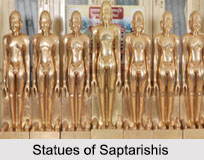
 Saptarishis: The Puranas mentions that Rishis are the great sages of Hinduism; they are said to be the Saptarishis; the Saptarishis are the seven sages. Rishis and their sons are born anew in each new Manvantara. Each Manvantara is ruled by a specific Manu or the great Rishi. The first Manvantara is the interval of Swayambhu Manu; the Rishis who belonged to this are Marichi, Atri, Angiras, Pulaha, Kratu, Pulastya, and Vasishtha. The second Manvantara is the interval of Swarochisha Manu and the Rishis of this Manvantara are Urja, Stambha, Prana, Dattoli, Rishabha, Nischara and Arvarivat. Third Manvantara is the interval of Auttami Manu and the sages in this age were the sons of Vashishtha; they were Kaukundihi, Kurundi, Dalaya, Sankha, Pravahita, Mita and Sammita.
Next is the Fourth Manvantara, which is the interval of Tamasa Manu and the list of Brahmans are Jyotirdhama, Prithu, Kavya, Chaitra, Agni, Vanaka, and Pivara. Fifth Manvantara is the interval of Raivata Manu and the sages are Hirannyaroma, Vedasri, Urddhabahu, Vedabahu, Sudhaman, Parjanya, and Mahamuni. Sixth Manvantara is the interval of Chakshusha Manu and the seven Rishis of this era are Sumedhas, Virajas, Havishmat, Uttama, Madhu, Abhinaman, and Sahishnnu. At present, the seventh Manvantara is the interval of Vaivaswata Manu and the seven Rishis are Kashyapa, Atri, Vasishtha, Vishwamitra, Gautama, Jamadagni and Bharadvaja.
Vishwamitra: Vishwamitra was recognized as one of the most venerated sages of ancient times in India. He is the rishi of the third book of Rigveda. Thousands of years ago, he discovered missile systems. Being a warrior he used those weapons and taught Rama how the missiles functioned.
Kapila: Acharya Kapil was born in 3000 BCE who gifted the world with the Sankhya School of Thought. His pioneering work threw light on the nature and principles of the ultimate Soul, primal matter and creation.
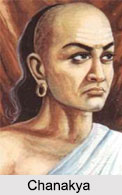 Chanakya: Chanakya or Vishnu Gupta or Kautilya was a teacher of the first Maurya Emperor Chandragupta. He authored the ancient Indian political treatise called Arthasastra. Chanakya is considered to be the pioneer of the field of economics and political science. He was a teacher in Takshashila, an ancient centre of learning.
Sikh Sages of India
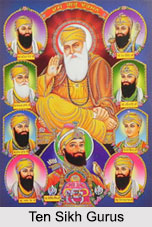
Sikhism is based on the spiritual teachings of Guru Nanak. Starting from Guru Nanak, Sikhism has been succeeded by his other nine disciples; these ten gurus are regarded as ten Sikh sages of India and they are:
Sri Guru Nanak Dev Ji: Sri Guru Nanak Dev Ji, first of the 10 gurus, founded the Sikh religion, by introducing the concept of one God.
Sri Guru Angad Dev Ji: Guru Angad Dev ji, second of the 10 gurus, compiled the writings of Nanak Dev Ji, and introduced the Gurmukhi script.
Guru Amar Das Sahib Ji: Guru Amar Das Sahib Ji, third of the 10 gurus, repudiated the caste system with the institution of langar, pangat and sangat.
Guru Ram Das Sahib Ji: Guru Ram Das Sahib Ji, fourth of the 10 gurus, started the excavation of the sarovar in Amritsar.
Guru Arjan Dev Ji: Guru Arjan Dev Ji, fifth of the 10 gurus, erected the Golden Temple (Harmandir Sahib) in Amritsar, compiled and contributed to Adi Granth in1604.
Guru Har Gobind Sahib Ji: Guru Har Gobind Sahib Ji, sixth of the 10 gurus, constructed the Akal Takhat.
Guru Har Rai Sahib Ji: Guru Har Rai Sahib Ji, seventh of the 10 gurus, propagated the Sikh faith.
Sri Guru Har Krishan Ji: Sri Guru Har Krishan Ji, eighth of the 10 gurus, became guru at the age of five, and is known for his wisdom and compassion.
Guru Tegh Bahadur Sahib Ji: Guru Tegh Bahadur Sahib Ji, ninth of the 10 gurus, sacrificed his life to protect Hindu Pandits from forced conversion to Islam.
Guru Gobind Singh Sahib Ji: Guru Gobind Singh Sahib Ji, tenth of the 10 gurus, created the order of Khalsa. He sacrificed his whole life and family to protect Sikhs from forced conversion to Islam.
 Buddhist Sages of India
The Buddhist sages of India, who showed the path of enlightenment to the people, are Mahakasyapa, Upagupta, Sariputra- they are often called orthodox saints, the criticized saint Pindola Bharadvaja, condemned monk Devadatta, solitary saint Pratyekabuddha and the Bodhisattva saint Shantideva.
Islamic Sages of India
Nund Rishi was regarded as the patron saint of Kashmiris. He was also known as Nund Reshi, Sheikh Noor ud-Din Wali, Sheikh Noor ud-Din Noorani and Sheikh ul-Alam. He founded the Rishi order of saints and the order later influenced many great mystics like Hamza Makhdoom, Resh Mir SÃ eb, Shamas Faqir till present day.
Jain Sages of India
The Jain sages who are known for their contributions to Jain philosophy and Jainism in India are Indrabhuti Gautama, Bhadrabahu, Kundakunda, Sudharma Swami, Umaswati. Among them Umaswati is the author of the Jain text.
Other Sages of India
Apart from the ascetics mentioned above, here are some other sages of India who contributed to this land and showed new paths to their followers for a new life. The sages are Bhaskaracharya, Garg Muni, Sushruta, Acharya Charak, Patanjali, Acharya Kanad, Lalleshwari etc.