
Shuddhi Movement was started by Arya Samaj in early 20th century to bring back those Hindu people back to their religion, who had converted themselves to Islam and Christianity. Dayananda Saraswati claimed to be rejecting all non-Vedic beliefs altogether. Hence the Arya Samaj unequivocally condemned idolatry, animal sacrifices, ancestor worship, pilgrimages, priestcraft, offerings made in temples, the caste system, untouchability and child marriages, on the grounds that all these lacked Vedic sanction. It aimed to be a universal church based on the authority of the Vedas. The process of reconverting Hindus, who had embraced Islam known as Shuddhi, was accompanied by a Sanghathan movement, which was launched to unify the Hindus and organize them in self-defence. Literally speaking Shuddhi means purification but when used by the Arya Samajists, it means reconversion. The Samaj being a Vedic church received a considerable success in reconverting Hindus.
Nature and Reformation of Hindu Ideologies
The nature of scriptural authority in Hinduism is different from Islam and Christianity in the sense that these two world religions claimed more or less exclusive divine authority for their books, the Veda never put up any such claim. Hinduism thus suffered from the universal character of their scriptures. Dayananda Saraswati was aware of this disadvantage and was moved by the evalengical spirit of Christianity and Islam to create a similar militancy in Hinduism itself. He therefore, moved to give the Vedas the same degree of supernatural authority, which was claimed by the Quran and Bible.
By doing so Dayananda made a departure from the line of ancient Hindu fathers, but by doing so he rendered an immense service to the new nationalist movement in India. He saw these world religions making deep inroads into India and realized that unless action was taken, India would in course of time cease to be the land of the Hindus. Dayananda was impressed by the credal universalism of Christianity and Islam that he wanted to seek it for his own religion. Thus the logic behind statement on the Infallibility of the Vedas was that he wanted to build Hindu society and Hindu nation.
Consequences of Reformations in Hindu Ideologies
The reformations incorporated by Dayananda provoked the Muslims. The thought that how could the Arya Samaj break their 1200-year-old monopoly led to the murder of Lala Ram Chandra in Kashmir in 1923. This was followed by the foul murder of Swami Shraddhananada. Swami Dayananda was the founder of the Gurukul at Kangri, a unique educational institution, respected by the Hindus and Muslims during the Non-Cooperation Movement. He was also arrested during the Khilafat Movement.
Beginning of Shuddhi Movement
After his release of he found that Muslims were harassing Hindus, converting them. He launched the Shuddhi movement. Because of his saintly character, courage and moving oration more than 18,000 Muslims returned to Hindu fold in some parts of U.P. alone. They also succeeded in reconverting a number of Hindus who had been forcibly converted to Islam during the Mopla rebellion in Kerala in 1920. The Muslims were upset, oddly though some Hindu Congress leaders joined the Muslim chorus in denouncing the Swami.
Consequences of Shuddhi Movement
The Swami narrated one incident in his journal Liberator that as regards the removal of untouchability, it has been authoritatively ruled several times that is the duty of Hindus to expiate for their past sins and non-Hindus must have nothing to do with it. But the Muslims and Christian Congressmen openly revolted against this dictum. Even an unbiased leader Shri Yakub Hassan, openly called upon Muslims the duty of converting all the untouchables in India to Islam.
India`s first President Dr Rajendra Prasad exposed the double standards adopted by the critics of the Swami. He explained that it was difficult to understand how Christians and Muslims were objecting to the Shuddhi movement on its merits. The Hindus must have the same rights as propagating as others have. On 23 December 1926, when the Swami, after a serious attack of pneumonia, was lying in his bed, a Muslim by the name Abdul Rashid came to see him, asked for a glass of water and when the attendant went in, took out his revolver and shot at the Swami four times. When Rashid was caught and charge sheeted the Muslims collected a large fund for his defence.
Shuddhi Movement
Shuddhi Movement aimed to bring the converted Hindus back to the community, based on the authority of the Vedas.
Recently updated articles in History of India
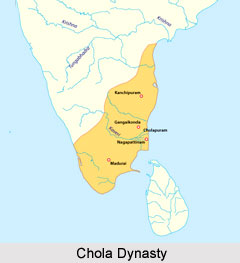
Chola Dynasty
Chola Dynasty is a Tamil dynasty and had longest duration of ruling in parts of South India. Chola dynasty had ruled South India successfully for a ex...
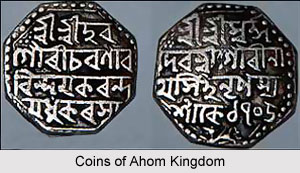
Suhungmung
Suhungmung was the fourteenth ruler of the Ahom dynasty who ruled from the period 1497 to 1539 AD. His reign was significant in terms of expansion of...
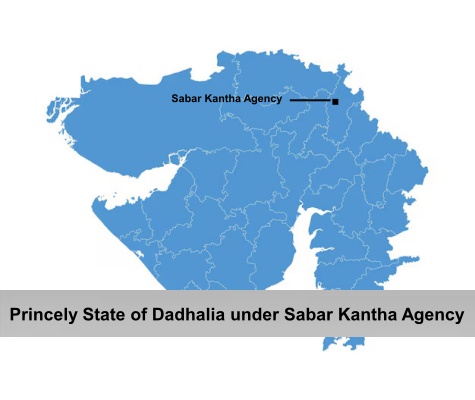
Princely State of Dadhalia
Princely State of Dadhalia was located in the present state of Gujarat. The state covered a total area of 28 sq miles and comprised of 15 villages. Th...
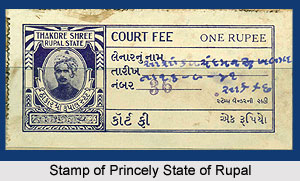
Princely State of Rupal
Princely State of Rupal was a part of the Baroda Agency, a sub division of Western India States Agency. It was under the administrative control of the...
Archaeological Sites of West Bengal
Archaeological sites of West Bengal reveal several aspects of ancient India. Excavations by the Archaeological Survey of India have furnished artefact...
Related articles in History of India

Mughal Architecture during Babur
Mughal architecture during Babur marked the foundation of a new architectural era in India, blending Timurid, Persian, and local influences. His reign...

Architecture during Sayyid and Lodi Dynasty
Architectures during the Sayyid and Lodi dynasty were mainly the tombs and monuments for the dead rulers. It were carefully designed and meticulously...

Brahmanical Sources of Ancient History
Brahmanical Sources of ancient history are contained in the Vedas and they constitute one of the most important literary sources of information about...

Coins of Chola Empire
Coins of Chola Empire were issued in gold, silver and copper and carried the Chola emblem.

Coins of Khilji Dynasty
Coins of Khilji Dynasty had an influential feature that was followed by the other dynasties.