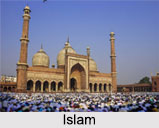
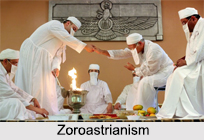
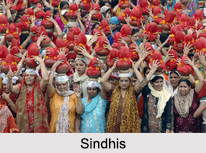
 Sindhi people are an ethnic community native to the former Sindh province of India, which today is one of the four provinces of Pakistan. They migrated about 65 years back from the Sindh province of West Pakistan to India. Most Sindhi people were originally Hindus or Buddhists, but the arrival of Muslim Arabs in the 7th century deeply influenced Sindhi religion and culture. Sindhi culture is highly influenced by Sufi principles and doctrines.
History of Sindhis
After the partition of India in 1947, over a million Sindhi Hindus left their homes in Sindh and became dispersed all over India. Many of them settled down in major trading centres such as Mumbai, Kolkata and Kandla Port.
Society of Sindhis
Sindhis are a vibrant and tight-knit group who first set foot in the country approximately two centuries ago. They became divided into two major groups: the Bhaibands and the Amils. These two groups cannot be classed as castes as they are fluid and interchangeable in the sense that families from one can enter the other and vice versa if one of the professions of the group being entered is practised for a generation or so. The present family names of Sindhis are derived from an ancestor, usually a great-grandfather. Some take the names of the professions followed. There is no taboo regarding marriage between the two groups.
Religion of Sindhis
Religious rites for the Sindhi Hindu community are the same as for most other Hindu communities in the country. All the boys wear the sacred thread and have the Mundan ceremony. The Sindhis were greatly influenced by Guru Nanak"s teachings as he did pass through Sindh and expound his beautifully simple philosophy to the Sindhis of that area.
Profession of Sindhis
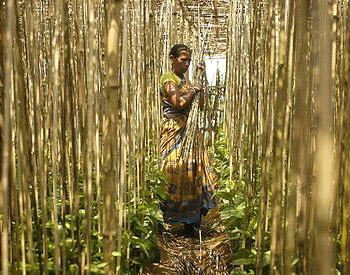
Though they were originally farmers, the Bhaibands have become a trading and shop keeping community. The latter had always been and still continue to pursue professions like teachers, civil services and scholars. Most of the Muslim rulers of Sindh had Hindu diwans who were Amils.
Having been deprived of their original work connected with the land, the Sindhis have taken up trading, banking and small independent enterprises, all occupations that depend on resourcefulness and the use of one"s wits.