
 Sarod is one of the leading concert instruments of North Indian Classical Music. This string instrument is most likely non-Indian in origin. The Sarod has four melody strings tuned to Sa, Pa, Sa, Ma and it is played with a triangular plectrum.
Sarod Musical Instrument
Sarod is a classical Indian musical instrument belonging to the family of string instruments. The Sarod is played with a plectrum and is notable among string instruments for the absence of frets along the neck.
Introduction
Sarod is one of the leading concert instruments of North Indian Classical Music. This string instrument is most likely non-Indian in origin. The Sarod has four melody strings tuned to Sa, Pa, Sa, Ma and it is played with a triangular plectrum.History of Sarod
 History of Sarod dates back to about 100 years. It has three identifiable ancestors. Two of these were rababas, short-necked fretless lutes with wooden bodies, cat-gut strings, and a skin-covered chamber resonator. The Persian rababa later came to be known as the Indian rababa, dhrupad rababa and seniya rababa. The third ancestor was the surasingara, a native version of the Persian dhrupad rababa.
The Persian rababa entered India in the eleventh century with the Gazhnavid occupation of the Punjab. It became an important part of music in the early Mughul courts. During the mid-Mughul period, the legendary Miya Tansen at Emperor Akbar`s court contributed substantially to performance on the rababa. The Tansen lineage, through his son Bilas Khan, perpetuated the dhrupad rababa tradition. The dhrupad rababa remained, along with the Rudra Veena, a pervasive presence in the Hindustani mainstream for over two hundred years after Tansen.
The Afghan rababa was different in design and plan from the Persian rababa. It had entered India from Afghanistan with pathana soldiers in the employ of the early-Mughuls. Soldier-musicians played martial tunes on it, and prized it for the fervor and beat it created. This instrument retained its Afghan music and identity until the mid-eighteenth century, when a line of rababiyas established a link with Hindustani musicians, and diverted its music towards the mainstream.
There is no evidence about when the Afghan rababa was renamed the saroda. The earliest significant sarodiya on record is Ustad Bade Gulam Ali Khan who was the grandson of Ghulam Bandegi Khan Bangash, a rababiya from Afghanistan, and lived in Rewa and Lucknow to finally settle down in Gwalior.
Saroda in Modern India : Despite its considerable status as a mainstream instrument, the Sarod was, until the late nineteenth century, an acoustically unstable instrument with gut strings, and a wooden fingerboard. It adopted the metallic fingerboard and metal strings probably from the surasingara.
After surrendering its most promising features to the sarod, the sumsingara faded into history. Further re-engineering of the Sarod took place during the 1930s to make it the sophisticated and versatile instrument we hear today. Most of this is credited to Ustad Alauddin Khan, and his brother, Ayet Ali Khan, who was also an expert craftsman. After the short-lived surasingara experiment, the rababa or sarod gharanas have not been too enthusiastic about imposing melodic fluidity on the capabilities of the Sarod, or to dilute the percussive element. Within limits, the instrument is being re-engineered to progressively offer a wider choice of idioms in terms of stroke-density relative to svara-density.
Although the world of Sarod recognizes several streams, its idiom is currently represented by three main lineages. The rababa-inspired idiom of Ustad Hafiz Ali Khan, an early twentieth century maestro, was diverted towards a khayal style vocalism by his son, Ustad Amjad Ali Khan. The Mohammed Ameer Khan or Radhika Mohan Maitra stream has reinforced its rababa-oriented idiom in the music of its contemporary exponents, Buddhadev Dasgupta and Kalyan Mukherjea. The rababa and Rudra Veena based style of Ustad Allauddin Khan inspired the genius of his son, Ustad Ali Akbar Khan, to launch the most comprehensive exploitation yet of the distinctive acoustic features of the re-engineered Sarod.
Structure of Sarod
It has a hollow circular belly to which is attached a tapering neck whose slim top portion holds the tuning pegs. Therefore it is a lute-type instrument. The shape of the belly of the instrument is distinctive in that it is pinched just below the place where the neck is attached. The use of wood for the belly of the Sarod and the use of parchment to cover the belly were retained from Rebab construction. The Sarod is usually three to three and a half feet long and has a body of teakwood overlaid with a fingerboard of polished metal, which facilitates sliding the finger along the strings. One of the distinctive features of the Sarod is that unlike the other string instruments it does not have a fret. The job of the frets is done by the left hand which is used for stopping the strings along the smooth fingerboard.
There are mainly two types of sarods namely the sarod with six pegs and the sarod with eight pegs. Both are equally developed but have distinctive features of their own. There are four or five metal strings on the Sarod. These are tuned Pa Sa Pa Sa Ma and Sa Pa Sa Ma, respectively. The lowest string is brass and the rest are steel. The lowest-pitched string, Kharaj Sa (or Pa), is closest to the player`s face. In addition, there are three to five Chikari (drone and rhythm) strings and anywhere from eleven to sixteen sympathetic strings.
The Sarod has four bridges, the main one that sits on the parchment over the belly, a secondary bridge (called a Jawari bridge) at the neck of the instrument, and two smaller bridges attached to the pegged side of the instrument. The Jawari bridge is wide, and is constructed such that it will add a buzz to the sounds produced by the four strings it supports (one drone string and three sympathetic strings, all of which are called jawari strings because they cross that bridge). The main bridge holds strings at three levels. Over the top go the playing strings, one jawari string (a drone string tuned to Sa), and the other two drone strings (tuned to Sa and Sa). One level down, the remaining three jawari strings (the sympathetic strings) go through small holes in the bridge. The lowest level of holes is for the remainder of the sympathetic strings. The sympathetic strings, called tarab, are all made of steel.
There are mainly two types of sarods namely the sarod with six pegs and the sarod with eight pegs. Both are equally developed but have distinctive features of their own. There are four or five metal strings on the Sarod. These are tuned Pa Sa Pa Sa Ma and Sa Pa Sa Ma, respectively. The lowest string is brass and the rest are steel. The lowest-pitched string, Kharaj Sa (or Pa), is closest to the player`s face. In addition, there are three to five Chikari (drone and rhythm) strings and anywhere from eleven to sixteen sympathetic strings.
The Sarod has four bridges, the main one that sits on the parchment over the belly, a secondary bridge (called a Jawari bridge) at the neck of the instrument, and two smaller bridges attached to the pegged side of the instrument. The Jawari bridge is wide, and is constructed such that it will add a buzz to the sounds produced by the four strings it supports (one drone string and three sympathetic strings, all of which are called jawari strings because they cross that bridge). The main bridge holds strings at three levels. Over the top go the playing strings, one jawari string (a drone string tuned to Sa), and the other two drone strings (tuned to Sa and Sa). One level down, the remaining three jawari strings (the sympathetic strings) go through small holes in the bridge. The lowest level of holes is for the remainder of the sympathetic strings. The sympathetic strings, called tarab, are all made of steel.
Techniques of Sarod
 Sarod is one of the leading concert instruments of North Indian Classical Music. This string instrument is most likely non-Indian in origin. The Sarod has four melody strings tuned to Sa, Pa, Sa, Ma and it is played with a triangular plectrum. The melodic techniques of Sarod can be divided into three different types that are discussed below:
First Technique of Playing Sarod : In the first type of technique of playing Sarod the fingers are moved along the finger board without lifting the fingers from the melodic string. The design and the ergonomics of the handling of the instrument make this the fundamental technique of executing any melodic phrase in the slow-to-medium tempi. Thus, the primary melodic character of the instrument is conjunct rather than disjunct. It is the limited sustain of the instrument and the necessity for higher stroke frequency. It tilts the bias of the aural experience in favour of the rhythmic element and melodic discontinuity.
Minda: The minda is a unidirectional glissando of short-melodic span executed under a single stroke.
Murki: The murki is phrase executed by a bi-directional glissando under the power of a single stroke. It involves a wrap-around movement around one svara with jerky motion mostly at the point of direction-reversal.
Gamaka: A gamaka is a magnified vibrato formed by repeatedly hitting a target svara from an adjacent svara, under multiple stroke activation.
Ghasita: A ghasita is a minda of broad melodic span, generally a full octave or more. The technique is borrowed from the suta technique of the Rudra Veena.
Second Technique of Playing Sarod : The second type of technique of playing Sarod implements the alternative use of two fingers on the same melodic string. Being a fretless instrument, finger-work belongs to the special effects department of the saroda idiom.
Sparsa: The sparsa engages the lifting of one finger from the string instantly after the stroke, and allowing the other finger to execute the adjacent svara. The two near-simultaneous svaras can be triggered either under a single stroke or even two or more strokes.
Krintana: Krintana is a specialty of the sitar and engages the execution of a phrase of four or more svaras under the power of a single stroke. The first svara of the phrase receives stroke power and the subsequent svaras are powered by the action of the middle finger being lifted from one svara, and the index finger attacking an adjacent svara.
Third Technique of Playing Sarod : The third type of technique of playing Sarod multiple-string execution inevitably requires the alternative use of two fingers. This facet of the Sarod technique, possessing elements of the polychord, dominates the aural experience in the medium-to-faster tempi, especially in broad-span melodic phrasing. This facet is emphasized by regarding the multiplicity of melodic strings as a distinctive musical element rather than unavoidable. Saroda players revel in opportunities for a harp-like activation of the melodic strings, and compose symmetric, geometric, and kaleidoscopic patterns to maximize such exposure.
Playing of Sarod
The Sarod is played with a plectrum held in the right hand. The plectrum is like a rounded-off triangle about one and a half to two inches across the base and from apex to base. The apex hits the strings. The plectrum is made either of coconut shell or of wire. Its base is embedded in beeswax so that it is easier to hold between the thumb and index finger.
Famous Sarod Players : Sarod players are often called Sarodiyas. One of the earliest among them is Mohammad Amir Khan (1873–1934). He was the court musician of Darbhanga and Rajshahi. Two of the most well know Sarod players in India are Sharan Rani and Ustad Amjad Ali Khan. Here is a list of famous Sarod players or Sarodiyas from India.
Allauddin Khan
Hafiz Ali Khan
Ali Akbar Khan
Bahadur Khan
Buddhadev Das Gupta
Kalyan Mukherjee
Sakhawat Hussain
Radhika Mohan Maitra
Vasant Rai
Rajeev Taranath
Aashish Khan
Brij Narayan
Narendra Nath Dhar
Biswajit Roy Chowdhury
Vikash Maharaj
Tejendra Majumdar
Amaan Ali Khan
Ayaan Ali Khan
Abhisek Lahiri
Aayush Mohan
Wajahat Khan
Arnab Chakrabarty
Soumik Datta
Prithwidev Bhattacharyya
Abhishek Borkar
Debanjan Bhattacharjee
Debasmita Bhattacharya
Vishal Maharaj
Famous Sarod Players : Sarod players are often called Sarodiyas. One of the earliest among them is Mohammad Amir Khan (1873–1934). He was the court musician of Darbhanga and Rajshahi. Two of the most well know Sarod players in India are Sharan Rani and Ustad Amjad Ali Khan. Here is a list of famous Sarod players or Sarodiyas from India.
Allauddin Khan
Hafiz Ali Khan
Ali Akbar Khan
Bahadur Khan
Buddhadev Das Gupta
Kalyan Mukherjee
Sakhawat Hussain
Radhika Mohan Maitra
Vasant Rai
Rajeev Taranath
Aashish Khan
Brij Narayan
Narendra Nath Dhar
Biswajit Roy Chowdhury
Vikash Maharaj
Tejendra Majumdar
Amaan Ali Khan
Ayaan Ali Khan
Abhisek Lahiri
Aayush Mohan
Wajahat Khan
Arnab Chakrabarty
Soumik Datta
Prithwidev Bhattacharyya
Abhishek Borkar
Debanjan Bhattacharjee
Debasmita Bhattacharya
Vishal Maharaj
Recently updated articles in Music in India
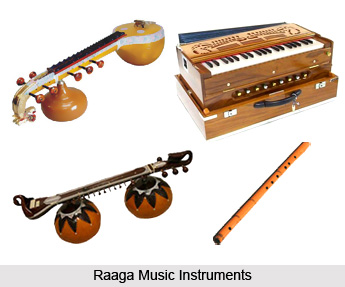
Classification of Raagas in Carnatic Music
Classification of Raagas in Carnatic music is based on scale type, devised as a system for raagas that existed as well as those that were in the proce...
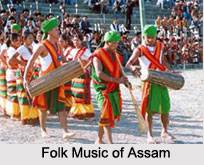
Folk Music of Assam
Folk Music of Assam reflects the outdoor and indoor life of the folk people and it does not follow any strict rule of composition and performance. Fol...
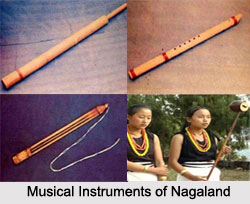
Musical Instruments of Nagaland
Musical Instruments of Nagaland reflect its rich tribal heritage and deep cultural roots. Crafted from natural materials like bamboo, wood, and animal...

Rasa, Hindustani Music
Rasa is an important part of Hindustani Music. Here the creative experience of the artist i.e. musician and the aesthetic response of the connoisseurs...
Kshetrajna, Telugu Poet and Composer
Kshetrajna (1600 - 1680) was a creative Telugu poet and composer of Carnatic music. He composed several padams and keertanas.
Related articles in Music in India
Kriti Carnatic Music
Kriti refers to one of the most widely used genres of Carnatic music. It originated from the kirtanas of the bhaktas, i.e., musicians who expressed th...
Indian Folk Music
Indian Folk Music is full of rustic charm. The appeal of Indian folk music lies in the simplicity of its style and lyrics. Most of the folk songs are...
Haryanvi Music
Haryanvi music is the folk music of the state of Haryana and is sung in western Uttar Pradesh along with the neighbouring districts of Rajasthan and P...
Carnatic Music
Carnatic music, also known as `Karnataka Sangitam`, is one of the two styles of Indian classical music.