
The Regulating Act was the first serious attempt by the Europeans to organize their Government in a far off country. Through the Regulating Act the company was given the undisputed powers to administrate India. It tried to establish the supreme authority of the English in Bengal, Madras and Bombay. The Regulating Acts though aimed to achieve a better administrative system however it could not solve the problem in India. Rather it made the situation worse. As a result certain remedial and supplementary legislation followed by the Regulating Act and it was the Amending Act of 1781was one such remedial measure.
The Amending Act of 1781 exempted the actions of the public servants of the Company done by them in their official capacity from the jurisdiction of the Supreme Court. The jurisdiction of the Supreme Court was settled. It was declared that the Court had its jurisdiction over all the inhabitants of Calcutta. The Court had the right to administer the personal law of the defendant. The Act also provided tats the Supreme Court must taken into consideration the religious concerns and the social customs ands usages of India while enforcing any decrees or processes. The Amending Act provided that the Government was to keep in view all the socio-religious and the ethical customs of the respective society before making rules and regulations.
Apart from these the Amending Act also provided for certain alterations and amendment in the judicial cases. It was envisaged in the Amendment Act that the appeals could be taken from the provincial Courts to the Governor General in Council. The Governor General in Council was considered as the final Court of Appeal except in those civil cases, which involved a sum of Rs. 5000 and more. Finally it was laid down that in the Amending Act of 1781 that the rules and regulations made by the Governor-General in Council were not to be registered with the Supreme Court. Before the Supreme Court under the Regulating Act was entitled to register and publish such rules and regulations.
The Act of 1781 thus brought important changes in the system inaugurated by the Regulating Act. The Amending Act of 1781 emphasized in the unequivocal terms the immediate need to strengthen the government. The Amending Act of 1781 also asserted the needs of an unimpeded system of revenue. Unlike the Regulating Act, the Act of 1781, insisted that the socio-religious customs and usages prevalent in India should be taken into consideration before implementing any decree.
Amending Act of 1781 dueing British Rule
The Amending Act of 1781 was enacted to bring some alterations and amendment to the Regulating Act of 1793.
Recently updated articles in History of India
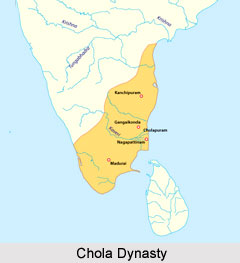
Chola Dynasty
Chola Dynasty is a Tamil dynasty and had longest duration of ruling in parts of South India. Chola dynasty had ruled South India successfully for a ex...
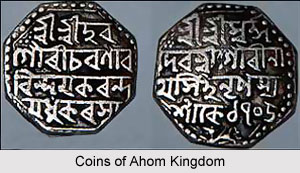
Suhungmung
Suhungmung was the fourteenth ruler of the Ahom dynasty who ruled from the period 1497 to 1539 AD. His reign was significant in terms of expansion of...
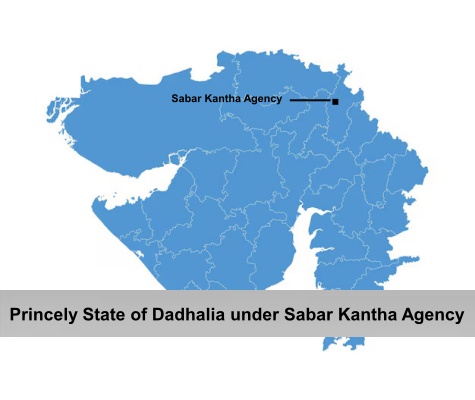
Princely State of Dadhalia
Princely State of Dadhalia was located in the present state of Gujarat. The state covered a total area of 28 sq miles and comprised of 15 villages. Th...
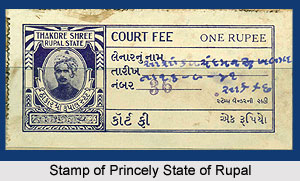
Princely State of Rupal
Princely State of Rupal was a part of the Baroda Agency, a sub division of Western India States Agency. It was under the administrative control of the...
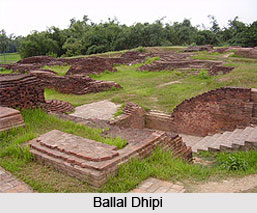
Archaeological Sites of West Bengal
Archaeological sites of West Bengal reveal several aspects of ancient India. Excavations by the Archaeological Survey of India have furnished artefact...
Related articles in History of India

Mughal Architecture during Babur
Mughal architecture during Babur marked the foundation of a new architectural era in India, blending Timurid, Persian, and local influences. His reign...

Architecture during Sayyid and Lodi Dynasty
Architectures during the Sayyid and Lodi dynasty were mainly the tombs and monuments for the dead rulers. It were carefully designed and meticulously...

Brahmanical Sources of Ancient History
Brahmanical Sources of ancient history are contained in the Vedas and they constitute one of the most important literary sources of information about...
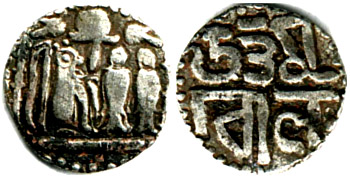
Coins of Chola Empire
Coins of Chola Empire were issued in gold, silver and copper and carried the Chola emblem.
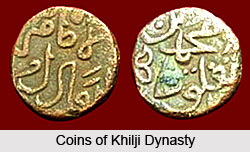
Coins of Khilji Dynasty
Coins of Khilji Dynasty had an influential feature that was followed by the other dynasties.