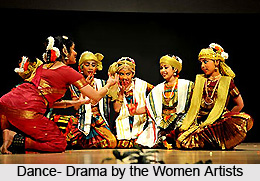
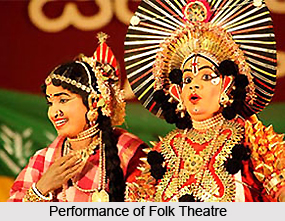
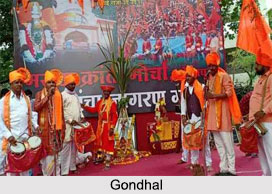
 History of Indian Drama has originated and developed from storehouse of Sanskrit in India. Indian drama has given its incredible impact and limit to perfection since ancient times. Drama is basically a form of performing arts, where stories are enacted by the utilisation of dialogue, music, signal and dance. Traditional Indian drama, which is highly influenced by the Hindu religion, was developed by local artists and performers and is not a replication of western influx. Bharata is traditionally considered to be the father in the history of Indian drama. The history of Indian Drama is deeply rooted in Classical Sanskrit Theatre, which is the earliest existing form of drama and theatre.
Ancient Indian Drama
History of Indian drama dates back to the ancient Vedic period. It then moves on to the classical theatre traditions, also influencing modern theatre, particularly the Hindi, Marathi and Bengali theatres down the line. Looking back towards the bygone historical path, the beginning of the ancient dramas owes to the Rig Veda for its monumental source material, together with Pururava, Urvashi, Yama and Yami, Indra-Indrani, Sarma-Pani and Ushas Suktas. Even the epics of Ramayana, Mahabharata and Arthashastra are instilled with specific techniques of dramaturgy. Sages like Valmiki and Vyas and Panini also had shed decisive light and Patanjali had heartily contributed in his Mahabhashya that there existed two dramas, namely, Kamsa Vadha and Vali Vadha. As such, the origin of dramas from the early Vedic Age is considered to be the most authentic and authoritative amongst all the later creations.
 Bharata Muni is regarded as the founder of the Indian dramaturgy and he described Indian drama as The Fifth Veda. Thus, Bharata is often acknowledged as the Father of Indian Theatrical Arts. Bharata`s Natyashastra appears to be the first attempt to devise and contrive the technique or rather art of drama in a systematic manner. The Natyashastra advises the reader not only about what is to be portrayed in a drama, but also how the portrayal is to be executed. Bharata Muni recognised 4 main modes: Speech and Poetry, Dance and Music, Actions and Emotions for the success of a drama production. What Aristotle is to Greek, Bharat is to the Indian folk when it comes to the medium, manner, matter of Drama.
Later, by the mid 300 AD, history of Indian drama enunciates that play acting and penning down in the Sanskrit language had developed and flourished to a considerable extent, which actually served as epic poems. Each play was organised around 1 of the 9 Rasas. Till the 15th century, Sanskrit dramas were mostly performed on stage in Tamil Nadu, Kerala, Karnataka, Andhra Pradesh, Uttar Pradesh and Gujarat. King Mitrak of Gujarat`s Vallabhi had given sufficient patronage to Indian dramas and arts.
Medieval Indian Drama
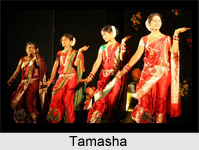
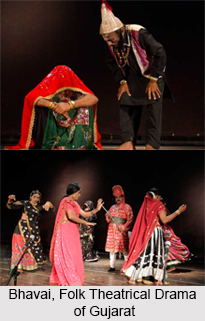
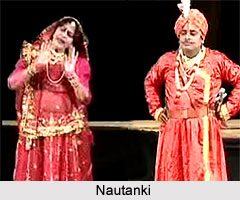
Going by the history of Indian drama and its significant contribution to the art history of India, one gets to be enlightened that after the 15th century, Indian dramatic activity almost ceased due to foreign invasions on India. However, the age had remained witness to the beginnings of Loknatya which was noticed in every state of India from 17th century onwards. Several states innovated fresh and new styles of drama; in Bengal there were styles like Yatrakirtaniya, Paala Gaan; in Madhya Pradesh Mach; in Kashmir Bhandya Thar and in Gujarat the forms comprised Bhavai, Ramlila; in northern India there existed the Nautanki (Uttar Pradesh), and Bhand, Ramlila and Raslila; in Maharashtra Tamasha; in Rajasthan Raas and Jhoomer; in Punjab Bhangra and Songe; while in Assam it was Ahiyanat and Ankinaat; in Bihar it was Videshiya.
 Modern Indian Drama
The colonial period in the history of Indian drama and its evolvement had ushered a radical and almost whirlwind phase for dramatists from all over the country. Quite understandably, the most renowned drama amongst the British was Shakuntala by Kalidasa, which was translated into English by Sir William Jones in 1789. The play was successful enough to etch upon an insightful impression upon such scholars like Goethe and created a ripple of literary sensation. The beginning and the rise of the modern history of Indian drama was hidden within 18th century when the British Empire and its stretch consolidated its stable power in India. In 1765, there came up two drama lovers, who had staged the legendary two English comedy plays by the names Disgaij and Love is the Best Doctor. In 1831, Prasaankumar Thakur had laid the foundation stone for the Hindi Rangmanch. In 1843, on the ardent request of the Sangli King, playwright Vishnudas Bhave had given birth to Seeta Swayamwar in Marathi.
In 1850, modern theatrical activity originated in Bengal, Karnataka and Kerala also, adding further to the history of Indian drama. Then, from 1858 onwards Gujarati and Urdu plays began to be staged in many cities in Mumbai and Gujarat, chiefly in Ahmedabad, Surat, Baroda and Vadnagar. The Parsis started their own drama company and made liberal usage of words from Hindustani, Urdu, Persian and Sanskrit, while staging their plays. With passing time, precisely in 1880, Annasaheb Balwant Pandurang Kirloskar had staged Abhignan Shakuntal in Marathi. However, in the western part of India, due utter the Portuguese domination, drama groups from western countries began to arrive in India to stage English plays.
Indian Drama after Independence
The period after Indian Independence in 1947 marks a significant 2nd stage in the development and history of modern Indian Drama. Prior to 1947, drama scripts were pivoted around Sanskrit plays, English plays and ancient religious-historical epics, deriving much influence from the ancient aspects in the play-acting scenario. The second stages of modern Indian drama had made an endeavour to divide dramas into 2 parts, comprising of Professional Theatre and Non-Professional Theatre. The Non-Professional Theatre groups were established which took shape under co-operative theatrical societies, where their subjects were inspired by western plays.
The Rise of the Moon of Knowledge is an allegorical and theological dramatic piece in 6 acts, within which non-figurative and non-objective qualities such as will, reason and the stupidities, vices of man is brought back to life and made to stand in conflict against one another. A political composition, named The Signet of the Minister, written approximately in 800; and another, called The Binding of a Braid of Hair, are amongst the most admired productions of plays that gained immense popularity in ancient India.
History of Indian Drama
History of Indian Drama is rich with Vedas and Indian epics and has gradually changed with time and remains unaffected by any foreign influence.