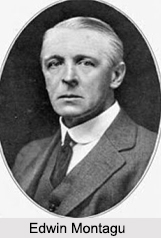
 A codified version of the Montagu- Chelmsford reforms, the Government of India Act of 1919 is named after the Secretary of the State, Edwin Charles Montagu and Lord Chelmsford, the Viceroy of India. It was one of the British Indian Acts passed by the British Parliament to "end the benevolent despotism" and to expand the participation of Indians in the Government of India.
Overview of Government of India Act 1919
The Government of India Act received royal assent on 23rd December, 1919. It is believed that the Government of India Act 1919 was the first attempt by the British to introduce self government in India but with significant restrictions. A notable feature of the Act was that it would be called for a review by the Simon Commission after a period of 10 years.
The Act introduced a number of administrative changes, out of which the most important was the concept of diarchy, which was basically providing a dual form of government for the major provinces. Diarchy introduced the concept of responsible government. As per the Act, the spheres of the central and provincial governments were demarcated by a division of subjects into "central" and "provincial".
The purpose of the diarchy was for the Provincial Governments, while the provincial subjects were divided into two categories: reserved and transferred. The reserved subjects were under the Governor and the transferred subjects were under a Council of Ministers, who were answerable to the Provincial Council.
Features of Government of India Act 1919
Discussed below are some of the salient features of the Government of India Act 1919:
•The Government of India Act 1919 had a separate Preamble, as per which, India was to remain an integral part of the British Empire. According to this, the objective of the British Government was the gradual introduction of responsible government in India.
•Introduction of diarchy at the Provincial Level along with the classification of the central and provincial subjects. As per the Act, the Income Tax was kept as a source of revenue to the Central Government.
•Legislative bills were supposed to be passed under the approval of the Viceroy without the assent of the legislature.
•The Act provided for the establishment of a Public Service Commission in India for the first time.
•The Simon Commission of 1927 was an outcome of the Government of India Act 1919 as it was set up to review the Act after a period of 10 years.
•The Act was symbolic of communal representation which included Sikhs, Europeans and Anglo Indians. The Act also granted the right to voting to the limited number of only those who paid certain minimum "Tax" to the government.
•The Government of India Act 1919 provided for partial transfer of power to the electorate through the system of diarchy and also prepared the ground for Indian federalism.