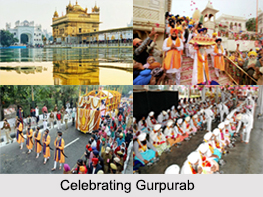
 As per Sikh tradition, the festival of Gurpurab is a mixture of the religious and the festive, the devotional and the spectacular, the personal and the communal. It is an auspicious occasion among the Sikhs.
Etymology of Gurpurab
It was during the time of the Sikh Gurus in 1469, and Guru Nanak was one of the first 10 Sikh Gurus and the founder of Sikhism. The term Gurpurab first appeared in the time of the gurus. Derived from the Sanskrit language, the word Guru means a teacher or master of certain knowledge in a particular field and the word Purab means parva. The term Gurpurab is mentioned in at least 5 places in the writings of Bhai Gurdas, an influential Sikh figure, writer, historian and preacher.
History of Gurpurab
The festival of Gurpurab celebrates the birth and death anniversaries of the Sikh Gurus. But there are indications in the old chronicles that the gurus who succeeded Guru Nanak celebrated his birthday. Such importance was attached to the anniversaries that dates of the deaths of the first 4 gurus were recorded on a leaf in the first revised edition of the scripture prepared by Guru Arjan, the 5th Sikh Guru.
Celebration of Gurpurab
As per the Nanakshahi calendar, other than the birth anniversary of Guru Nanak or Guru Nanak Jayanti, the other important Gurpurab are the birth anniversary of Guru Gobind Singh along with the festival of Baisakhi. Then there are the martyrdom days of Guru Arjan, Guru Tegh Bahadur and the young sons of Guru Gobind Singh. Except the birth anniversaries and the martyrdom days of the Sikh Gurus, the day of the installation of the Guru Granth Sahib in the Harimandir gurdwara at Amritsar is also celebrated as Gurpurab.
Over the years the standardized pattern for celebrating Gurpurab has evolved and the people modify and change the pattern as per their own needs. The day of Gurpurab is celebrated by organizing special assemblies in gurdwaras and reading through the Guru Granth Sahib in a single continuous ceremony lasting 48 hours. This reading can also be done in the home of the devotees and is known as Akhand Path and must be read without any interruptions.
During Gurpurab, the Sikh devotees march in processions through the towns and cities chanting the holy hymns. There are special Langars, or community meals, which are held for the participants. Partaking of a common meal on these occasions is reckoned as an act of merit. Public functions are held along with programmes including initiating those not already initiated into the order of the Khalsa in the manner in which Guru Gobind Singh had done in 1699.
Gurpurab of Guru Nanak
The birth anniversary of Guru Nanak usually falls on the month of November and may vary according to the lunar Indian calendar. The celebrations usually last for three days and generally 2 days prior to the birthday, Akhand Path is performed in the gurdwaras. The Sikh procession led by the Panj Piare and the palanquin of Guru Granth Sahib is done a day before the birth anniversary. The procession is followed by teams of singers singing hymns, brass bands playing different tunes and the Gatka teams showing their swordsmanship.
On the Gurpurab day, the Divan begins early in morning at about 4 or 5 a.m. with the singing of Ardas and hymns from Guru Granth Sahib. Sometimes katha, religious and Sikh historical lectures and recitation of poems in praise of the Guru follow it. Sikhs visit gurdwaras where special programmes are arranged. Kirtan- Darbars and Amrit Sanchar ceremonies are also held in the Gurdwara hall. After the Ardas and distribution of Karah Prasad, which is a sweet pudding, the Langar is served to one and all and there is kirtan till late in the night.
Gurpurab of other Gurus
The birth and death anniversary of Guru Gobind Singh is celebrated in a similar way to that of Guru Nanak"s. The main celebration in Gurpurab is same with the continuous recitation of the Akhand Path, procession, kirtan, religious discourses, Ardas, Karah Prasad and langar.
The martyrdoms of the Sikh Gurus are also celebrated as Gurpurabs. Guru Arjan, the 5th Sikh Guru, was martyred on 25th May in 1606 by the Mughal Emperor Jahangir. He was tortured to death. Guru Tegh Bahadur was decapitated under the orders of the Mughal Emperor Aurangzeb because he refused to convert into Islam. Usually a day of celebration is organized to commemorate the Gurus martyrdom.