 The twenty-ninth yoga sutra states about the major constituents of yoga. All the eight facets are interdependent on each other. Though these sometimes emanate different ideologies, they all lead to ultimate sadhana. Through even more concentration and devotion, a sadhaka reaches an elevated stage of consciousness.
yama self-restraint, vows of abstention, control
niyama fixed observance, fixed rules, precepts, established order, law
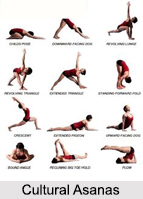
asana sitting in various postures, seat in general, a posture
pranayama regulation of breath, restraint of breath
pratyahara retreat, withdrawal of the senses
dharana the act of concentration, act of holding, keeping the mind collected
dhyana meditation, contemplation, reflection, attention
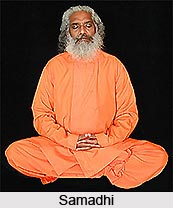
samadhayah putting together, collection, composition, profound meditation, absorption, super-consciousness
astau eight
angani constituent parts, members or divisions, limbs
Moral injunctions (yama), fixed observances (niyama), posture (asana), regulation of breath (pranayama), internalisation of the senses towards their source (pratyahara), concentration (dharana), meditation (dhyana) and absorption of consciousness in the self (samadhi), are the eight constituents of yoga.
This sutra sets out the eightfold path of yoga (astahgayoga), which Patanjali continues to describe in detail in the remaining sutras of sadhana pada.
Restraints and observances that are bound by tradition and lineage follow uninterruptedly in the practice of yoga. Although asana, pranayama and pratyahara are separate entities, they depend on one another for expressing the hidden aspects of yoga. These stages, which enable the seeker to heighten in the art of yoga, are called progressive sadhana. Through them one achieves a higher and even more higher state. The first five aspects of yoga are individual efforts for the evolution of the consciousness, while dharana, dhyana and samadhi are the universal manifestation or the natural states of yoga (yoga svaritpa).