
Vaishnava Kavyas constitute a category of Vaishnava literature in Assam. Vaishnava Kavyas can be classified into two broad categories according to subject-matter: The Vadha Kavyas and the Parinaya Kavyas. The Vadha Kavyas deal, roughly speaking, with the slaughter of demons and monsters, and (ii) Parinaya Kavyas are poems on the subject generally of elopement and marriage. Though distinctive in subject-matter, the undertone of these narrative poems is the same, i.e., the glorification of Vaishnava values.
Vadha Kavyas are about the Daityas and Danavas like Jaghasura, Kulacala and Asvakarna. Due to their narrative aspect and interesting themes, these Kavyas generally serve as an appropriate source of recreation and pleasure to people. In a way they fed the flame not only of knowledge, but also that of moral attitudes through lessons aimed at showing the justice of God in the person of His incarnation on earth, Lord Krishna, and the ultimate triumph of virtues justifying "the ways of God to man". In keeping with popular interest the Vaishnava romance-writers blended humor with heroism. The Vadha Kavyas deal with super-normal themes of exploits and enterprise.
In Vaishnava literature, this world of human existence is conceived as a huge forest and the desires and attachments of life as a fastening snare. In it the soul of man is caught like an enslaved deer. The exile and subsequent wanderings of the Pandavas in dense forests and their frequent encounters with terrible forms like the Daityas and the Danavas are symbolic of man`s brief stay on earth, surrounded by cruel forces of existence.
The Vadha Kavyas are mostly symbolic. Baghasura, for instance, symbolises the vice of avarice. Bhima, on the other hand, is the saviour of the people, a hero of unsurpassed might. He is endowed with super-normal powers to combat the forces of evil personified in the Daityas and the Danavas. In short, the expansion of spiritual ideas constitutes the central theme of the Vaishnava Kavyas. There are spiritual lessons in these Kavyas. In the Kulacala vadha, it is said: as a mother does not take note of "the child in the womb striking her with his feet", so God does not take note of man`s occasional transgression, provided he remembers Him at the ultimate moment.
It must be said of the Kavyas that the plots are excellently constructed and arranged to reach a skilful climax. In brief, Vaishnavism made its mystic influence felt in all the avenues of Assamese life and literature. However, it may be mentioned here that one notable feature of Assamese Vaishnava poetry is the absence of romantic love in its limited sense, although it must be noted that there are the Bargeetas of Sankaradeva to show that separation from Krishna is an agonising ordeal for the Gopis, i.e. this is explained as love on a higher spiritual level, a kind of spiritual realisation. Though they enact episodes of love and romance, the Harana or Parinaya Kavyas do not directly come under the purview of love poetry as commonly understood. The secret romantic exchanges between Usha and Aniruddha are an instance in point. According to the Vaishnavas, Krishna is a split personality, a man with a normal human existence and a god without attributes (Nirguna) seen through the spiritualised gaze of the devotee.
Vaishnava Kavyas
Vaishnava Kavyas form a component of Vaishnava literature in Assam. Parinaya Kavyas and Vadha Kavyas are the two main types of Vaishnava Kavyas.
Recently updated articles in Indian Literature
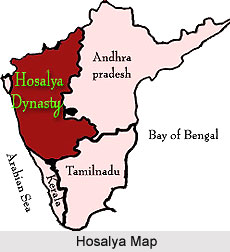
Gadyakarnamrita
Gadyakarnamrita is a 13th-century Sanskrit literary work written mainly in prose. It describes the ninety-day battle at Srirangam between the Hoysala...
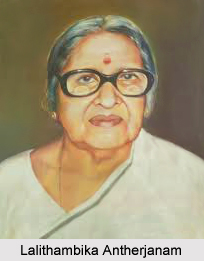
Women Writers in Malayalam Literature
Women writers in Malayalam literature have worked incessantly to make a place for their literary works. In the earlier periods, they were completely o...
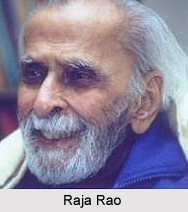
Comrade Kirillov, Novel by Raja Rao
Comrade Kirillov, a distinctive creation of Raja Rao, is presented as a brief yet incisive novelette that offers an ironic portrayal of the self-contr...
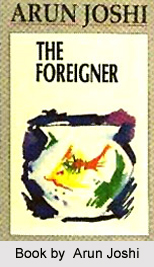
The Foreigner, Novel by Arun Joshi
“The Foreigner” is a book authored by Arun Joshi and published by Vision. It is an illustrious creation in the entire career of Arun Joshi, the famous...
Short Story in Telugu Literature
Short Story in twentieth century Telugu Literature was extremely popular and growing in and developing in a major way. Their popularity was greatly fa...
Related articles in Indian Literature
Mythological Themes in Indian Literature
Mythological themes in Indian literature have been integral to every ancient and contemporary writer and their path to f
Literature During Gupta Age
It is during the Gupta Age literature in the form of poetry, epos and drama gained a colossal importance.
Literature of Aravidu Dynasty
Sanskrit and Telugu were the popular literary medium of communication during Aravidu dynasty.
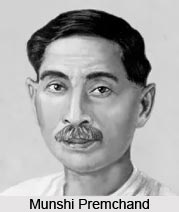
Munshi Premchand
Munshi Premchand was a legendary Indian writer notable for his modern Hindustani literature. A writer of a very high caliber, Premchand`s writings hav...
Sanskrit Poets
The names of some of the Sanskrit Poets are Bharavi, Devarshi Ramanath Shastri, Jayadeva and Srinivas Rath.