
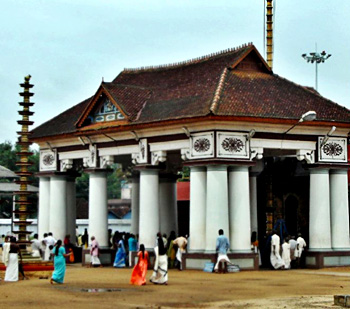
 Vaikom Shiva Temple is famous for its benign deity. Life in the little town of Vaikom literally revolves round the deity. It is endearingly called Lord of Vaikom or Perumthrikovilappan or simply Vai-katnappan. His name is always on the lips of devotees. The temple of Vaikom every morning and evening becomes vibrant with hundreds of devotees thronging the shrine with chants of "Nama Shivaya", "Hara Hara Mahadeva", and "Shambho Mahadeva." The life of people here is intimately connected with the deity because he is Annadana Prabhu or the Giver of food.
Vaikom Shiva Temple
Vaikom Shiva Temple of Kerala is a well known pilgrimage site. The deity of Lord Shiva in the Vaikom Temple is known for its benign image. The devotees of Lord Shiva in the Vaikom Temple are very much dedicated to Him.
Introduction
Vaikom Shiva Temple is famous for its benign deity. Life in the little town of Vaikom literally revolves round the deity. It is endearingly called Lord of Vaikom or Perumthrikovilappan or simply Vai-katnappan. His name is always on the lips of devotees. The temple of Vaikom every morning and evening becomes vibrant with hundreds of devotees thronging the shrine with chants of "Nama Shivaya", "Hara Hara Mahadeva", and "Shambho Mahadeva." The life of people here is intimately connected with the deity because he is Annadana Prabhu or the Giver of food.Origin of the Vaikom Shiva Temple
The Vyaghrapuri Mahatmya of the Bhargava Purana alludes briefly to the history and divinity of the deity of Vaikom. Khara, and asura of the Ramayana, attained Yogic powers through years of severe penance. At the instance of `Malyavan` the preceptor of the asuras, he propitiated Nataraja at Chidambaram. Moved by his devotion the God granted him several boons and also three Shiva-lingas.
Khara took hold of the lingas one in each hand and the third in his mouth and journeyed through the sky southward. On the way he was overcome by the weight of the objects he carried and hence was constrained to descend and rest for a while. He set the linga in his right hand at a sacred spot, knee-deep in water. After a while he resumed the journey and tried to remove the linga but it would not move although he tried hard to remove it.
At this juncture, Saint Vyaghrapada appeared on the scene. Khara was waiting exactly for this. He entrusted the linga to the care of the saint and proceeded to Ettumanur, 25 km away, where he installed the left-hand linga. The one in the mouth was deposited at Kaduthuruthy, midway between the two places.
 Thus the three spots namely Vaikom, Kaduthuruthy and Ettumanur were sanctified simultaneously. It is also believed as stated in the previous chapter that darshan at these places on the same day is highly auspicious.
Khara took hold of the lingas one in each hand and the third in his mouth and journeyed through the sky southward. On the way he was overcome by the weight of the objects he carried and hence was constrained to descend and rest for a while. He set the linga in his right hand at a sacred spot, knee-deep in water. After a while he resumed the journey and tried to remove the linga but it would not move although he tried hard to remove it.
At this juncture, Saint Vyaghrapada appeared on the scene. Khara was waiting exactly for this. He entrusted the linga to the care of the saint and proceeded to Ettumanur, 25 km away, where he installed the left-hand linga. The one in the mouth was deposited at Kaduthuruthy, midway between the two places.
Thus the three spots namely Vaikom, Kaduthuruthy and Ettumanur were sanctified simultaneously. It is also believed as stated in the previous chapter that darshan at these places on the same day is highly auspicious.Legend of Vaikom Shiva Temple<
The installation of the idol and the construction of the temple are attributed to Parasurama, an incarnation of Vishnu who, as is now well-known, had consecrated several temples sacred to Lord Shiva and Lord Vishnu for the spiritual well-being of the people of Kerala. One day while being borne northward his eyes chanced upon the beautiful linga at Vaikom, radiating glory all round. Overwhelmed with joy he descended to the spot and embraced the linga in knee-deep water.
He raised a square platform by heaving up earth and installed the linga on it according to Sankarshana rites. It is on this square that the present temple stands. The platform is about 2 feet in height and the linga itself is about five feet.
Parasurama also brought Brahmins for the performance of puja and established the various rites to enhance the divinity of the idol. It was he who also arranged (or the conduct of the Ashtami festival. It is enjoined that whoever offers a bilwa leaf or a coin or a lamp on the day is liberated in this world and the next.
He raised a square platform by heaving up earth and installed the linga on it according to Sankarshana rites. It is on this square that the present temple stands. The platform is about 2 feet in height and the linga itself is about five feet.
Parasurama also brought Brahmins for the performance of puja and established the various rites to enhance the divinity of the idol. It was he who also arranged (or the conduct of the Ashtami festival. It is enjoined that whoever offers a bilwa leaf or a coin or a lamp on the day is liberated in this world and the next.
Deities of Vaikom Shiva Temple
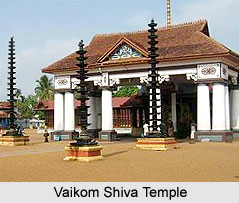 Vaikom Shiva Temple located in Kottayam district is one of the biggest temples located in Kerala. The temple is dedicated to Lord Shiva. Vaikkom`s Shiva is fondly called Vaikkathappan. The Shiva Linga here is believed to be from the `Treta Yuga.` Apart from the main idol the temple also houses many other idols. These idols have their own legends associated with them. Some of the idols located in the temple have been described below:
Panachikkal Bhagavathi : To the south side of the temple yard one can see a Shakteya Sanidhya called Panachikkal Bhagavathi. The legend of it origin of the idol has been described as follows:
Once, the great sage Agastya with many Maharshis was returning after worshipping Vaikkathappan on a Pradosha day. A Gandharva Kanyaka by the name Neelakundala was traveling with her family then. As she was very proud of her beauty she began laughing at the Maharshis and even the Maheswara. The sage became very angry and cursed her to become a Rakshasi . When she repented and asked for Shapa Moksha i.e. redemption of the curse the Maharshi taking pity on her said that after 86 years she will get Shapa Moksha (redemption) here in Vyaghrapadapuram.
Sthambha Vinayaka : The idol of Sthambha Vinayaka is also located in the Vaikom Shiva Temple. There is legend associated with it. Sthambha Vinayaka was in charge of the temple protection from the day Parasurama left for pilgrimage from the place. One day the cruel Rakshasi came there troubling the people and animals. The people approached Vyaghrapada Muni. He was well aware of the old story of Rakshasi and prayed to Sthambha Vinayaka. The later then ordered His servant Bhadrayush to deal with her. With the help of a Thrissul he cut the Rakshasi into three pieces. He then saw that all the three pieces transformed into the forms of three Devis. All of them then praised Vaikkathappan and Sthambha Ganapathi for granting her Moksha.
Sthamba Vinayaka then requested Vaikkathappan to grant them each a place who readily agreed. The middle piece is remaining here in the southern part of the temple yard and known as Panachikkal Bhagavati. The other Devies were sent tot Cherikkumel in the south and Koottummel in the north.
Sarppa Sanidhya : The idols of Sarppa Sanidhya are installed to the south of temple yard. The Snake Gods are worshipped here. Rituals and poojas are performed here only once a year. There was a pipal tree and a surrounding elevated platform, which was destroyed some years ago. A new tree has been planted and the platform has also been rebuilt in the recent years. Earlier Pampumekkad Illom was in charge of the poojas. Now the Parampur Bhattathiri of Thiruvalla is having the right to do the poojas in this Sarppa Sanidhya. In the Malayalam month of Kumba that falls in the month of February and March special poojas for the Sarppas are performed nowadays.
Architecture of Vaikom Shiva Temple
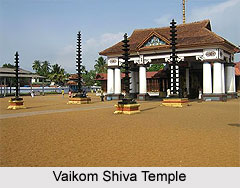 Vaikom Shiva Temple is located in Kottayam district of the southern state of India, Kerala. It is one of the main pilgrim centres of the south. The temple is famous for the Vaikkath Astami celebrations in the months of November-December. It is one of the few temples which is held in reverence by both Shaivites and the Vaishnavites. Vaikkom`s Shiva is fondly called Vaikkathappan. The Shiva Linga here is believed to be from the `Treta Yuga.` Vaikom Shiva Temple is famous for its benign deity. Life in the little town of Vaikom literally revolves round the deity. It is endearingly called Lord of Vaikom or Perumthrikovilappan or simply Vai-katnappan.
Vaikom Shiva Temple is one of the biggest temples in Kerala. It has a courtyard of about eight acres of land. The temple premise is protected by compound walls with four Gopuras or towers on all the four sides. The temple faces the East direction. There is a protected platform located near the east Gopura. The great Shaivopasak Vyaghrapada Maharshi is said to have done penance and pooja here. It is here that he got Shiva Shakti Darsana.
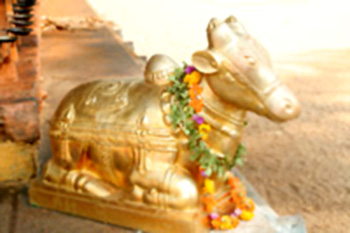
A golden flag staff can be seen in the temple complex. A Stambha Ganesha seated at its north east corner can be seen while entering the place of the sacrificial stone. From here one can enter the Namaskara Mandapa. The story of Ramayana is sculptured on the inner roof. A huge Nandi made of a single stone can be seen seated in the east side of this Mandapa. The main inner yard or the Sreekovil of the Vaikom Shiva Temple is round in shape and roofed with copper sheets and with two chambers. The Mukha Mandapa is built in shaped stone and single piece woods. The walls and pillars are very strong.
The garbhagriha or the sanctum santorum is the second chamber built of stone. A platform of about three foot high has been built in the middle of it on which the holy Shiva Linga of Shree Vaikkathappan is consecrated. It is of about six feet high made of chaste black stone. The Linga is adorned with Chandrakala (crescent), three eyes, nose and four hands with Shaiva abharanams (ornaments) in the form of `anky` in pure gold. Inside, the Holy of Holies Oil and ghee lamps are lighted together with camphor. The thousands of devotees who gather here attain fulfilment at the sight of this Holiest Linga reciting all kinds of Sivasthuthis. The outer walls of Sreekovil are decorated nicely with paintings of puranic stories and wooden sculptures.
Apart from the main deity the idol of Vighneswara or Lord Ganesha is located in the Agni cone i.e. south-east corner. It has been established on a Peedhom of stone. There are two idols, Maha Ganapathy in the South and Sakthi Ganapathy in the north. The idols are in pancha loha.
The Mathrusila where the Beli stones of the seven divine Mathas are kept is to the south of Sreekovil. The Nivedya is prepared in the Thidapally which is located in the eastern part of the Mathrusala. The buildings of the temple courts are built surrounding the Sreekovil. One can see the centuries old Vilwa tree in the vayu kone of the Sreekovil. The Ashtadikpalakas or Lords of the eight directions etc. are consecrated in the yard of the Sreekovil. Lord Varuna i.e. the Lord of water finds a special place in the west.
In the temple court of north one can see a very holy place called the `Manya Sthana.` Here Vaikkathappan was seen eating Prathal dressed like a Brahmin, by Vilwamangalathu Swamiyar. A stone has been placed with Ashta dala in his memory. A sloka has also been written on it. A lighted Bhadradeepa is kept in this place and the beginning of Prathal or Annadana is still done from here.
Three Aspects of Lord Shiva in Vaikom
The Lord Shiva of Vaikom assumes three aspects during the day. In the morning up to panthirati pooja he is Dakshinamoorti giver of divine wisdom to all sages and saints. He is the ultimate knowledge in human form jnana swaroopa. Hence worshipping him at this time one obtains wisdom and intellect.
In the noon upto uccha pooja, he is in the form of Kirata hunter fighting with his greatest warrior devotee Arjuna to test him if he deserves the weapon-the Pasupata astram. This is propitious for bathing the deity and those who want success in anything obtain it by worshipping him now.
In the evening the Lord is Satchidananda itself the ultimate goal of every devotee, be he an ascetic or a householder. The Lord is immersed in bliss, ananda, in the embrace of his consort Parvati. Everybody can freely approach him at this time and obtain his blessings.
In the noon upto uccha pooja, he is in the form of Kirata hunter fighting with his greatest warrior devotee Arjuna to test him if he deserves the weapon-the Pasupata astram. This is propitious for bathing the deity and those who want success in anything obtain it by worshipping him now.
In the evening the Lord is Satchidananda itself the ultimate goal of every devotee, be he an ascetic or a householder. The Lord is immersed in bliss, ananda, in the embrace of his consort Parvati. Everybody can freely approach him at this time and obtain his blessings.
Pananchikkal Bhagawati of Vaikom Shiva Temple
On the southern side of the temple courtyard there is a small shrine for Goddess Pananchikkal. This is a Vana-Durga exposed to the sun and rain and as such without any roof.
Once there was a Yakshi (demi-goddess of evil aspect) roaming in the temple premises, harassing humans and animals. The terrified people approached Vyaghrapada Maharshi for protection. The sage turned to Stambha Vighneswara on the north-eastern side of the temple at the entrance. There is another image of Ganaapti inside the temple.
Vighneswara cast a significant glance on Trisuli, on one of his attendant bootaganas. Trisuli, meaning literally three-pronged dragger, cut the woman into three pieces. The trunk was thrown on the southern side of the temple where the shrine stands, the head, at Muthedathu Kavu, 4 kilometres away, and the legs at Kuttummel to the north of the temple. From these the respective goddesses arose.
The Yakshi in a previous birth had been a Gandharva damsel, by name, Neelakuntala. Conceited by her personal beauty and charm she once mocked at Sage Agastya and his disciples returning to their ashram after worshipping Vaikathappan. The enraged rishi cursed her as a result of which she became a Yakshi. She begged forgiveness and was promised liberation at the hands of Trisuli.
Once there was a Yakshi (demi-goddess of evil aspect) roaming in the temple premises, harassing humans and animals. The terrified people approached Vyaghrapada Maharshi for protection. The sage turned to Stambha Vighneswara on the north-eastern side of the temple at the entrance. There is another image of Ganaapti inside the temple.
Vighneswara cast a significant glance on Trisuli, on one of his attendant bootaganas. Trisuli, meaning literally three-pronged dragger, cut the woman into three pieces. The trunk was thrown on the southern side of the temple where the shrine stands, the head, at Muthedathu Kavu, 4 kilometres away, and the legs at Kuttummel to the north of the temple. From these the respective goddesses arose.
The Yakshi in a previous birth had been a Gandharva damsel, by name, Neelakuntala. Conceited by her personal beauty and charm she once mocked at Sage Agastya and his disciples returning to their ashram after worshipping Vaikathappan. The enraged rishi cursed her as a result of which she became a Yakshi. She begged forgiveness and was promised liberation at the hands of Trisuli.
Festivals of Vaikom Shiva Temple
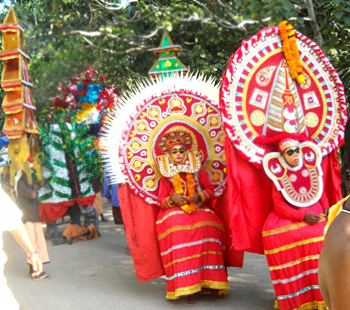 Various festivals are celebrated in the Vaikom Temple of Kerala. The most important festival of the temple is the annual Ashtami Festival. Ashtami Festival is celebrated in the in the month of Vrischikam. It is a 13-day festival, the main event, Ashtami being on the 12th day and arattu or the holy bath for the deity on the 13th. In fact, the Vaikom Ashtami is considered so auspicious that it is observed throughout Kerala with special poojas to Vaikathappan.
At the temple on each of the 13 days there are special programmes, poojas and rites, elephant processions, public feeding, music, dance and other entertainments. Thousands from the neighbourhood attend these functions. The celebration reaches its peak on Ashtami Day. The salient features of the Ashtami Day are the early morning darshan, the feast at noon and the procession at night from Udayanapuram. From the early hours of the day, devotees crowd the temple chanting holy names. This is followed by darshan at Udayanapuram about 3 km. to the north of the Vaikom temple, on the Vaikom-Ernakulam road. The presiding deity here is Lord Subramanya, son of Shiva.
The main event of the Ashtami occurs at night when the happy meeting between Vaikathappan and Udayana-purathappan or the Lord of Udayanapuram takes place. It is believed that the son had gone to battle with the asuras and the meeting is an occasion for the father to greet the triumphant son. The coming of Udayanapuram deity with Gods and Goddesses of the neighbouring temples on gorgeously caparisoned elephants accompanied by nadaswaram and hundreds of torches (theevattis) is a spectacular sight.
There are other famous temple processions in Kerala like the Trichur Pooram and the Arattupuzha Pooram in which several elephants participate. But the procession from Udayanapuram is singularly grand and hundreds of thousands gather to witness this symbolic meeting between father and the son.
The Celestial Meeting :
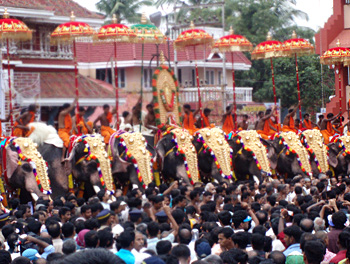 The 2 km. procession from Udayanapuram takes nearly 3 hours to reach the north gate at Viakom at about 1 .30 A.M. During the period the 300 torches consume nearly 100 tins of oil. All the while, Vaikathappan, the father, mounted on the elephant, stands impatiently to meet his beloved son. The meeting takes place at the east nada to the accompaniment of another moving song in praise of Paramasiva.
Devotees wipe tears of joy from their eyes and offer kanikkai (offering of money) to the deities.
Thereafter father and son take a round of the temple and then the equally touching farewell takes place at the northern gate. The rendering of Khandara or Neelambari ragas lends pathos to the occasion.
Koodi Puja : The next day the holy bath ceremony (arattu) takes place at the tank (arattu kulam) about a kilometre from the east nada. For this function also the Lord of Udayanapuram comes to Vaikom. After the arattu, a koodi (joint) pooja takes place for both father and son in the sanctum. This ritual is again unique and not seen in any other temple in Kerala. There is no more auspicious occasion for the devotees than the koodi puja and naturally they gather in their thousands, with whole families. Annapra-itnam, Thulabharam and various other festivals also take place at this time.
After the ceremony Vaikathappan also goes to the ion`s place and has his holy bath there. There again Koodi pooja takes place. It is significant that on Ashtami day there is no pooja or naivedyam at Vaikom temple. Vaikathappan himself observes a fast, prays for his son`s success in battle, while feeding thousands as an act of penance. The feast on Ashtami day is particularly grand. It is the rule that everybody must be fed sumptuously on this day.
Sandhya Vela : Sandhya Vela is another ritual specially conducted at Vaikom particularly during the 40 days preceding Ashtami. The main ceremony is recital of Vedas by learned Brahmins sitting on the mandapam. Then there are siveli or procession in the morning, of course a feast at noon and vilakku (Laksha deepam) at night.
Different parties like the rulers of Travancore and Cochin, various associations like the Brahmin samooham and neighbouring devaswamis like Ambalapuzha used to vie with one another in the past in celebrating Sandhya Vela.
Recently updated articles in Temples of India
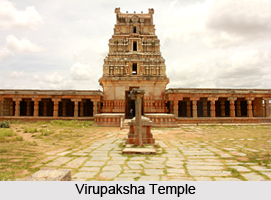
Virupaksha Temple
Virupaksha Temple, located in Hampi, Karnataka, is a historic Hindu temple dedicated to Lord Shiva. Dating back to the 7th century CE, it flourished u...
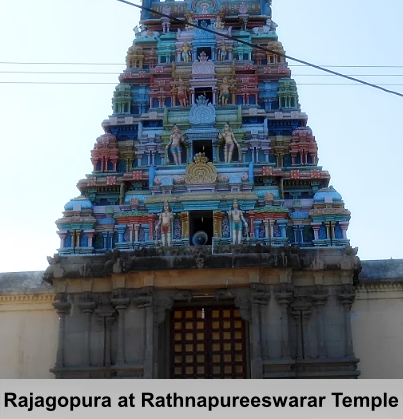
Rathnapureeswarar Temple
Rathnapureeswarar Temple in Tiruvarur district, Tamil Nadu, is a revered Shaivite shrine among the Paadal Petra Sthalams. Dedicated to Lord Shiva, it...
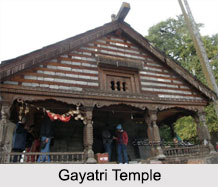
Gayatri Temple, Sirmaur
Gayatri Temple is located in Sirmaur district, Himachal Pradesh. Gayatri Temple is a sacred shrine that belongs to the medieval age.
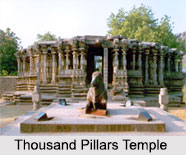
Thousand Pillars Temple
Thousand Pillars Temple, Andhra Pradesh possesses 1000 pillars built by the Kakatiya ruler Rudra Deva during 1163 AD and is adorned with beautiful scu...
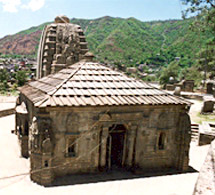
Triloknath Temple, Mandi District
Triloknath Temple is built in the Shikhara style of architecture, situated in Mandi, HP.
Related articles in Temples of India
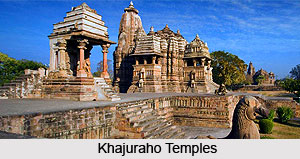
Khajuraho Temples
Khajuraho Temples are known the world over for their beauty and architectural construction. This group of temples is situated in the central Indian st...
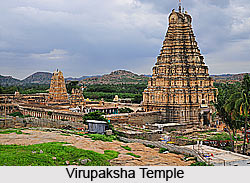
Temples In Hampi
Temples in Hampi are the manifestations of rich religious beliefs and architectural and sculptural abundance.
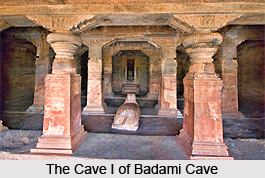
Badami Cave Temples
The Badami Cave Temples, an exemplary production of Indian architecture, are situated in the town of Badami.
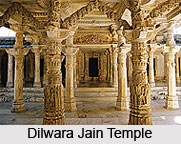
Temple Architecture During Rajput Period
Temple architecture during the Rajput period was inclined to the aspect of Bhakti. Rajput kings encouraged this art which is reflected in the grandeur...
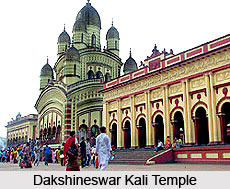
Medieval Temples of India
Medieval temples of India vary from each other due to the style and architecture. The impact of the prevalent kingdom is prominent in the style of bui...