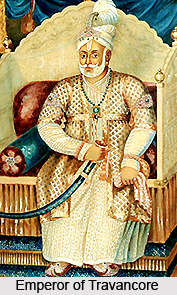
 The treaty of Mavelikkara was signed by Marthanda Varma and the Dutch on 15th August 1753 at Mavelikkara. As per the treaty both the sides agreed to live in harmony. This treaty allowed the English to have full control over their factories at Ajengo, Edava and Vilinjam. However Travancore was not allowed to give further encouragement to the English or footing in its territories for any other European power. The Dutch should not interfere in any political disputes. They had to renounce all their engagements with Malabar princes. In case if any European power attacked the king the Company would have to give their support both by land and sea. The Dutch as per the treaty had to supply Travancore with war materials annually and Travancore in return should sell to the Dutch a specified quantity of pepper at fixed rates both from the territories then in possession of Travancore and from those might be conquered afterwards.
The ninth clause of the treaty humiliated the Dutch the most. They could not interfere in any internal policy of the states. As per the treaty the Company should renounce all alliances with the other chiefs and nobles of Malabar and shall not prevent him in this matter in any respect. The Dutch had to surrender all pretensions to political authority. This treaty was a betrayal of their allies. The Raja of Kochi interpreted the disastrous implications of this treaty but was unable to do anything concrete.
Treaty of Mavelikkara helped Marthanda Varma to continue the policy of expansion and consolidation without the intervention of any foreign power. He conquered the neighbouring principalities that brought him to the borders of Cochin. Martanda Varma was free to pursue a policy of conquest and annexation. However the people of Kayamkulam, Purakkad and Chengannasseri went against Travancore. They opposed the conquest of one state of Malabar by another with the help of foreigners. The Raja of Purakkad joined the rebels. Martanda Varma himself violated one of the clauses of the treaty by leading an army against Ambalapuzha.
In order to retain the pepper trade the foreign rulers had to depend on the provisions of the treaty. This treaty contained several clauses that made the position of the Dutch weak. This treaty marked the beginning of end of Dutch control in India.