
Tirumurai or Thirumurai, which means holy division, is a 12 volume collection of hymns or songs eulogizing Lord Shiva. It was composed in the Tamil language between 6th century and 11th century by several poets in South India. Nambi Andar Nambi accumulated the initial 7 volumes by Tirunavukkaracar (Appar), Nanacampantar (Campantar) and Cuntarar (Sundarar) as Tevaram, in the 12th century. During that period, many scholars decided that there was a necessity to compile Shaiva literary works. Manickavasagar`s Tiruvacakam and Tirukovayar are incorporated as eighth; the nine parts are accumulated as ninth Tirumurai, tenth as Tirumular`s Tirumantiram, which is compiled by the renowned Siddhar. Karaikal Ammaiyar, Cheraman Perumal and others compiled eleventh. The work of Nampi is included in the eleventh Tirumurai as the existing Chola king was impressed by Nampi`s work. Periya Puranam, composed by Sekkizhar after a century, depicted the lives of all the sixty three nayanaars.
As the work received great response from Kulottunga Chola I and other Shaiva scholars, it was included as the 12th Tirumurai. Along with Saiva Agamas and the Vedas, Tirumurai forms the basis of Saiva Siddantha philosophy in Tamil Nadu.
History of Tirumurai
The reign of the Pallava dynasty in Tamil history marks the renewal of Shaivism by the Shaivite Nayanars. These Nayanaars captured the hearts of the people by their Bhakti hymns. Their songs in the praise of Lord Shiva composed in exciting devotional hymns created a wonderful impression on the people. Tirumurai in anthology surpasses Tamil literature of Sangam age, which was mainly secular in character. Tirumurai, in its entirety, is written in the viruttam meter that is in lines of four. The main feature of the head-rhyming is influenced by both moric and syllabic prosody.
Hymns of Tirumurai
There are 12 Shaiva Tirumurais, of which the initial seven Tirumurais are the hymns composed by the 3 great Shaivite poet saints, Tirunavukkaracar (Appar), Nanacampantar (Campantar) and Cuntarar (Sundarar). The hymns composed by them were the best musical compositions during that period. The first three Tirumurais are the improvised compositions of Campantar. The fourth, the fifth and the sixth Tirumurais are created by Tirunavukkaracar. The seventh Tirumurai consists of Cuntarar`s verses. The eighth Tirumurai includes Tiruvacakam and Tirukovayar by Manikkavasagar, which contain visionary experience, divine love and imperative desire for truth. The ninth Tirumurai was created by Sundarar, Tirumalikaittever, Karuvurttevar, Gandaraditya, Nampikatava Nampi, Venattatikal, Purutottama Nampi, Tiruvaliyamutanar and Cetirayar. Amongst these poet saints, Gandaraditya was a Chola king who became a Shaivite saint.
Tirumantiram by Tirumular reveals about attainment (siddantha) as a four fold path, internal worship, temple worship, moral living and union with Siva. Tirumandiram also provides details about agamic traditions, which were conducted along with the Bhakthi movement. The eleventh Tirumurai was composed by Karaikkal Ammeiyar, Pattinattu ppillaiyar, Cheraman Perumal, Nakkiratevar, Tiruvalavaiyudaiyar, Kapilateva, Nambiyandar Nambi, Kalladateva, Paranateva, Iyyadigal katavarkon, Athirava Adigal and Ellamperuman Adigal. Tirutottanar Tiruvanthathi by Nambi had an exclusive form of mincing Sanskrit and Tamil verses in anthati meter.
Karaikkal Ammaiyar was the oldest woman Shaivite poets. She introduced the kattalaikkalitturai meter, a complicated structural departure from the earlier traditional Tamil meters. The other meter used by her was venba and also antathi meter. Sekkizhar composed the twelfth Tirumurai.
Tirumurai
Tirumurai a 12 volume collection of hymns or songs praising Lord Shiva, which was composed in Tamil by several saint poets between 6th century and 11th century.
Recently updated articles in Indian Literature
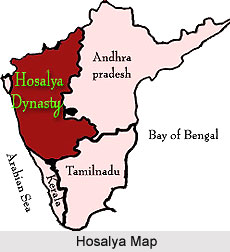
Gadyakarnamrita
Gadyakarnamrita is a 13th-century Sanskrit literary work written mainly in prose. It describes the ninety-day battle at Srirangam between the Hoysala...
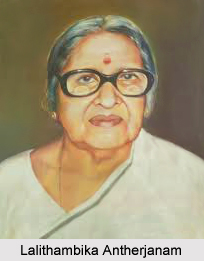
Women Writers in Malayalam Literature
Women writers in Malayalam literature have worked incessantly to make a place for their literary works. In the earlier periods, they were completely o...
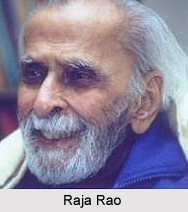
Comrade Kirillov, Novel by Raja Rao
Comrade Kirillov, a distinctive creation of Raja Rao, is presented as a brief yet incisive novelette that offers an ironic portrayal of the self-contr...
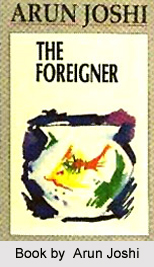
The Foreigner, Novel by Arun Joshi
“The Foreigner” is a book authored by Arun Joshi and published by Vision. It is an illustrious creation in the entire career of Arun Joshi, the famous...
Short Story in Telugu Literature
Short Story in twentieth century Telugu Literature was extremely popular and growing in and developing in a major way. Their popularity was greatly fa...
Related articles in Indian Literature
Mythological Themes in Indian Literature
Mythological themes in Indian literature have been integral to every ancient and contemporary writer and their path to f
Literature During Gupta Age
It is during the Gupta Age literature in the form of poetry, epos and drama gained a colossal importance.
Literature of Aravidu Dynasty
Sanskrit and Telugu were the popular literary medium of communication during Aravidu dynasty.
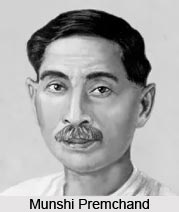
Munshi Premchand
Munshi Premchand was a legendary Indian writer notable for his modern Hindustani literature. A writer of a very high caliber, Premchand`s writings hav...
Sanskrit Poets
The names of some of the Sanskrit Poets are Bharavi, Devarshi Ramanath Shastri, Jayadeva and Srinivas Rath.