
The eighth yoga sutra speaks about the kinds of actions and deeds that manifest according to its potentiality. Memory is one of the leading actions that give rise to desires at its root, results in latent desired memories that can spring up in a later time. Desire is yet another driving-force towards the most malevolent senses of lust, covetousness, envy, jealousy, anger, frustration or satisfaction. Unfavourable impressions create such a state, wherein the consciousness is bound by these materialistic feelings. If one reverentially follows in the eightfold path of yoga, one is sure to attain kaivalya.
tatah thence
tad those impressions, their tendencies, potentialities
vipaka ripening, fruition
anugunanam correspondingly, accordingly
eva only
abhivyaktih manifestation
vasananam of desires, of tendencies
These three types of actions leave impressions which become manifest when conditions are favourable and ripe.
Of the four kinds of action, the first three leave behind potential residues, which are accumulated as impressions in the memory. Memories generate desires, and the results of desires in turn grow to be memories. They move together and form dormant impressions, which, according to their maturity, either manifest immediately or remain dormant; to appear unexpectedly later in this life or in future lives.
Desire is the propelling force, which stimulates the body and mind and strives for satiation. Desires and their fulfilment bind consciousness to the threefold actions. Desire and memory compel the mind to act for their gratification, determining one`s future class of birth, span of life, and the kinds of experiences to be undergone. If the impressions are good, they create situations favourable to spiritual life. Unfavourable impressions bind one to lust, anger, greed, infatuation, pride and envy, creating perturbations in the consciousness. But even then, if one turns one`s consciousness towards the seer by sincerely and deferentially following the eightfold path of yogic discipline, one`s actions will no longer be of the threefold type, but of the fourth, which do not give rise to desire for fruits or rewards. This is the literal meaning of `Yogah karmasu kausalam`, `skill of yogic action`.
Tatah tadvipaka anugunanam eva abhivyaktih vasananam
This is the eighth yogic sutra that is contained in the fourth phase of the Patanjali Yoga Sutras.
Recently updated articles in Yoga
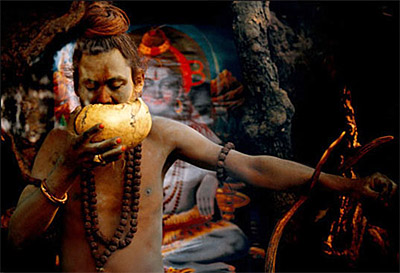
Khanda Manda Yoga
Khanda Manda Yoga is a difficult form of yoga where the Yogi cuts off his own arms and legs with a sharp cleaver, that is axe-like knife, and throws t...

Kaivalya Pada
Kaivalya Pada, the fourth chapter of Patanjali Yoga Sutra denotes an absolute, indivisible state of existence of the Yogi. The Kaivalya Pada is someti...
Vibhuti Pada
Vibhuti is the Sanskrit term for “power” or “manifestation.” In this third chapter, Patanjali introduces the final three limbs of Aṣṭanga Yoga, collec...

Sadhana Pada
Sadhana Pada in Patanjali Yoga Sutra denotes the idea of practicing yoga that leads to spiritual illumination. Sadhana, the Sanskrit term for “practic...
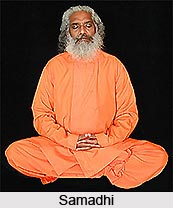
Samadhi Pada
Samadhi Pada is the first chapter of Patanjali Yoga Sutra. In this chapter, the author explains the essence of yoga, the nature of samadhi, and the me...
Related articles in Yoga
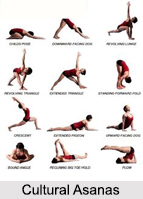
Cultural Asanas
Cultural Asanas refer to the daily physical exercise postures that train the body and mind in Yoga Practice.
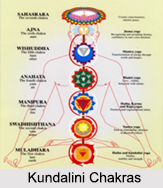
Kundalini Chakras
Kundalini Chakras are psychic energy centres or vortices, which connect between our psychic and physical energy systems.
Patanjali Yoga Sutras
Patanjali’s Yoga Sutras presents a foundational guide to the philosophy and practice of yoga. Through concise aphorisms, it outlines the nature of the...
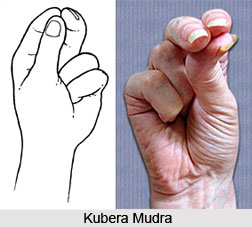
Kubera Mudra
Kubera Mudra, a form of Hatha Yoga, leads to the elevation of mental peace and physical relief by proper practice and cleanses frontal sinuses.