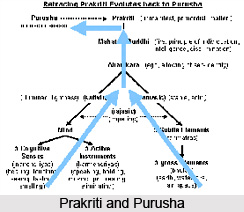
 The forty-ninth yoga sutra states about the supremacy over the functions of the body, senses and mind, corresponding with the soul, free from nature. Bu subduing every property of nature, a yogi cleanses both the body and consciousness. The self, thus sees much more speedily and, in this process the functioning organs and the senses of perception, body and mind stand at par with the soul, free from satisfactions and indulgences.
tatah thence, from it, there from
manojavitvam quickness of mind, speed of mind
vikaranabhavah feeling of change, modification, without the help of thesenses, freedom from the senses of perception
pradhana first cause, chief, main, pre-eminent, most excellent, best, first cause, primary or original matter
jayah mastery, conquest
ca and
By mastery over the senses of perception, the yogi`s speed of body, senses and mind matches that of the soul, independent of the primary causes of nature. Unaided by consciousness, he subdues the first principle of nature (mahat).
When the properties of nature have been conquered, and both body and consciousness purified, the self perceives directly and quickly, independent of nature. Body, senses, mind and consciousness stand equal to the seer in their movements, and the soul drinks its own sweetness. Sage Vyasa, commenting on this state, calls it madhu pranka (madhu = sweetness, honey; pranka = turned towards). The taste of honey is the same from whichever side of the honeycomb it is collected. Likewise, the organs of action and senses of perception, body and mind are made as pure as the soul, when they are transformed to the level of the soul. In this spiritual elation, they lose interest in sensual gratification and pleasure. Each cell reflects the light of pure Self and each cell drinks the nectar of the soul. This is madhu pranka. (1.41, 48; ui.26, 37-)