
The thirty-second yogic sutra explains about the state of dharma megha samadhi and how a person now dwells in its light. The qualities of gunas come to an end, having satisfied their purpose. The order of consecutive transformations also ceases to function. These successive mutations and rhythmic sequences and their qualities - sattva, rajas and tamas, also come to a culmination. The essence of intelligence and the essence of consciousness now pull back to rest in the dwelling of the soul. The soul finally is independent.
Utah thence, by that
krtarthanam having fulfilled their duties
parinama change, alteration, transformation, expansion
krama regular process, course, order, service, succession
samaptih the end
gunanam qualities of nature, sattva, rajas and tamas
When dharma megha samadhi is attained, qualities of nature (gunas) come to rest. Having fulfilled their purpose, their sequence of successive mutations is at an end.
Having transformed the yogi`s consciousness by the radiation of the rays of the soul, the orderly mutations and rhythmic sequences of the qualities of nature, sattva, rajas and tamas come to an end. Their tasks are fulfilled, and they return to nature.
The essence of intelligence and the essence of consciousness both now retire to rest in the abode of the soul. The master, the seer or the soul, is independent. He keeps the gunas in suspension, or uses them when necessary. They enthusiastically serve him as committed servants, without influencing him as before, and without interfering in his true glory.
Tatah krtarthanam pannamakrama samaptih gunanam
This is the thirty-second yogic sutra, which is incorporated in the fourth phase of the Patanjali Yoga Sutras.
Recently updated articles in Yoga
Khanda Manda Yoga
Khanda Manda Yoga is a difficult form of yoga where the Yogi cuts off his own arms and legs with a sharp cleaver, that is axe-like knife, and throws t...
Kaivalya Pada
Kaivalya Pada, the fourth chapter of Patanjali Yoga Sutra denotes an absolute, indivisible state of existence of the Yogi. The Kaivalya Pada is someti...
Vibhuti Pada
Vibhuti is the Sanskrit term for “power” or “manifestation.” In this third chapter, Patanjali introduces the final three limbs of Aṣṭanga Yoga, collec...

Sadhana Pada
Sadhana Pada in Patanjali Yoga Sutra denotes the idea of practicing yoga that leads to spiritual illumination. Sadhana, the Sanskrit term for “practic...
Samadhi Pada
Samadhi Pada is the first chapter of Patanjali Yoga Sutra. In this chapter, the author explains the essence of yoga, the nature of samadhi, and the me...
Related articles in Yoga
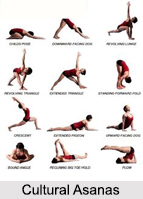
Cultural Asanas
Cultural Asanas refer to the daily physical exercise postures that train the body and mind in Yoga Practice.
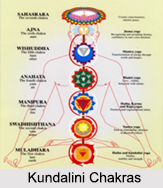
Kundalini Chakras
Kundalini Chakras are psychic energy centres or vortices, which connect between our psychic and physical energy systems.
Patanjali Yoga Sutras
Patanjali’s Yoga Sutras presents a foundational guide to the philosophy and practice of yoga. Through concise aphorisms, it outlines the nature of the...
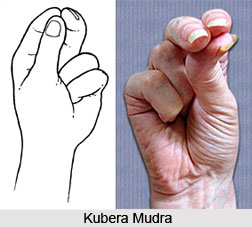
Kubera Mudra
Kubera Mudra, a form of Hatha Yoga, leads to the elevation of mental peace and physical relief by proper practice and cleanses frontal sinuses.