
The yogic sutra tajjapah tadarthabhavanam explains that Aum should always be repeated with extreme respect and devotion and it needs to be chanted unremittingly. With incessant practice and reverence, a sadhaka can attain realisation of the Divine Being.
tat that (aunt)
japah muttering in an undertone, whispering, repeating
tadarthabhavanam its aim, its purpose, its meaning with feeling, its identification
The mantra aum is to be repeated constantly, with feeling, realising its full significance.
Constant, venerating repetition of the pranava aum, with reflection on its meaning and the feeling it arouses, helps the seer to reach the highest state in yoga.
Words, meaning and feeling are interwoven. As words are eternal, so are meaning and feeling. Meaning and feeling vary according to one`s intellectual calibre and understanding. This sutra expresses the devotional aspects of the seed mantra aum.
Japa is repetition of the mantra, with veneration and realisation of its meaning. Practice of japa unites the perceiver, the instruments of perception, and the perceived - God. The mantra aim is considered the Sabda Brahman (Word of God, or Universal Sound) to be known with the organs of perception and action, mind, intelligence and consciousness.
Tajjapah tadarthabhavanam
This is the twenty-eighth yogic sutra that is contained in Patanjali Yoga Sutras.
Recently updated articles in Yoga
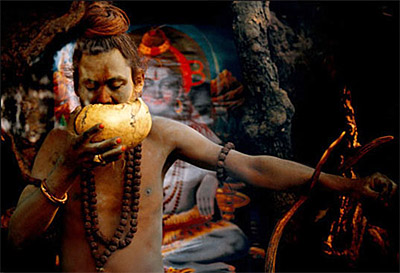
Khanda Manda Yoga
Khanda Manda Yoga is a difficult form of yoga where the Yogi cuts off his own arms and legs with a sharp cleaver, that is axe-like knife, and throws t...

Kaivalya Pada
Kaivalya Pada, the fourth chapter of Patanjali Yoga Sutra denotes an absolute, indivisible state of existence of the Yogi. The Kaivalya Pada is someti...
Vibhuti Pada
Vibhuti is the Sanskrit term for “power” or “manifestation.” In this third chapter, Patanjali introduces the final three limbs of Aṣṭanga Yoga, collec...

Sadhana Pada
Sadhana Pada in Patanjali Yoga Sutra denotes the idea of practicing yoga that leads to spiritual illumination. Sadhana, the Sanskrit term for “practic...
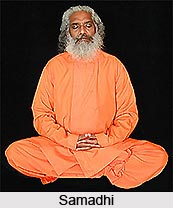
Samadhi Pada
Samadhi Pada is the first chapter of Patanjali Yoga Sutra. In this chapter, the author explains the essence of yoga, the nature of samadhi, and the me...
Related articles in Yoga
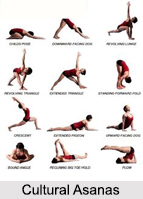
Cultural Asanas
Cultural Asanas refer to the daily physical exercise postures that train the body and mind in Yoga Practice.
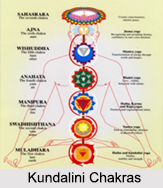
Kundalini Chakras
Kundalini Chakras are psychic energy centres or vortices, which connect between our psychic and physical energy systems.
Patanjali Yoga Sutras
Patanjali’s Yoga Sutras presents a foundational guide to the philosophy and practice of yoga. Through concise aphorisms, it outlines the nature of the...
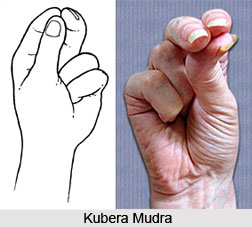
Kubera Mudra
Kubera Mudra, a form of Hatha Yoga, leads to the elevation of mental peace and physical relief by proper practice and cleanses frontal sinuses.