
The seventeenth yoga sutra states about the capability of a conscious mind and a conditioned mind in regard to perceiving an object. It should always be kept in mind that consciousness is not the seer, but an instrument of the seer. A conditioned mind can never see an object in its true light; the mind in such instances has already been influenced upon, it is already biased and prejudiced. An object is known only upto that limit, which the mind wants to perceive, and in this process it remains un-perceived. A true yogi is the one, who has perceived the object in its truest light, staying un-distorted and has thus achieved enlightenment.
tad thereby
uparaga conditioning, colouring
apeksitvat expectation, hope, desire, want, need
cittasya by the consciousness, for the consciousness
vastu object
jnata known
ajnatam unknown
An object remains known or unknown according to the conditioning or expectation of the consciousness.
Consciousness is not the seer, but an instrument of the seer. A conditioned mind can never perceive an object correctly. If the mind sees the object without expectation, it remains free.
An object is understood and known according to the expectation of the mind, or remains unrecognized, owing to the absence of reflection. When the object attracts the mind, contact and reflection begin. This gives rise to knowledge. If the mind fails to come in contact with the object, it does not perceive it and the object remains unknown.
If consciousness is conditioned or coloured (vrttis and Mesas - 1.6 and 11.6), knowledge of the object also becomes coloured. When the consciousness reflects on the object without condition, taint or expectation, its real essence is known. Likewise, if the consciousness reflects on the essence of the seer without conditioning, bias, or prejudice, the mind becomes enlightened. It knows that it is not itself the seer, but only an instrument of the seer. The un-enlightened mistake mind and consciousness for the seer.
Taduparaga apeksitvdt cittasya vastu jnata ajnatam
This is the seventeenth yogic sutra, which is incorporated in the fourth phase of the Patanjali Yoga Sutras.
Recently updated articles in Yoga
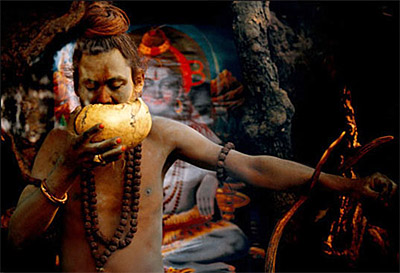
Khanda Manda Yoga
Khanda Manda Yoga is a difficult form of yoga where the Yogi cuts off his own arms and legs with a sharp cleaver, that is axe-like knife, and throws t...

Kaivalya Pada
Kaivalya Pada, the fourth chapter of Patanjali Yoga Sutra denotes an absolute, indivisible state of existence of the Yogi. The Kaivalya Pada is someti...
Vibhuti Pada
Vibhuti is the Sanskrit term for “power” or “manifestation.” In this third chapter, Patanjali introduces the final three limbs of Aṣṭanga Yoga, collec...

Sadhana Pada
Sadhana Pada in Patanjali Yoga Sutra denotes the idea of practicing yoga that leads to spiritual illumination. Sadhana, the Sanskrit term for “practic...
Samadhi Pada
Samadhi Pada is the first chapter of Patanjali Yoga Sutra. In this chapter, the author explains the essence of yoga, the nature of samadhi, and the me...
Related articles in Yoga
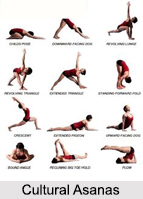
Cultural Asanas
Cultural Asanas refer to the daily physical exercise postures that train the body and mind in Yoga Practice.
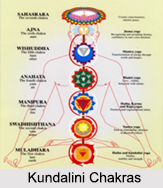
Kundalini Chakras
Kundalini Chakras are psychic energy centres or vortices, which connect between our psychic and physical energy systems.
Patanjali Yoga Sutras
Patanjali’s Yoga Sutras presents a foundational guide to the philosophy and practice of yoga. Through concise aphorisms, it outlines the nature of the...
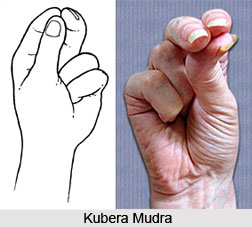
Kubera Mudra
Kubera Mudra, a form of Hatha Yoga, leads to the elevation of mental peace and physical relief by proper practice and cleanses frontal sinuses.