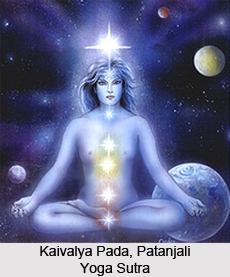
 The twenty-third yogic sutra states about the strengths of self-realisation and the function of their unfolding forth, aiding in the sadhaka`s self discovery. A craving for fusion among the three fundamental principles of existence has existed since time immemorial. However, the master needs to be cautious about his consciousness springing out of bounds and intermixing again with worldly affairs. This leads to attachment.
sva one`s own, of being, owned, nature
svami owner, master, lord, seer
saktyoh strength of prakrti and purusa, power of the two
svarupa form, one`s own
upalabdhi to find, obtain, perceive, to see, recognise, to experience
hetuh cause, reason, purpose
samyogah union, conjunction
The conjunction of the seer with the seen is for the seer to discover his own nature.
The powers of purusa and prakrti are designated for Self-Realisation. The purpose of their contact is the blossoming of their innate powers, and the seer`s discovery of his own essential nature.
This sutra makes clear that a desire for synthesis or a close association or assimilation between the owner, the `owning` and the owned has existed since the beginning of civilization.
By the light of pure knowledge, the owner, the seer, perceives and cognises whatever is to be perceived or cognised through his association with nature. If this association is fed by ignorance, it leads the master towards enjoyment, desire, and complaints, and ties him down. But if non-attachment is garnered, it leads to detachment or renunciation - vairdgya.
If the master maintains constant vigilant awareness of his consciousness, associates with nature without attachment and stays a witness, nature (prakrti) leads its owner, the soul, to freedom - moksa.