
Sundarar or Cuntarar was born as Nambi Aruvar to parents Sadaiyanar and Isaignaniin in the village of Turinavalur. Narasingamunaiarayar, the ruler of the local kingdom, Thirumunaippadi- Nadu had adopted and brought him up as his own son. Later when he grew up and was about to get married an old man suddenly arrived at the wedding hall. He claimed that Sundara was his slave and hence there can be no marriage. The old man produced an old palm script written by Sundara`s forefathers. The script helped the old man prove his words to the assemblage of people. The marriage was thus cancelled and dejected Sundarar followed his `new master.` They together went to a nearby temple where the old man suddenly disappeared. Sundarar soon realized that the old man was Lord Shiva who wanted him to worship and sing his praise. Sundarar thus immersed himself in the service and devotion of Shiva. He became one of the christened devotees whose verses form the seventh book of the twelve sacred Thirumurai. These form the sacred requests to Lord Shiva for the Shaivaites. Sundarar also compiled the life histories of many other Shavaite saints. He travelled extensively to different parts of the world and later even married Paravayar, a courtesan. However he also married another woman Sangiliyar and for this bigamous deed he lost his eyesight. Later through his devotion he regained his eyesight. Afterwards when the moment to unite with the lord approached Lord Shiva sent Lord Indra`s white elephant Iravatham to bring him. Cherum Perumal, the king of Kerela and an ardent devotee of Lord Shiva, when heard about the royal journey of Sundarar, followed him on his horse. They both then united with Shiva at Mount Kailasa.
The story of Sundarar and Cheraman has been narrated in Periapuranam which is a detailed work on the lives of all the sixty three Nayanmar saints. In the twelfth century this work was sponsored by Anapaya, a Chola King. It was compiled by one Sekjiyar. The chapter on Sundarar has been named as `Velaanai-Ch-Charukkam` or the `Chapter on the White Elephant.` Sundarar`s royal status, his ardent devotion to Shiva and his grand role of propagating Shaivism has undoubtedly made the most renowned saints among the other sixty three saints. Sundarar is one of the few saints who attained salvation in his human form mounting the elephant sent by Shiva. Rajaraja Chola 1, one of the greatest emperors of the Chola Dynasty, had also chosen the story of Sundarar to depict it in his frescoes.
Sundarar
Sundarar was a one of Nayanmar saints who devoted his complete life in the devotion of Lord Shiva and received salvation in his human form.
Recently updated articles in Indian Puranas

Mandakini, Holy River
Mandakini River is a significant Himalayan river in Uttarakhand, renowned for its ecological, cultural, and religious importance. Originating near the...
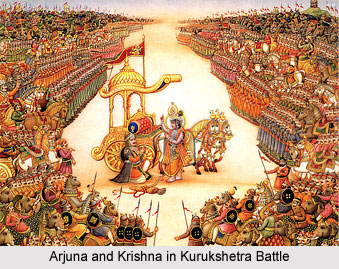
Kausika, Son of Vasudeva
Kausika is a minor figure in Hindu mythology and is identified in the Vishnu Purana as the only son of Vasudeva and his wife Vaishali. He is recognize...
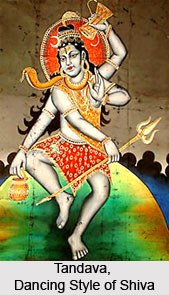
Tandu, Attendant of Lord Shiva
Tandu is revered as the divine attendant of Lord Shiva and the foremost exponent of the Tandava dance. According to the Natya Shastra, he instructed S...
Niramitra, Mahabharata
Niramitra was a son of Nakula and Kareṇumati in the Mahabharata. A descendant of the Pandavas and the Kuru dynasty, he fought on the Pandava side duri...
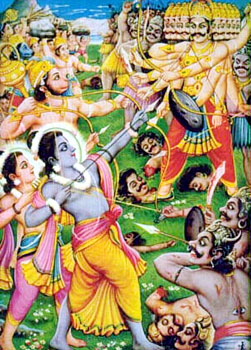
Mahodara, Ramayana
Mahodara was a prominent Rakshasa warrior, minister, and army chief who served under Rāvaṇa during the Battle of Lanka in the Ramayana. Celebrated for...
Related articles in Indian Puranas
Adhyayas in Agni Purana
Adhyayas in Agni Purana are all encompassing. The chapters have dealt with a variety of subjects related to human lives. A large number of chapters ha...
Indian Puranic Tribes
The existence of Indian Puranic tribes is often mixed with mythology and fiction that depict them as superhuman or sub.

Puranic Texts
Puranic Texts are vital according to Hindu, Jain or Buddhist religion; they describe the history of the Universe.

Puranic Shaivism
Puranic Shaivism established during the Gupta Dynasty. This puranic religion developed and expanded, and was accompanied by the development of Brahman...

Nilamata Purana
Nilamata Purana is a Kashmiri Purana that is referred by Kalhana. It is considered as one of the sources of ancient history of Kashmir.