
The forty-fifth yoga sutra states about the various components and constituents of the earthly essential elements. And, by complete self-control, a yogi can achieve total control of these elements, their mass, forms, subtlety, concurrence or purposes.
sthula gross
svarupa form, attributes
suksmasubtle
anvaya all-pervasiveness, interpenetration, conjunction
arthavatva purpose, fullness
samyamat by restraint
bhutajayah mastery over the elements
By samyama on the elements - their mass, forms, subtlety, conjunction and purposes, the yogi becomes Lord over them all.
By restraint, the yogi gains control over the gross and subtle elements of nature, their forms and gunas, as well as their purpose.
The Universe is created from the constituents of the basic elements of nature - earth (prthvi), water (ap), fire (tejas), air (vayu) and ether (akasa). Each element possesses five attributes - mass (sthula), subtlety (suksma), form (svarupa), all-pervasiveness or interpenetration (anvaya), and purpose or fruition (arthavatva).
The characteristics of the gross forms of elements comprise solidity, fluidity, heat, mobility and volume. Their subtle counterparts are smell, taste, sight, touch and sound. Their all-pervasiveness or interpenetration are the three gunas, and their purpose is either worldly enjoyment or freedom and beatitude.
The earth element has five properties of sound, touch, sight, taste and smell. Water possesses four - sound, touch, sight and taste. Fire has three - sound, touch and sight. Air comprises sound and touch. Ether has only the one quality of sound (`pranavah`, 1.27).
Sthula svarupa suksma anvaya arthavatva samyamat bhutajayah
This is the forty-fifth yogic sutra, which is contained in the third phase of the Patanjali Yoga Sutras.
Recently updated articles in Yoga

Khanda Manda Yoga
Khanda Manda Yoga is a difficult form of yoga where the Yogi cuts off his own arms and legs with a sharp cleaver, that is axe-like knife, and throws t...

Kaivalya Pada
Kaivalya Pada, the fourth chapter of Patanjali Yoga Sutra denotes an absolute, indivisible state of existence of the Yogi. The Kaivalya Pada is someti...
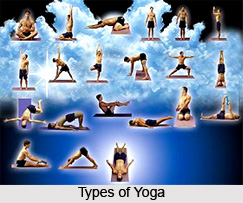
Vibhuti Pada
Vibhuti is the Sanskrit term for “power” or “manifestation.” In this third chapter, Patanjali introduces the final three limbs of Aṣṭanga Yoga, collec...

Sadhana Pada
Sadhana Pada in Patanjali Yoga Sutra denotes the idea of practicing yoga that leads to spiritual illumination. Sadhana, the Sanskrit term for “practic...
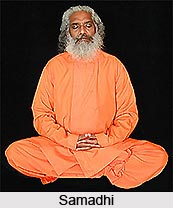
Samadhi Pada
Samadhi Pada is the first chapter of Patanjali Yoga Sutra. In this chapter, the author explains the essence of yoga, the nature of samadhi, and the me...
Related articles in Yoga
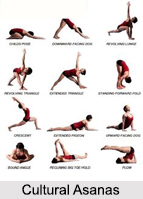
Cultural Asanas
Cultural Asanas refer to the daily physical exercise postures that train the body and mind in Yoga Practice.
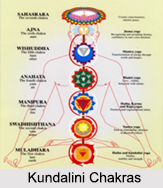
Kundalini Chakras
Kundalini Chakras are psychic energy centres or vortices, which connect between our psychic and physical energy systems.
Patanjali Yoga Sutras
Patanjali’s Yoga Sutras presents a foundational guide to the philosophy and practice of yoga. Through concise aphorisms, it outlines the nature of the...
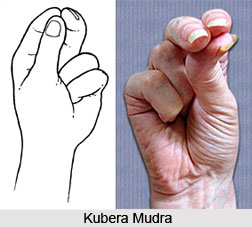
Kubera Mudra
Kubera Mudra, a form of Hatha Yoga, leads to the elevation of mental peace and physical relief by proper practice and cleanses frontal sinuses.