The inscriptions attached a traditional splendor to the antiquity of the temple. It not only provides a chronological significance of the temple, but also mentions the name of those benevolent contributors of the contemporary era, who made gifts for the upkeep of the Venkatesa Perumal temple. A long Tamil inscription found on a wall of this temple, belonging to the reign of Vira-Rajendra Chola of the 11th century A.D., provides very interesting information about a Vedic college (pathasala), which functioned inside the premises of the temple. This epigraphic record mentions in detail the different subjects taught here, the number of teachers and students studying each subject, the salary paid to the teachers, etc. The Rig Veda, Yajur Veda, Vyakarana (grammar) and the upavataara were some of the important subjects, which were taught here. The famous hymn, Tiruvaymozhi of Nammazhvar was recited at this temple.
As the inscriptions suggest, there was a hostel attached to this temple-college where the students lived and sixty people were fed here everyday. Moreover there was also a hospital attached to this educational institution where the students, teachers and the servants of the temple could be treated. This hospital called "Vira-Cholan` and had fifteen beds s the inscriptions depict. The hospital within the temple precinct was under the charge of a physician called Kodandarama Asvattama-Bhatta, whose name is precisely mentioned in the inscription of the Chola king who prescribed medicines for the patients under his care. Besides him, there was also a surgeon in this hospital to perform operations which might have been necessary. Two people were engaged for procuring medicinal herbs, three people who supplied firewood and also assisted in the preparation of medicine, two nurses to attend on the patients and also a barber, who probably assisted in minor operations in addition to his regular duties were employed in this hospital. The inscription goes on to say that twenty Ayurvedic medicines were stored in this hospital always and their names are also clearly mentioned in these inscriptions stamped on the temple walls. The inscription thus reveals that Sri Venkatesa Perumal Temple was very important religious centre in the Chola times and equally renowned and well known as the educational center.
Apart from this major Chola inscription some other important inscriptions are also found. A number of inscriptions are also found imprinted on the temple walls, which reveal that the deity of this fascinating shrine was known by different names during the rule of the various dynasties like the Pallavas, Cholas ayanagara. The presiding deity enshrined in the temple was also known as Tirumukkudal-Azhvar, Maha-Vishnu, Venkatesvara Svamin and Venkatesa Perumal.
Sri Venkatesa Perumal Temple housed in the small serene village of Tirumukkudal is considered as a flourishing hub of religious fervor and academic activity.

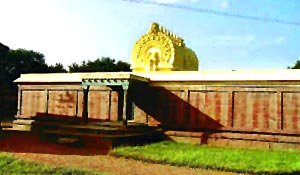
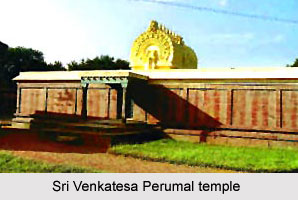 Sri Venkatesa Perumal temple is a noteworthy temple in the small village of Tirumukkudal. There are a number of ancient and beautiful temples to be seen en route to Kanchipuram, turning off the Chennai-TiruchirapaMi highway. This historic area has been ruled in succession by the kings of the Pallava, Chola, Pandya and Vijayanagara dynasties. One of these historic shrines is that of Lord Venkatesa situated in the village of Tirumukkudal. The temple is stationed at the opposite bank of the river Palar from the village of Pazhaiya Seevaram where the renowned temple for Lord Lakshmi Narasimha is situated.
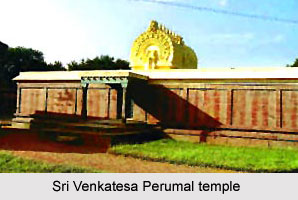 Sri Venkatesa Perumal temple is a traditional temple at the heart of the small village of Tirumukkudal in South India. A number of legendary stories are found to have associated with the temple. The legendary stories not only provide information about the history of the Temple rather it also added a dignified magnificence to the temple. As the legendary stories depict, the ruler of this area, was known as Tondaiman Chakravarti, who used to be a very great devotee of Venkatesa Perumal, Lord of Tirumala. On account of this, he planned to offer his veneration to the Lord by submitting himself at His feet and go away to live in Tirumala to live in the close association with Lord. Hence he gave up the responsibility of administering the kingdom to his son. But the Lord advised him and warned not to come at that time as there would soon be an invasion of his kingdom. Once the enemy was driven back and the kingdom protected, he could come to Tirumala. Tondaiman, according to his Lord`s wish completely surrendered to Him and stayed back.
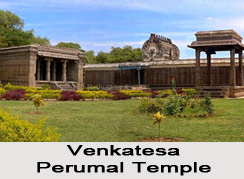 The superb architecture of the contemporary era is evident from the superb artistic carvings imprinted on the temple walls. The wonderful architecture is an added grandeur to the traditional temple. The structural design of the temple is no les fascinating. The entire temple of Sri Venkatesa Perumal faces north. The main shrine is immensely beautiful and is the abode of the charming and imposing image of Lord Venkatesa, the presiding deity of the temple. The unusual posture of lord Venkatesa is an important aspect of interest for those who come to visit the temples. The Lord Sri Venkatesa Perumal is seen in a standing posture, carrying the sankha and chakra with sage Markandeya and Goddess Bhu Devi is found at His feet. It is believed that this deity is a combination of the aspects of Brahma, Vishnu and Siva. Hence this very image carries a special significance for the devotees. The utsava-murti or the processional image of this shrine is known as Lord Srinivasa. This image is highly venerated and the sanctum enshrining this image is considered a sacrosanct.