The historical background of the temple deciphered it as one of the ancient and antique temple. The architectural trappings on the walls of the temple point to the traditional grandeur of the temple. Moreover the superb architecture on the temple walls also added a stately magnificence to the temple. This temple, built in the 16th century A.D as the historical researches revealed. The temple architecture depicts the Vijayanagar style and has several unique features. The superb craftsmanship of the contemporary artists is evident from the structural design of the temple. The principal sanctum is north facing marks the uniqueness of the temple. The structural design is very rare as most temples face either east or west. The striking aspect of the temple is that there is only one sanctum, which is dedicated to Lord Hanuman, inside this very vast temple-complex. Other than this principal shrine, there are no other sanctums, not even niches, where images of other Gods or Goddesses are worshipped. The principal sanctum also enshrines the very beautiful icon of Lord Anjaneya. The imposing image of the lord Anjaneya is approximately six feet high, in the attitude of a devotee (Bhakta Anjaneya) with his hands folded in the posture of anjali hasta. On a wall of this sanctum is inscribed in bold Grantha alphabet the celebrated Sanskrit poem composed by Ettur Lakshmikumara Tatacharya when he was accosted by the bandits at this very place. The same poem is also found inscribed in several places in the Sri Varadarajasvami temple in Kanchipuram. The utsava-murtis or the processional images are highly fascinating and constitutes the captivating images of Lord Rama, his consort Sita Devi, Lakshmana and Hanuman of this temple. These images are enshrined in another small shrine in the crowded portion of Ayyangar Kulam village for safety.
The structural design of the temple points to the architectural craftsmanship of the artists of the contemporary period. The vimana above the main sanctum is known as Hanuman Vimanam. The maha-mandapa in front of the main shrine is supported by as many as fifty massive, carved pillars, beautifully aligned, presenting the symmetrical beauty, which reflects the exceptional skill of the architects of the Vijayanagar epoch. The ceiling of this mandapa, a specimen of the Vijayanagara art still bears faint traces of murals, which is painted by artists five hundred years ago. The temple-complex has three circumambulatory passages (prakaras). The innermost and the narrow prakara runs immediately around the garbha-griha, while in the other two outer ones are seen a number of four-pillared mandapas, which are very ornate and majestic despite their present dilapidated condition.
The stupendously large sacred tank situated on the northern side of this temple testifies the craftsmanship of the contemporary artists. The captivating tank is located in front of the main entrance, deserves special mention. The tank is popularly called Tatasamudram, in honour of Kotikanyadanam Lakshmikumara Tatacharya; the tank occupies an area of 133 acres in total. Enclosed by a high bund called Valkottai, it casts an attractive sight, especially during the rainy season when it holds plenty of water. Even in summer, the portion immediately in front of the temple remains partially full. It is to this bund that people suffering from various ailments come to inhale the pristine air, which devotees believe has curative powers due to the association with the Sanjeevi hill.
The entire structure of the temple and the images enshrined in it and also the beautiful tank in front of the temple testify the superiority of the architectural style of the then era. Hence Sri Sanjeevi Rayar temple apart from having a religious and legendary significance has also a special importance among the ancient temples of South India because of its brilliant sculpture.

 Kanchipuram is considered as a sacrosanct since it is often visited by Srivaishnavas as it is home to as many as fourteen Divya Desams and other smaller temples associated with the lives of preceptors (Acharyas) like Tirukkacchi Nambi and Kurattazhvan. However, the small temples in Kanchipuram are rarely visited. But some of great historic and religious importance, situated in the suburban region of Kanchipuram. One among such neglected temples is the large and very beautiful Sanjeevi Rayar temple, dedicated to Hanuman. The beautiful shrine dedicated to Hanuman is located in an ancient small village named Ayyangar Kulam. This consecrated site is situated about ten kilometers from the heart of Kanchipuram on the Kanchi-Wandawasi route. The temple is located in a peaceful albeit lonely corner of Ayyangar Kulam village, far from the noise and bustle of the city of Kanchi.
 Sri Sanjeevi Rayar temple in the small village of Ayyangar Kulam is a legendary temple. As the researches have revealed this area is a celebrated place and the Hanuman temple situated here have a glorious history. From the historical researches it is known that this temple was constructed by a great scholar and administrator named Kotikanyadanam Lakshmikumara Tatacharya. This administrator was popularly known as Ettur Lakshmikumara Tatacharya and was highly venerated. He was the royal preceptor (raja-guru) of the Vijayanagar emperor Venkata Raya II (1586-1614 A.D.) who had his capital at Chandragiri in the region of Andhra Pradesh. He performed the coronation of this king. The newly coroneted king entrusted much of the administration of his realm to his guru, Tatacharya. Tatacharya was then the manager (Sri-karya-durandara) of many temples in Kanchipuram like the Sri Varadarajasvami temple and other important shrines elsewhere. He contributed immensely to the growth and expansion of the Sri Varadarajasvami temple through several donations. He presented many vahanas to this shrine and covered the vimana above the sanctum of Goddess Perundevi Thayar. This vimana was popularly called Kalyanakoti vimana, with gold in 1614 A.D.
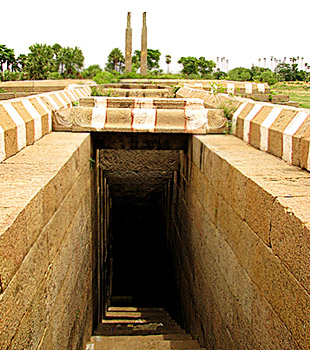
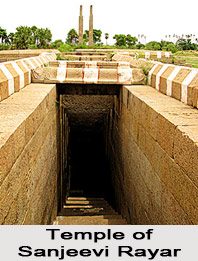
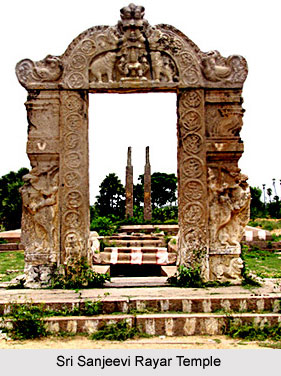
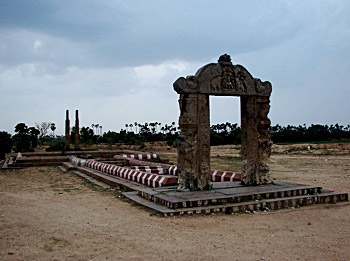 The festivals organized in the temple reveals the cultural as well as the religious significance of Sri Sanjeevi Rayar temple. A number of festivals are celebrated in this temple, with enough pomp and grandeur. The sanctified shrine is considered as a Prarthana Sthala, which follows the rules of the Vaikhanasa Agama. During the festival season a large number of people gather in the temple complex in order to offer their worship and veneration t the lord. Among the important festival celebrated in the shrine the significant is Mula Nakshatram (the birth-asterism) of Sri Anjaneya, which is celebrated every month in a grand style. The other important festivals are Margazhi Mulam when Hanuman Jayanthi is celebrated. During the time of Avani Mulam, pushpangi and sandana kapu are offered to the deity as a form of worship. A unique festival associated with this temple is the famous Ayyangar Kulam Nadavavi Utsavam, which is celebrated on the full-moon day in the month of Chittirai (Chitra-Pournami) when Lord Varadaraja from Kanchipuram visits the Nadavavi (Nadavapi) situated on the north side of the Sanjeevi Rayar temple. Here, the first tirumanjanam for Varadaraja Perumal after His Tiruavatara-Utsavam (Hasta nakshatram) is celebrated. This is one of the important festivals performed with immense splendor. The Nadavavi is a beautiful and captivating structure with a grand entrance or gateway, which is made of granite, and steps leading to a large underground mandapa with carved pillars and a sacred kitchen (madapalli). On most days of the year, this entire area is filled with water, but before the beginning of this festival, the water is pumped out and devotees carry the imposing image of Lord Varadaraja inside the cool precincts of the mandapa in the hot month of Chittirai and worship is offered in a grandiose manner. The other significant festivals celebrated here are Sri Rama Navami, Tamil New Year and Navaratri Utsavam. Every Sunday, the temple is open all morning to receive devotees who come to worship Nava-Vyakarana Pandita. This is the name given to Lord Sri Anjaneya.