 Sadkara is regarded as the promoter of Advaita Vedanta as a distinct school of Indian philosophy. Vedanta is normally a school of Indian philosophy. Though it is a label for any hermeneutics that attempt to interpret the philosophy of the Upanishads and more precisely, it is the canonical summary of the Upanishads. Advaita is often translated as `non-dualism` although it has a literal meaning of its own. Literally, it means `non-secondness`. Idealist monism is the essential philosophy of Advaita. The Advaita metaphysics states that Brahman, the ultimate transcendent and imminent God of the latter Vedas appears as the world because it possesses the `Maya` or the creative energy. There is no separate existence of the world except Brahman.
History states that possibly the Advaita tradition existed in the early part of the first millennium C.E. Mandukya Karika, a commentary on the Mandukya Upanishad, written by Gaudapada is considered as the first complete Advaitic work. The prominent names in the later Advaita tradition are Prakasatman (tenth century), Vimuktatman (tenth century), Sarvajnatman (tenth century), Sri Harda (twelfth century), Citsukha (twelfth century), Anandagiri (thirteenth century), Amalananda (thirteenth century), Vidyaranya (fourteenth century), Sadkarananda (fourteenth century), Sadananda (fifteenth century), Prakadananda (sixteenth century), Madhusudhana Sarasvati (seventeenth century), Dharmaraja Advarindra (seventeenth century), Appaya Diksita (seventeenth century), Sadasiva Brahmendra (eighteenth century), Candrasekhara Bharati (twentieth century), and Sacchidanandendra Saraswati (twentieth century).
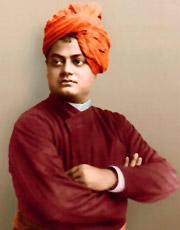
Throughout the 18th century and until the 21st century, the roots of many saints and philosophers are found in the Advaita philosophy. Some of the prominent saints are Bhagavan Ramana Maharsi, Swami Vivekananda, Swami Tapovanam, Swami Chinmayananda, and Swami Bodhananda.
Advaita Vedanta appears as a nihilistic philosophy that deprecates the matters of the lived-world. Advaita Vedanta is the most influential sub-school of the Vedanta philosophy. One of the major features of Advaita Vedanta is the three basic truths. They are: the transcendental level in which Brahman is the only reality; the pragmatic level in which both Jiva and Isvara are true, and the apparent level in which material world reality is actually false. Advaita rejuvenated the Hindu thought. It further helped to merge the old Vedic religion with popular south-Asian cults.