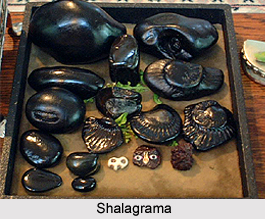
 Shalagrama is a representation of Lord Vishnu that is made out of stone. A Shalagrama is named according to the number of Chakras present on it. In Brahmavaivarta Purana a story has been represented that says about Lord Vishnu being cursed. He would become a stone on the banks of the Gandaki River. The Garuda Purana describes different types of Shalagrama images which are sacred. It is believed that if any one touches any of these images, their sins are forgiven.
A Shalagrama that has marks of a conch shell, chakra, mace and lotus is known as keshava. A Shalagrama that has the marks of chakra, shankha, padma and gada is known as Madhava. Narayana Shalagrama has the order padma, gada, chakra and shankha. Govinda has the order gada, padma, shankha and chakra. Image of Vishnu has the order padma, shankha, shakra and gada. Madusudana has the order of Shankha padma, gada and chakra. Trivikrama has the order gada, chakra, shankha and padma.
There are other combinations too. The order chakra, gada, padma and shankha signify the image of Vamana. Chakra, padma, shankha and gada signify the image of shridhara. Padma, gada, shankha and chakra signify the image of Hrishikesha. padma, chakra, gada, and shankha signify the image of padmanabha. A Shalagrama that has the order Shankha, chakra, gada and padma is known as damodara, while chakra, shankha, gada and padma represent Vasudeva.
Sankarshana Shalagrama has the order shankha, padma, chakra and gada. Image of Pradyumna can be identified by the order Shankha, gada, padma and chakra. A Shalagrama that has the order gada, shankha, padma and chakra is known as Anirudha. The image of purushottama can be identified by the order padma, shankha, gada and chakra. The order of weapons Gada, shankha, chakra and padma is known as adhokshaja. The order of padma, gada, shankha and chakra is the avatar Narasimha. The order of shankha, chakra, Padma and gada is the image janardana. The order gada, chakra, padma and shankha signify the image of upendra. Chakra, padma, gada, and shankha signify the image of Hari. Finally, the shrikrishna avatar has the order gada, padma, chakra and shankha.