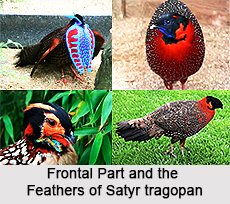
 Satyr tragopan is an Indian bird, is also known as "Tragopan satyra" also known as the crimson horned pheasant in another name. The male of Satyr tragopan has the darkest, deepest red underparts of all tragopans, with the brighter crimson-red colouration typical of these birds being restricted mainly to the neck and upper breast. Elsewhere the plumage of Satyr tragopan is primarily dark reddish-brown to black, spotted with small, black-edged white dots, except for a crimson streak on each side of the crest and red under tail coverts. Like other tragopans, the males of Satyr tragopans are strikingly adorned with vibrant blue skin on their face, throat and bib-like lappet, which is decorated with a series of triangular scarlet. Satyr tragopan is a pheasant found in the Himalayan mountain region of India, Tibet, Nepal and Bhutan.
Concentration of Satyr tragopan
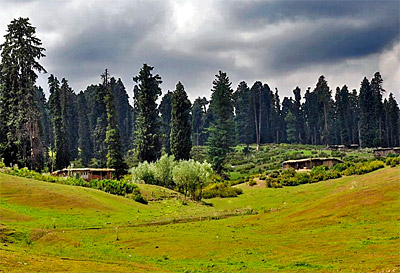
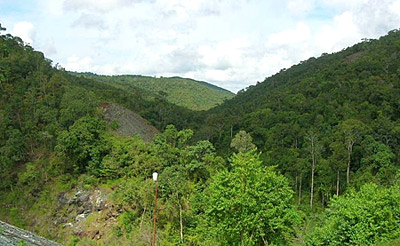
Satyr tragopan resides in moist oak and rhododendron forests with dense undergrowth and bamboo clumps. They range from 8,000 to 14,000 feet in summer and 6,000 feet in winter. The male crimson horned pheasant is about 70 cm long.
Breeding of Satyr tragopan
When it is mating season, the male Satyr tragopans grow blue horns and a gular wattle. When ready to display, Satyr tragopans inflate their horns and hide behind a rock, waiting for females to pass by. When one does, they will perform an elaborate and attractive display in front of the females. At the end of the display, the male will stretch to his full height and show off all of his ornaments.
Genders of Satyr tragopan
The females are brown. Males are usually red with blue, black, and white spots and freckles. Although the least threatened of the tragopans, satyr tragopans still face many threats. The species is thought to have a moderately small population that is subjected to hunting and habitat loss throughout most of its range.
Climatic Suitability of Satyr tragopan
Satyr tragopans are resident in moist oak and rhododendron forest with dense undergrowth and bamboo clumps, mixed forest, scrub and densely vegetated ravines, usually between 2,200meters and 4,250 metres in the breeding season, sometimes moving down to 1,800 m in winter.