
The thirty-sixth yogic sutra speaks about the state of samyama, when a yogi is successful to distinguish between the refined intelligence and the soul. Though intelligence is liberated from egoism, it serves the own function of the self and nature. The pure light of the soul brings in the discriminative power, otherwise a yogi is bound to become enmeshed in worldly affairs. The soul is always unchangeable, and it is the capability of a yogi to differentiate between its pristine light and the illuminative intelligence. This leads one to seclusion from materialistic senses, and finally to the threshold of release.
sattva intelligence, one of the three gunas, certain, real, true
Purusayoh of the soul
otyanta absolute, extreme
asamkirnayoh distinct from each other, unmingled
pratyayah awareness
avisesah not distinct
bhogah experience
Pararthatvat apart from another
svartha one`s own, self-interest
samyamat by constraint, control
purusa jnanam knowledge of the soul
By samyama, the yogi easily differentiates between the intelligence and the soul, which is real and true.
Since it serves the purposes of the Self and nature, pure intelligence and the seer appear to be one, but they are quite dissimilar from each other. By samyama on that which exists for itself, comes knowledge of the soul.
The refined, illuminative intelligence (sattva buddhi) is free from egoism. It is quite dissimilar from the light of the soul. Samyama on one`s own self brings to light the difference between intelligence and self and coronates the yogi with the knowledge of the soul. This sutra, by the use of the word svartha for the seer and parartha for the intelligence, clearly illustrates the difference between the two. Failure to differentiate between them leads to entanglement in worldly pleasures. Knowing the distinction enables one to enter the gates of the soul.
Though the refined illuminative intelligence is the summit of nature, it is subject to diverse experiences. The soul being immutable, its light is constant, steady and unalterable. To the sadhaka, the intellect appears to be purusa. By samyama, the yogi has to disentangle the knot that binds the intellect and the self, and isolate the refined intelligence. From this follows isolation of the senses, mind and ego, and ultimately the release of the light of the soul.
People rightly admire such men as Albert Einstein, Ramanuja, Arnold Toynbee, Sakuntala Devi and C. G. Jung. Their looming intellects, directed to the service of humanity, inspire one and all. Nonetheless, their spirituality was that of the refined illuminative intelligence belonging to human nature, and not that of the luminescent immutable purusa. (1.3; 11.18, 20; in.35 and iv.34.)
Sattva purusayoh atyantasamkirnayoh pratyaya avisesak bhogah pararthatvat
This is the thirty-sixth yogic sutra, which has been incorporated within the third phase of the Patanjali Yoga Sutras.
Recently updated articles in Yoga
Khanda Manda Yoga
Khanda Manda Yoga is a difficult form of yoga where the Yogi cuts off his own arms and legs with a sharp cleaver, that is axe-like knife, and throws t...
Kaivalya Pada
Kaivalya Pada, the fourth chapter of Patanjali Yoga Sutra denotes an absolute, indivisible state of existence of the Yogi. The Kaivalya Pada is someti...
Vibhuti Pada
Vibhuti is the Sanskrit term for “power” or “manifestation.” In this third chapter, Patanjali introduces the final three limbs of Aṣṭanga Yoga, collec...

Sadhana Pada
Sadhana Pada in Patanjali Yoga Sutra denotes the idea of practicing yoga that leads to spiritual illumination. Sadhana, the Sanskrit term for “practic...
Samadhi Pada
Samadhi Pada is the first chapter of Patanjali Yoga Sutra. In this chapter, the author explains the essence of yoga, the nature of samadhi, and the me...
Related articles in Yoga
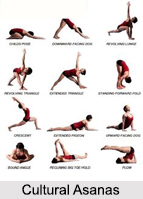
Cultural Asanas
Cultural Asanas refer to the daily physical exercise postures that train the body and mind in Yoga Practice.
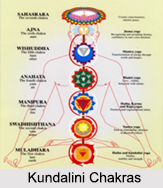
Kundalini Chakras
Kundalini Chakras are psychic energy centres or vortices, which connect between our psychic and physical energy systems.
Patanjali Yoga Sutras
Patanjali’s Yoga Sutras presents a foundational guide to the philosophy and practice of yoga. Through concise aphorisms, it outlines the nature of the...
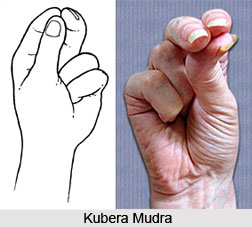
Kubera Mudra
Kubera Mudra, a form of Hatha Yoga, leads to the elevation of mental peace and physical relief by proper practice and cleanses frontal sinuses.