 Kalpavriksha and Chaityavriksha scriptures mention that worshipping trees have been an ancient Indian practice. Considering trees as sacred entities, dates back to the era of the Aryans who worshiped nature. Plants and trees are associated with several Indian rituals and tree worshiping continues to be an aspect of modern Indian traditions.
The Hindus, Buddhists and Jains worship the Ashoka Tree, which is one of the most legendary and sacred trees of India. Myth says that Lord Buddha was born under this tree in Lumbini. The Hindus worship this tree since it is dedicated to "Kama Deva" (God of Love). On the other hand the banyan tree symbolizes the Trimurti- Lord Vishnu, Lord Shiva and Lord Brahma. Depicting life and fertility in many Hindu cultures, this tree is worshiped by the childless. Banyan tree is usually never cut, thus it grows covering several hectares.
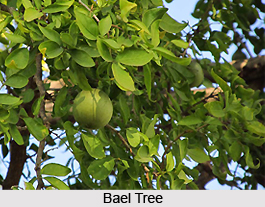
Bael tree is considered to be sacred, too, because its alliance with Lord Shiva, who is pleased by Bael leaf offerings. The trifoliate leaf or tripatra of the bael tree is believed to symbolize the three functions of the Almighty - the creation, preservation and destruction. The Peepul Tree or "Ashvattha" symbolises Lord Vishnu. Lord Buddha is believed to have attained enlightenment under the peepul tree; hence it is also called the Bodhi tree or "tree of enlightenment".
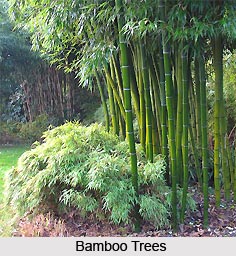
Bamboo tree is also a sacred tree for its association with Lord Krishna - Venugopal; since his Bansuri is actually made of bamboo. Although banana is not a tree, but it is known as a sacred tree since its fruits are offered to Lord Vishnu and goddess Lakshmi. Worshipping banana tree with flowers brings welfare to the devotee`s family. Banana leaves are also used during several Hindu religious festivals.
The Bhang Tree is considered an auspicious tree as it brings wealth and prosperity. The leaves and flowers of this plant are deemed to be the "prasad" for Mahashivratri. Tulsi plant is always associated with purity, revered by the Hindus and is most loved by Lord Vishnu and Vrinda Devi.
The coconut tree is known as "Kalpa vriksha" in Sanskrit and enjoys special importance in most Hindu households. The coconut is used for all religious purposes and also for main "sthapana" of any pooja, the fruit is believed to represent Lord Shiva and the three black marks on the coconut shell depicts his eyes. Signifying love and fertility, the leaf of the Mango tree is used for religious and social ceremonies.
The Neem tree is also manifested as "Goddess Durga" or "Maa Kali". Sandalwood tree or Chandan is considered sacred as it is related to Goddess Parvati created Lord Ganesha out of sandalwood paste that she used for her bath and later breathed life into the figure. Sandalwood pastes are widely used while worshipping the Indian gods and goddesses.
The sacred plants of India are actually worshipped throughout the nation owing only to its mythological significance.