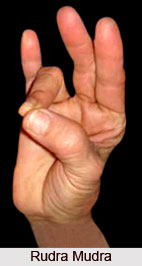
 Rudra Mudra is the ruler of the solar plexus chakra. In addition to that the mudra of Rudra is a good antidote for weakness. It should be practised with both hands for about five minutes three to six times a day. According to the Five Element Theory, the centering force is associated with the earth element. This Mudra strengthens the earth element and its organs in the body. It is believed that the chi or the Chinese term for elemental energy suffers a distinct decrease because of weakened earth energy; there will also be a diminished supply to the head area as a result. Consequently, the person feels restless, heavy, weighed down, or even dizzy. Rudra Mudra can relieve a state of weakness or even completely eliminated the problem.
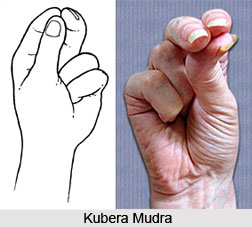
While practicing Rudra Mudra, place the tips of thumb index finger, and ring finger together. Extend the other two fingers in a relaxed way. It can be done with each hand. Rudra Mudra can be used as needed, or three to six times a day, for five minutes. Rudra Mudra can be interesting to practise. The process involves imagination of sitting at the center of a wheel, close to the hub. The wheel can turn as much as it wants, but this has no effect on the person. However, when one leaves the centre and sit on one of the spokes or at the edge, one must use all of one`s strength to avoid losing stability. This applies to all situations in life. When we are not centered this implies when we are "beside" ourselves, this creates all types of tense states. One individual may have tension in the stomach; another person has tension in the neck, back, pelvis, or chest, which rules the energy of the stomach, spleen, and pancreas.
Benefits of Rudra Mudra
•Cures heart complaints and dizziness
•Helps improving the descent of interior organs, or general states of exhaustion.