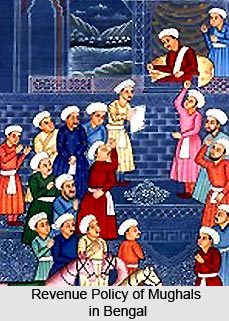
 Revenue policy of Mughals in Bengal produced the surplus that sustained the Nawabs. The Mughal revenue system existed in pre 1765 Bengal. The captains, troopers of Nawabs together with the great hierarchy of those holding revenue rights, rested on extracting the produce of the land from the cultivators. In order to provide revenue the cultivator of the land had to surrender a proportion of the value of his crop. Those responsible for collecting revenue from him measured the amount of land and determined what crops he was growing.
Thereafter the cultivator was assessed at an established rate for each bigah according to the crop grown. Cash crops were assessed at a higher rate than grain. Payments were made in cash and crops were sometimes physically divided. It was relatively simple system. By the mid eighteenth century it was mysterious to the highest degree. Practice varied. The rule of Assessments changed. The rates were based on the holding of the ryot. They were based on historic standard to which numerous additions were made and extra surcharges were added. It was known as abwabs. Ryots were charged according to the supposed quality of the land, quality of the person involved.
The rich paid less than the poor. Those cultivators who lived for a long time in the village had different rates. The rates for the migratory and non-resident cultivators were different as they had no right to security of tenure. The zamindars acted as middlemen between the ryots and the government. The land belonged to the state and not to the zamindar.
The rate fixation of the ryots and the amount to be paid by the zamindars to the government exchequer posed major problem. Zamindars were represented by diwan. The diwan and his staff charged accordingly keeping in view the loss of crops due to weather condition, the land erosion caused by flood and change of river course, change of agricultural lands to uncultivated lands and so on. The Mughal revenue system collected as much revenue as possible and simultaneously kept the ryots happy so that they might prosper and bring more land under cultivation.
Under Mughal rule the revenue demand varied between one-half and one-quarter of the crop. The revenue system as executed by the late Nawabs ensured a reasonable income as well as left a large margin in the hands of the revenue agents. It became part of the implied compact on which the rule of the Nawabs rested. Merchants and bankers were also involved in this. The Nawabs regarded shroffs and merchants as their immediate support. Their purchases made the peasants to pay their taxes in cash. They encouraged the spread of cash crops in order to levy higher rates of tax. Throughout the year the government received revenue payments in instalments.