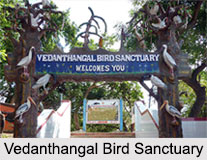
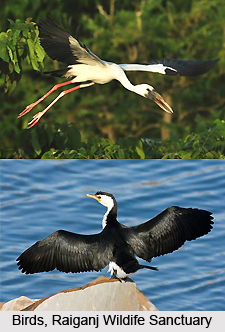
 Raiganj Wildlife Sanctuary is also recognised as the `Kulik Bird Sanctuary` and is located close to Raiganj in Uttar Dinajpur District, West Bengal. It is based at a distance of 4 kms away from the northern portion of the Raiganj town and boasts of 164 species of birds as well as about 70, 000 species of migratory birds who arrive in the sanctuary every year. Though it is believed to be the second biggest bird sanctuary in the entire continent of Asia, others are of the view that Harike Pattan Wildlife Sanctuary deserves that rank. Raiganj Wildlife Sanctuary is shaped like the English alphabet `U`. A network of man-made canals has been linked to Kulik River, and therefore during the monsoons, the water of this river enters the sanctuary which enables the birds to enjoy their foods, particularly the Asian Openbill which feeds generously on Apple Snail.
Migratory birds approach the zoo every year during the month of June including birds like Drongo, Night Heron, Egret, Cormorant, Stork, Owl, Woodpecker, Kingfisher, Flycatcher, Kite and so on.
History of Raiganj Wildlife Sanctuary
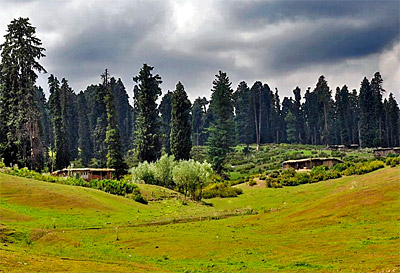
During the year 1970, the initial phase of development in this sanctuary commenced as portion of the development project of the Government of West Bengal. Eucalyptus, Jarul, Kadam and Sisoo trees were planted in the sanctuary which were under the category of `tropical dry deciduous trees`. Finally it was accorded the title of a `Wildlife Sanctuary` in 1985 with the arrival of the several species of migratory birds including the Asian Openbill during the breeding season. Since the Kulik River flows near this sanctuary, this sanctuary is also often known as the `Kulil Bird Sanctuary`.
Heronry of Raiganj Wildlife Sanctuary
Raiganj Wildlife Sanctuary is a very significant heronry of the country as it shelters the breeding Asian Openbills and studies have revealed that this sanctuary is home to about 30 to 40 percent of the approximate population of Asian Openbills residing in South Asia. It is said to be a globally important heronry. The heronry includes Pond Heron, Little Cormorant, Asian Openbill, Little Egret and Night Heron. The heronry forms during the period between July and December.