
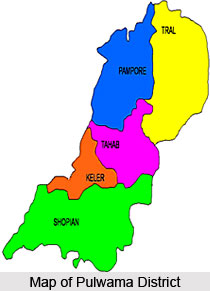
 Pulwama District is considered as one of the pretty spots on the earth, because of its congenial climate, innumerable springs, streams, water falls, fragrant flowers delicious fruits and other natural sceneries. Pulwama District is one of the administrative districts of Jammu and Kashmir with its headquarters located at Pulwama. Pulwama District also is famous all over the world for saffron cultivation which is mainly grown in the Karewa lands of Pampore, Kakapora and Pulwama blocks. The district is also called `Rice Bowl` of Kashmir for maximum production of rice grains in the state. Pulwama District is spread over an area of 1398 sq kms.
Pulwama District
Pulwama District is centrally located in the valley of Kashmir and is a resting place for adventure lovers since it is full of clean water streams, lakes, magnificent trees and mighty mountains.
Introduction
Pulwama District is considered as one of the pretty spots on the earth, because of its congenial climate, innumerable springs, streams, water falls, fragrant flowers delicious fruits and other natural sceneries. Pulwama District is one of the administrative districts of Jammu and Kashmir with its headquarters located at Pulwama. Pulwama District also is famous all over the world for saffron cultivation which is mainly grown in the Karewa lands of Pampore, Kakapora and Pulwama blocks. The district is also called `Rice Bowl` of Kashmir for maximum production of rice grains in the state. Pulwama District is spread over an area of 1398 sq kms.History of Pulwama District
Pulwama District came into being in the year 1979 in the larger interests of maintenance of law and order, closer supervision, more effective control and above all to ensure balanced development of the area. Pulwama district comprised of 550 villages, which were grouped in 5 Tehsils namely Shopian, Pulwama, Tral, Pampore and Awantipora. Further, the district has been bifurcated in two parts namely Shopian District and District Pulwama.
Demography of Pulwama District
As per 2001 census, Pulwama District has a population of 4.42 lakhs. The total literacy rate of the district is around 49.60 percent; out of which male literacy rate is nearly 60.70 percent and 37.70 percent is the female literacy rate.
Administration of Pulwama District
In Pulwama District there are four tehsils, namely, Pulwama, Tral, Awantipora and Pampore. The total number of villages in the district is 319 with four Community Development Blocks and part of Keller block. The reporting area of this district has been reduced to 0.67 lakhs hectares from 0.98 lakhs hectares after creation of the new Hill District, Shopian. The Deputy Commissioner heads the administration of this district as the Controlling Officer. The Deputy Commissioner also acts as the district Development Commissioner for the development purposes. The Deputy Commissioner also acts as District Magistrate in matters associated with law and order related matters. Pulwama District is administratively divided into four Tehsils namely Pulwama, Pampore, Awantipora and Tral headed by the Tehsildars respectively. Pulwama district has 236 Panchayats and 554 Villages out of which 18 villages are uninhabited. The district further has been grouped into four community block and these are Pulwama, Kakapora, Tral and Pampore for development purposes. There are 131 patwar halqas and 236 delimited Panchayats.
Economy of Pulwama District
Agriculture plays an important role in the economy of Pulwama District. Agriculture products like paddy, oilseeds, fodder and saffron are the main contributors to the Gross Domestic Product (GDP) of Pulwama District. Area sown more than once is about 0.26 lakh hectares and the productivity of the land in the district is higher than in any other district in the state. District Pulwama is famous for saffron cultivation which is mainly grown in Karewa lands of Pampore, Kakapora and Pulwama blocks. This district has the distinction of having the State`s largest Cement Plant at Khrew. Since the infrastructure set-up of the district is not properly developed, measures are being taken for the development of various sectors of basic amenities namely Transportation, Public Health, Education, Power Development, Medical facilities, Roads etc.
Temples in Pulwama
 Truly blessed with virgin greens, Pulwama is a considerable place of archaeological magnitude, the proof lying in the temple architectures scattered around the whole district. There are a number of temples in Pulwama that further enhance the spiritual significance of the place. The district is famous for Archeological monuments especially those left by Raja Avantivarman and Lalta Ditya religious shrines like that of "Khan-Kahi Faiz Panah of Shah Hamdan" at Tral and "Temple of Jwala Mukhi" at Khrew.
Avantishwar Temple :
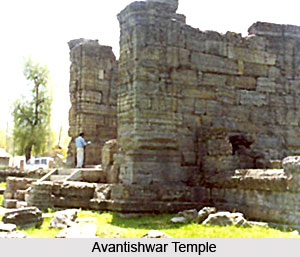
 Dedicated to the 2 commanding Gods of the Hindu Trinity, Lord Vishnu and Lord Shiva, "Avantishwar Temple" was built in the 9th century. The temple is effectively distributed with exuberant carvings and graceful sculptures which is a masterly symphony of architecture and art. The layout of the original complex consists of a temple erected in the central part of a spacious oblong courtyard. There are 4 smaller shrines at the 4 corners of the central shrine, a roof with an array of cells ranged around the courtyard and an imposing gateway. In front of the staircase of the central shrine was a pillared mandapa with open sides, containing a "Garudadwaja". During the medieval times, these temples witnessed mass destruction and were reduced to ruins.
Narastan Temple : With no ceiling to support the structure, the "Narastan Temple" is far removed from any other Kashmiri temples, uniqueness visible on every carving in the interior and exterior.
Gurudwara Shahji Marag : "Gurudwara Shahji Marag" was built to immortalise the visit of Guru Hargobind Singh, who had lent discourses on this place to his disciples.
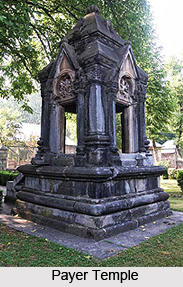
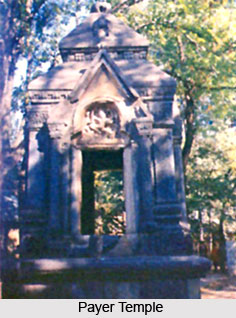
Payer Temple : "Payer Temple" is one of the most popular religious attractions of Pulwama and is situated 3 km south of Pulwama District. This temple is named after the Payer Village, where it is located. This temple is also called the "Payech Temple" by several travellers. The architecture of this temple is said that it has been carved out of a monolith stone which dates back to the 10th century.
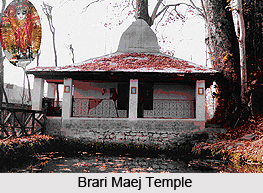
Brari Maej Temple : "Brari Maej Temple" is situated in the North West of the village in Mohalla Brarimaejpur. The word Brari has developed from "Bhattarika" meaning the venerated Mother. Brari Maej is synonymous to "Divine Mother Uma". This temple came into existence when the Bhat dynasty migrated from village Sumbal to this village in 1775. This is a beautiful temple surrounded by mighty chinars all around with a big and beautiful spring having crystal clear water having a diameter of about 15 m. The temple is facing towards the east of the upper bank of the spring. Adjacent to the Brari Maej Temple is a Shivalaya dedicated to Lord Shiva.
Tourism in Pulwama District
Tourism in Pulwama District is considered as one of the best enriching experiences as it offers visiting several historical monuments and religious places. Apart from visiting these sites there are various beautiful lakes and waterfalls in Pulwama District, which are worth seeing. Some of the major tourist attractions in Pulwama District are mentioned below -
Pilgrimage Tourism in Pulwama District :
Avantishwar Temple: Avwantishwar temple at Jawbrari at Awantipora is one of the significant monuments present in Pulwama District. The temple was built by Raja Awanti Varma in the 9th Century A.D when he chose it as his capital. The temple is dedicated to Lord Vishnu and Lord Shiva as is clearly seen from the idol.
Payar Temple: Payer temple is situated at about 3 kms in the south of Pulwama district. The temple is known after the village, Payer, where it is located.
Asar Sharief Pinjoora: The shrine is the most revered religious place in the district situated 12 kms from Pulwama town. The shrine houses the holy relic of Prophet Mohammed which is displayed on special occasions associated with the life of the Prophet.
Shrine of Shah Hamdan: Situated in Tral town, the shrine is believed to have been built by Syed Ali Hamdani. People in large numbers throng the shrine on annual festival associated with the saint.
Jama Masjid: The mosque is said to have been built during the Mughal period. The other important holy shrines are situated at Awantipora and Pampore. The shrines of Syed Hussan Mantaqui, Mir Mohammed Hamdani and Namat Ullah Shog Baba Sahab are located in these towns.
 Shrine of Syed Hassan Mantaqui: The shrine is situated near Awantipora and is considered a very sacred place.
Nature Tourism in Pulwama District :
Aharbal Waterfall: 35 kms from Shopian Aharbal is famous for an impressive water fall formed by Vishav River. The fall has a height of 24.4 metres. The water fall is bewitchingly beautiful surrounded by Fir forests at the scenic spot.
Kungwattan: A charming and enchanting meadow, which is eight kms away from Aharbal.
Nagberan: Situated about 2 kms from the town of Tral. Nagberan is place of scenic beauty visited by the lovers of nature.
Shikargah: It is another attractive tourist spot situated at about 3 kms from Tral.
Hurpora: About 12 kms from Shopian, commands a beautiful scenic view. The place is situated on the historical Mughal road and is accessible by car or a bus.
Tarsar and Marsar: There are two legendry lakes in the District, Tarsar and Marsar Situated in the high mountains about 3 kms and 5 kms, from Nagberan.
All the tourist spots of Pulwama District are worth exploring and they draw the attention of a large number of tourists every year.
Recently updated articles in States of India
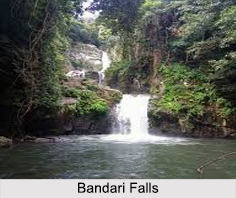
Bandare Waterfalls, Meghalaya
Bandare Waterfalls in South Garo Hills, Meghalaya, is a secluded natural attraction surrounded by dense subtropical forests and rugged mountain terrai...
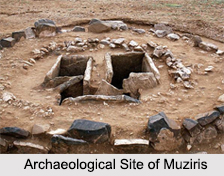
History of Thissur District
Early History of Thissur District explains flourishing of the port cities. Now these port cities are transformed into archaeological sites.
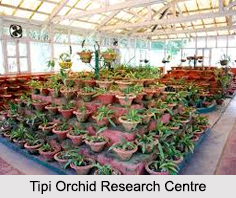
Tippi Orchid Research Centre, Arunachal Pradesh
Tippi Orchid Research Centre in Arunachal Pradesh is renowned for its rich collection of exotic and endangered orchids. Surrounded by lush rainforest...
Tourism in Nashik District
Pilgrimage tourism in Nashik district involves visiting the various places of Hindu and Jain worship located here. Some of the holiest sites for Hind...
Mangadu, Kerala
Mangadu in Kerala’s Kollam district is a significant megalithic site known for its urn burials, cist burials, menhirs, and stone circles. Excavations...
Related articles in States of India
East Indian States
East Indian States comprises of Bihar, Jharkhand, West Bengal, Odisha and also the Union Territory of Andaman and Nicobar Islands. It defines the cult...
Purnia District in Bihar
Purnia District is located in Bihar and extends from River Ganga to Nepal. The district has a rich Hindu history and glorious past.
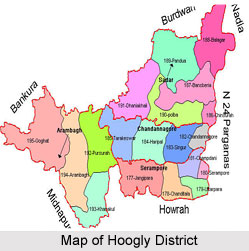
Hooghly district
Hooghly District along the bank of the river Hooghly is one of the principal trading ports of West Bengal.
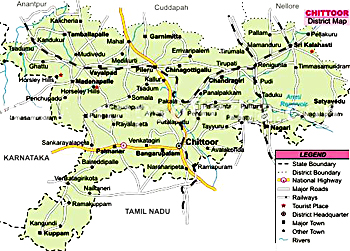
Geography Of Chittoor District
Geography of Chittoor district is spread along the topography of the land which is divided into two natural divisions; Chittoor has a dry and healthy...
Districts of West Bihar
Districts of West Bihar is comprised of medieval monuments that were built by the different governors of Mughal era.