 The Pulindas were a people belonging to the aboriginal stock, and have often been classed with such non-Aryan tribes as the Sabaras, Abhiras, Pulkusas, etc. They are usually definitely stated to be a southern tribe, but there seems to have been a northern branch of the Pulindas as well. The association of the Pulindas with the Andhras and Savaras, as also with the Pundras and Mutibas, is as old as the Aitareya Brahmana where it is stated that the elder sons of Vishwamitra were cursed to become progenitors of such races as the Andhras, Pundras, Savaras, Pulindas and Mutibas.
The Mahabharata has placed the Pulindas in the Daksinapatha or in the Deccan along with the Andhras, Guhas, Savaras and Madrakas. The Matsya Purana and Vayu Puranas have also described them as Daksindpatha-vasinah or those dwelling in the Deccan, along with the Vaidarbhas, Dandakas, Vindhyas and others. The Markandeya Purana has also placed the Pulindas in the Deccan, and classes them with the Pundrakas, Keralas, Kalingas, Abhiras, Andhras, Vidarbhas and Kuntalas. Some other Pauranic account on the other hand has associated them with the Kiratas, Hunas, Andhras, Pulkusas, Abhiras, Suhmas, Yavanas and Khasas, all of whom had sought the protection of Lord Krishna.
In the Bengali recension of the Ramayana the Pulindas has appeared both in the south and in the north. The northern recension knows only of the northern Pulindas. The Vishnu Purana on the other hand has associated the Pulindakas with the Sindhus: the two peoples are coupled in a compound-Sindhu-Pulindakas-and are mentioned together with, the Karusas, Bhojas, Dasarnas, Mekalas, Utkalas and other tribes. The compound Sindhu-Pulindaka has also occured in the Mahabharata and Padma Purana. The Pulindas have been alluded to in the Raghuvamia as well but there is hardly any clue to their geographical location.
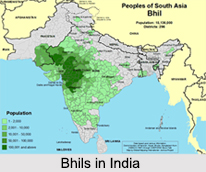
The capital of the southern Pulindas was Pulindanagara which lay to the south-east of Dasarna, i.e. in the Vidisa or Bhilsa region, and may have been identical with Rupnath. At the time of Ashoka, the Pulindas, together with the Andhras, Bhojas and Rastrikas had formed a group of vassal tribes within the Emperor`s dominions, which had extended as far south as the Pennar River in the Nellore District. Some of the early historians have located the Pulindas in and around Gujarat near the Gulf of Kutch.