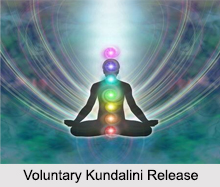
Preparation for Voluntary Kundalini Release
Voluntary Kundalini release is not trouble-free and demands immense patience and firmness to reach the goal.

Share this Article:

Preparation for Voluntary Kundalini ReleaseIt is probable to accomplish several lifetimes of growth during one life by safely liberating, absorbing and using more Kundalini. Proper release however requires time, endurance and determination.

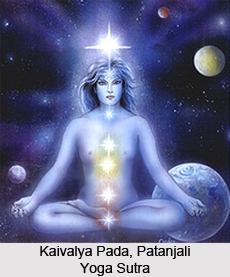
Once release starts, there is no turning back. It will continue on its own. Kundalini release is a progression with its own intellect and goal, amalgamating with the sacred at the crown chakra- the dance of shakti and shiva.

The more organised one`s system is, the easier the release and faster the energies are incorporated to amplify all levels of capability. Many people feel called to enter into this life but not all have competent teachers to steer them. Many people work with Kundalini with only a vague familiarity of it. Most of the references are Eastern- they are not always simply understood and are aimed for those who have devoted their lives to spiritual growth. In the West one normally does not have the time (if it were even possible) to separate themselves from life and focus on staying in the world and bringing the unearthly into it.

Many have been brought in into chakra work without introduction to the nadis, glands and the entire system. If chakra work is all one does, it is like hopelessly centring on the wheels of a vehicle. It maybe important, but one should also think about the rest of it.

Caring for the physical body before, during and after Kundalini raising is very crucial; it is the living machine through which one verbalises and accepts. One attains elevated states of evolution only as the body tolerates; when the body refuses, one feels encased or trapped in it. Instead of getting away from the body, it is necessary to learn to bring it along. A metamorphosed body feels great confidence, self-determination and joy.
Share this Article:

Related Articles

More Articles in Yoga


Meditative Asanas
Meditative Asanas are essentially designed to aid one’s meditation and concentration, and formed the basis for several other Asanas in creating a complete physical culture.
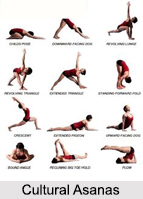
Cultural Asanas
Cultural Asanas refer to the daily physical exercise postures that train the body and mind in Yoga Practice.
Soma Chakra
Soma Chakra is a minor chakra in the seventh chakra which is located above the third eye, in the centre of the forehead.
Jihva-Bandha
Jihva Bandha is one of the cultural asanas that improves the nervous and circulatory system. It means tongue-lock which strengthens the muscles of the neck and the cervical nerves.
Nauli Kriya
Nauli Kriya is a cultural asana where the Yogi rotates the abdomen speedily like a rotating whirlpool.
Tantra Kundalini
The Kundalini Tantra is the awakening of the vital force according to the Kundalini.
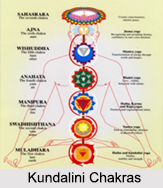
Kundalini Chakras
Kundalini Chakras are psychic energy centres or vortices, which connect between our psychic and physical energy systems.
Tadasana Yoga Asana
Tadasana, or the Mountain Pose is a standing Yoga posture with feet together and hands at the sides of the body, and improves one`s height and flexibility.
Asanas in Sitting Position
Asanas in Sitting Position help in aligning the spine and develop a sense of stability required for practice of pranayama and meditation.
Types of Yoga
Types of Yoga benefits the practitioner mentally, physically and spiritually. However, speculating the right Yoga as per the need of an individual is very important.
Siddhasana Yoga Asana
Siddhasana is one of the most well known meditative postures, and is termed ‘the chief of all Asanas’ in the Hatha Yoga Pradipika.
Asanas in Standing Pose
Asanas in Standing Pose are generally held for shorter times than other poses, and tend to be more energetically uplifting and opening.
Patanjali Yoga Sutras
Patanjali’s Yoga Sutras presents a foundational guide to the philosophy and practice of yoga. Through concise aphorisms, it outlines the nature of the mind, the eightfold path of discipline, and the means to attain inner stillness. Its teachings continue to inspire modern yoga, meditation, and spiritual exploration.
Vakrasana - Yoga Asana
Vakrasana is a simplified form of the Ardha Matsyendrasana, an asana named after Matsyendranath, the founder of Hatha Yoga. It stretches the thigh and tones the abdomen.
Types of Yoga Asanas
Types of Yoga Asanas are stated on varied bases like postures, methods and objectives. The practice of yoga asanas provides a wide range of mental and physical benefits.
Impact of Yoga on Excretory System
Impact of Yoga on excretory system is indefinable as it not only helps the particular system but the body.
Yoga Asanas
Yoga Asanas are comfortable and peaceful postures that make the physical body ready for the higher and more spiritual levels of Yoga practice.
Surabhi Mudra
Surabhi Mudra is a powerful and effective mudra that helps in breaking barriers and achieving ultimate meditation.
Yoga - Discipline for Complete Health
Yoga is the traditional physical and mental disciplines in India that aims to keep body and mind fit.
Kubera Mudra
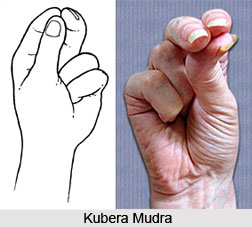
Kubera Mudra, a form of Hatha Yoga, leads to the elevation of mental peace and physical relief by proper practice and cleanses frontal sinuses.
Asanas in Lying Position
Asanas in lying position are known as Supine pose which are helpful to relax the body as well as to strengthen the muscles.