
The fourteenth yoga sutra speaks about the alteration of time when it is united by the three elements - sattva, rajas and tamas. However its essential nature does not change and there exists a harmonious mutation. It depends on an individual, who perceives it differently, accompanied by his gunas of character. A true yogi who recognises the nature of this mutaiton, stays away from this. His knowledge in unbound by time and the seer is always unchangeable. This sutra helps a yogi to envision and perceive clearly the way in which he thinks about his accumulated desires and impressions. It makes one understand that truth is One, and it is eternally without differences and oscillations.
parinama change, alteration, modification, transformation,
expansion
ekatvat due to oneness, on account of unity
vastu object, thing, nature
lattvatn essence, real, abiding substance, essential property
Unity in the mutation of time caused by the abiding qualities of nature, sattva, rajas and tamas causes modifications in objects, but their unique essence, or reality, does not change.
As there is a harmonious alteration between sattva, rajas and tamas (prakasa, kriya and sthiti), both in nature and in the individual self, so there are differences in the way one perceives objects. According to the predominating gunas in one`s intelligence, an object is perceived differently, although its essence remains the same.
The yogi penetrates the harmonious combination of nature with its gunas, clearly understands their mutations, and stays detached from them. This study helps him to remain in the essence of his object of contemplation, which is not bound by time or qualities of nature. This object is the unchangeable seer, or the soul. The seer is not bound by time, whereas mind is.
This sutra is a good guide for every yoga practitioner. In one`s practice of oiasana and pranayama, one is the subject, the performer. The different asanas and pranayamas are the objects which one tries to perceive and conceive clearly, so as to understand their principles and essence. Due to one`s accumulated desires and impressions, one`s ways of thinking, seeing and feeling change. If one learns to observe carefully, and memorise the basic principles of every posture and every breathing practice, one will be able to grasp their true essence.
Truth is One, and one must experience it in its real essence, without distinctions. If it seems to fluctuate, that is because one`s intelligence and perception fluctuates, and this prevents one from seeing the essential truth. If intelligence and consciousness are filtered and refined, both subject and object retain and reflect their real essence.
When Patanjali says that dualities disappear when asanas are performed perfectly (11.48), he is explaining that the essence of an object does not vary - subject and object merge into one, so distinctions between them do not arise. Similarly in prdnayama, the veil that covers the intelligence is lifted, and subject and object reveal their true essence. This conclusion applies equally to the essence of all other objects.
Parinama ekatvdt vaslutattvam
This is the fourteenth yogic sutra, which is incorporated in the fourth phase of the Patanjali Yoga Sutras.
Recently updated articles in Yoga
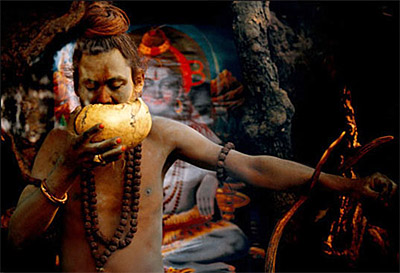
Khanda Manda Yoga
Khanda Manda Yoga is a difficult form of yoga where the Yogi cuts off his own arms and legs with a sharp cleaver, that is axe-like knife, and throws t...
Kaivalya Pada
Kaivalya Pada, the fourth chapter of Patanjali Yoga Sutra denotes an absolute, indivisible state of existence of the Yogi. The Kaivalya Pada is someti...
Vibhuti Pada
Vibhuti is the Sanskrit term for “power” or “manifestation.” In this third chapter, Patanjali introduces the final three limbs of Aṣṭanga Yoga, collec...
Sadhana Pada
Sadhana Pada in Patanjali Yoga Sutra denotes the idea of practicing yoga that leads to spiritual illumination. Sadhana, the Sanskrit term for “practic...
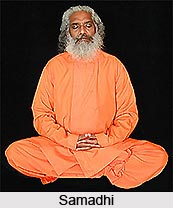
Samadhi Pada
Samadhi Pada is the first chapter of Patanjali Yoga Sutra. In this chapter, the author explains the essence of yoga, the nature of samadhi, and the me...
Related articles in Yoga
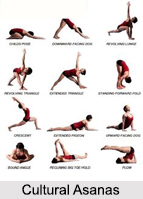
Cultural Asanas
Cultural Asanas refer to the daily physical exercise postures that train the body and mind in Yoga Practice.
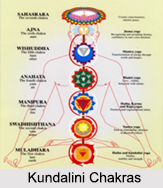
Kundalini Chakras
Kundalini Chakras are psychic energy centres or vortices, which connect between our psychic and physical energy systems.
Patanjali Yoga Sutras
Patanjali’s Yoga Sutras presents a foundational guide to the philosophy and practice of yoga. Through concise aphorisms, it outlines the nature of the...
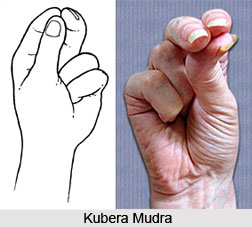
Kubera Mudra
Kubera Mudra, a form of Hatha Yoga, leads to the elevation of mental peace and physical relief by proper practice and cleanses frontal sinuses.