
Major changes in the organisation, style, and subject matter of Swang took place by the end of the nineteenth century. The popular theatrical activity that had been diffused over a fairly expansive area converged on the town of Hathras, where the most visible changes occurred. Hathras is in the Aligarh district in Indian state of Uttar Pradesh. Situated in proximity to both the Vaishnava pilgrimage sites in Mathura district and the former capital of Mughal Empire at Agra, Hathras became an important independent Jat kingdom under the chieftain Dayaram in the early nineteenth century.
The area around Hathras was renowned for its unusually rich commercial agriculture, with cash crops of indigo and cotton providing the base for a prosperous economy. It continued to flourish even after the British seizure of Dayaram`s kingdom in 1817 and the Revolt of 1857. The town had a large population of money lenders (sahukars); together with the wealthy agriculturists they formed a sizable patron class to the service groups, including artisans and performers. Affluent individuals like Hanna Singh Dalai are said to have squandered fortunes on the maintenance of Swang members, construction of their houses and stage facilities, and expenses of special events. As a railway junction later in the century Hathras continued to thrive, a commercial centre in a predominantly agricultural region. The constant flow of travellers to festivals and fairs ensured a ready audience for the folk theatre.
The organizational basis of Swang acquired greater structure and visibility with the development of the Akhara system in Hathras. The Akhara (wrestling-ground or arena) was already associated with teams and lineages of folk poets of Iavani and khyal. The first and foremost of the Hathras Swang Akharas was founded by a poet named Indarman, who immigrated from Jahangirabad in Bulandshahr district sometime in the 1880s. A Chhipi (from the artisan caste that prints cloth), he was prevailed upon by his fellows in Hathras to visit and initiate them into the art of poetic improvisation for which he was well known. As a devotee of the goddess, Indarman enjoyed the reputation of a seer and, although he himself was illiterate, exerted a spiritual leadership among his followers. The most prominent of these were Govind Ram and Chiranjilal, both Chhipis and prolific poets in their own right. Under their leadership, the Indarman Akhara began exhibiting Swangs in Hathras, probably in the 1880s.
Although it is said that Indarman only dictated verses to his disciples and authored no Swang himself, a text has come to light in the London collections that is almost certainly a composition of Indarman - but whether he was the Indarman of Jahangirabad and Hathras we cannot be sure. The work, Khyal puran mat ka (1892), is not a Rajasthani khyal but a Khari Boli Sangit in the style that soon became the standard for the Sangits of Hathras. One of the first to be printed using machine-made type, it was published in Kolkata by Ganesh Prasad Sharma.
Natharam and the Indarman Akhara of Hathras
Natharam and the Indarman Akhara of Hathras have been very active and over the years contributed to the promotion of the folk theatre in North India.
Recently updated articles in Indian Dances
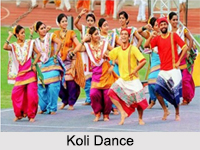
Koli Dance
A folk-dance form of Maharashtra, the Koli dance is mainly performance by the Koli community of the region. Known for their primary profession of fish...
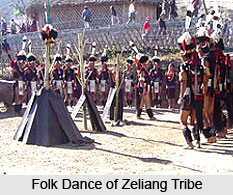
Folk Dances of Nagaland
Folk Dances of Nagaland reflects the naga tradition and culture of the local habitants. In most of the cases, naga dances are monopoly of men with som...
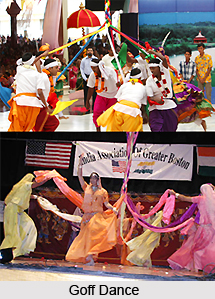
Goff Dance
Goff dance of Goa is performed during the Shigmo festival in the month of Phalgun in Hindu calendar. Goan peasants mainly practice this dance after th...
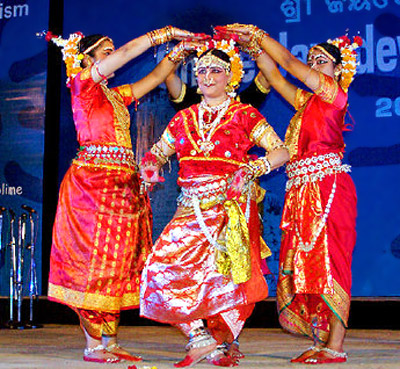
Abhinaya Chandrika
Abhinaya Chandrika is an ancient text on Odissi dance that explain every minute details of Odissi performance. The text explains about different mudra...
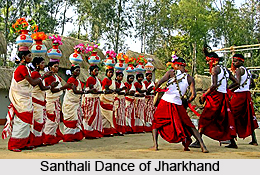
Santhali Dance
Santhali dance is a vibrant folk tradition of the Santhal tribe, reflecting the deep connection of the Santhal tribe with nature, community, and celeb...
Related articles in Indian Dances
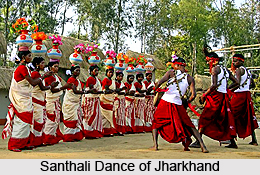
Santhali Dance
Santhali dance is a vibrant folk tradition of the Santhal tribe, reflecting the deep connection of the Santhal tribe with nature, community, and celeb...
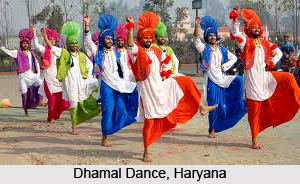
Dhamal Dance
A folk dance form of Haryana, the Dhamal Dance has its roots in the days of the Mahabharata. This dance form is primarily performed by men in the outd...
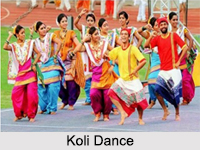
Koli Dance
A folk-dance form of Maharashtra, the Koli dance is mainly performance by the Koli community of the region. Known for their primary profession of fish...
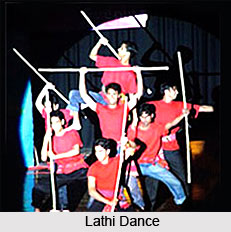
Lathi Dance
Lathi dance is a dance form of West Bengal performed on the occasion of Muharram.
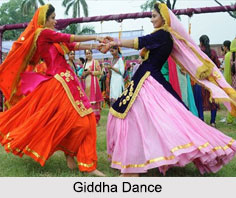
Giddha Dance
Giddha Dance of Punjab, performed only by the women, is a very popular folk art form in India. During Lohri, the Punjabi women reveal their joy throug...