
Nalatiyar or Naaladiyar is an ethical poetic work of didactic character which belongs to the Pathinenkilkanakku anthology of Ethical Tamil Literature. Nalatiyar was composed in the post-Sangam age equivalent to between 100 CE - 500 CE. The literary work has 400 poems, each containing 4 lines in Venpa metre. Every poem in Nalatiyar deals with ethics and morals, commending righteous behaviour. Nalatiyar was written by Jain monks who thrived in the Tamil nation during the supremacy of the Kalabhras. The monks composed several literary works containing didactic messages which were the striking characteristics of the epoch. Different poems in Nalatiyar or Naaladiyar were written by different poets and it concentrates on the transitory nature of youth and life. The poetic work of Tamil literature is exceptional in the application of similes that assist to edify the moral codes with the use of simple instances from every day life.
History of Nalatiyar
The composition of the poems is narrated by a popular tale which states that eight thousand Jain ascetics lived in the mountain regions of the Tamil nation. Affected by the famine, the Jain monks migrated to the capital of the Pandya rulers, Madurai, where they were welcomed and supported by the Pandya king. Eventually the got engaged with Tamil research. After a few years, the effects of famine in their homeland had reduced and they expressed their wish to return to the Pandya ruler. But as the Pandya king denied giving his consent, on a certain night, the monks left Madurai without informing the king. But before their departure, all the eight thousand Jain ascetics composed one poem each in Venpa meter and kept it in their dwellings. When the king was informed of the Jain ascetics` departure on the following morning, he was disheartened and commanded that the poems written on palm leaves be thrown into the river. Only four hundred of the eight thousand palm leaves sailed against the river current. The king accumulated only those four hundred leaves and edited those with the title Nalatiyar.
The Tamil poetic work was edited later on the pattern of Tirukkural by Patumanar. Consequently, Nalatiyar comprises of 3 segments as well, namely, Love, Wealth and Virtue; each segment contains various chapters. An English missionary named G.U. Pope translated the entire poetic work into English.
The value of the Nalatiyar lies in giving portraits with a literary essence even on obscure subjects such as the uncertainty of life. The literary work depicts the impermanence of youth, position and wealth. It also focuses on the duty of an individual in ordinary life.
Nalatiyar
Nalatiyar or Naaladiyar, written by different poets, is an ethical poetic work included in the Pathinenkilkanakku anthology of Ethical Tamil Literature. It was composed in the in Venpa metre.
Recently updated articles in Indian Literature
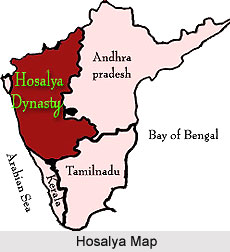
Gadyakarnamrita
Gadyakarnamrita is a 13th-century Sanskrit literary work written mainly in prose. It describes the ninety-day battle at Srirangam between the Hoysala...

Women Writers in Malayalam Literature
Women writers in Malayalam literature have worked incessantly to make a place for their literary works. In the earlier periods, they were completely o...
Comrade Kirillov, Novel by Raja Rao
Comrade Kirillov, a distinctive creation of Raja Rao, is presented as a brief yet incisive novelette that offers an ironic portrayal of the self-contr...
The Foreigner, Novel by Arun Joshi
“The Foreigner” is a book authored by Arun Joshi and published by Vision. It is an illustrious creation in the entire career of Arun Joshi, the famous...
Short Story in Telugu Literature
Short Story in twentieth century Telugu Literature was extremely popular and growing in and developing in a major way. Their popularity was greatly fa...
Related articles in Indian Literature
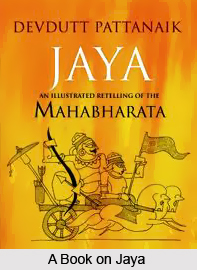
Mythological Themes in Indian Literature
Mythological themes in Indian literature have been integral to every ancient and contemporary writer and their path to f
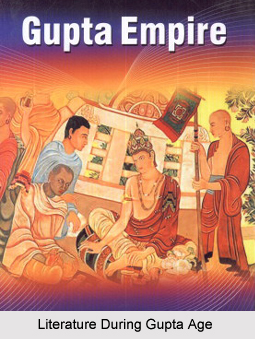
Literature During Gupta Age
It is during the Gupta Age literature in the form of poetry, epos and drama gained a colossal importance.
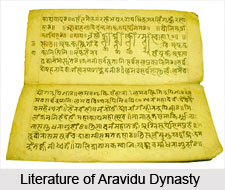
Literature of Aravidu Dynasty
Sanskrit and Telugu were the popular literary medium of communication during Aravidu dynasty.
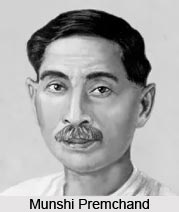
Munshi Premchand
Munshi Premchand was a legendary Indian writer notable for his modern Hindustani literature. A writer of a very high caliber, Premchand`s writings hav...
Sanskrit Poets
The names of some of the Sanskrit Poets are Bharavi, Devarshi Ramanath Shastri, Jayadeva and Srinivas Rath.