 South India has a plethora of tracts of dense and lush forests, mighty rivers, making it ideal for the national parks, wild life sanctuaries to grow in large numbers. It is located in the state of Andhra Pradesh on Nagarjunasagar dam that was built on the Krishna River. The reserve got its name from Acharya Nagarjuna, a renowned Buddhist researcher.
During the era of approximately AD 150, he founded a center of learning in this part of India. Although it was lost in oblivion, many years later, remnants of this center were explored in the early 1900s. In the year 1950, when the site was chosen for an irrigation-cum-hydropower reservoir, the unearthed sculptures and rare artifacts were reconstructed in the fringes of the region. Other fascinating archeological sites are also found with in Nagarjunasagar-Srisailam Tiger Reserve and near by. Established on the banks of the Krishna River that flows for nearly 125 km, these sites divide the reserve into northern and southern sections. This is the largest tiger reserve of India and includes in its area the Srisailam dam, which is also on the Krishna River.
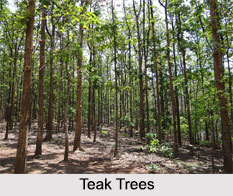
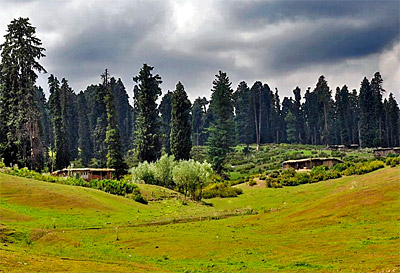
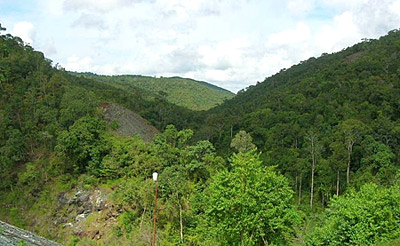
The reserve covers the total area of 3,568 sq km. It comprises of the several plateaus of the Nallamalai Hills, the most famous being the Amrabad Plateau in the northern section. A variety of forest types can also be found in the vivid gorges and valleys. The Krishna River forms these, including thorny scrubs to parched and mixed deciduous and sheltered patches of semi evergreen. There is a wealth of bamboo in this rugged wilderness.
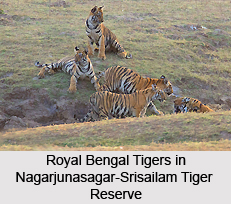
The tourists can have a close watch on vivid treasures. Tigers are reclusive and chances of sighting them are rare. Animals typical of deciduous Indian forests, such as Leopard, Wolf and Sloth Bear, are mostly present. However there is hardly a trace of Gaur or Asian Elephant.
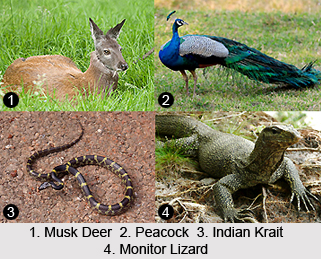
Quite a number of bird species are available in Nagarjunasagar-Srisailam Tiger Reserve. There are near about two hundred species on view, including wintering waterfowl on the reservoirs. Grey Junglefowl, Indian Peafowl, Grey Francolin, Painted Spurfowl. Red Spurfowl, Indian Grey Hornbill, Rufous Woodpecker, Lesser Yellownape, Emerald Dove, Yellow-footed Green Pigeon, Painted Sandgrouse, Indian Cuckoo, Blue-faced Malkoha, Sirkeer Malkoha {above), Alpine Swift, Black-hooded Oriole, Black-headed Cuckooshrike, Large Cuckoo shrike; Spangled Drongo throng the woodlands.
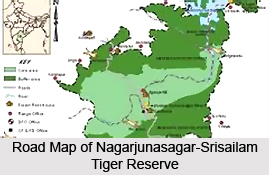 Nature walks; jeep drives and boat rides on the river can keep the visitor well occupied. A morning spent in a circular bamboo makes a pleasing change. The Chandravanka stream narrows down for more than 15 meters at the Ethiopothala Falls lies 12 kms downstream from Nagarjunasagar dam. Also a center has been established for breeding crocodiles nearby and an environment educational center is set at Srisailam Tiger Reserve.
Signs of human intrusion are quite evident in certain areas of the reserve. The Chcnchus, a tribal community, reside here in their primitive homes called gudems. Gudems are made from bamboos. The tourists from outside make a visit to these places. The temple at Srisailam within the protected reserve draws attention of so many devotees. This region is a hub of some social unrest and other problems. However thanks to the diligent efforts of the management, Nagarjunasagar-Srisailam Tiger Reserve was being saved time and again from losing its exuberances.
The huge number of creatures and animals that find shelter here largely maintains the wilderness of the Nagarjunasagar-Srisailam Tiger Reserve. Other mammals include tiger, Leopard, Sloth Bear, Wild Dog (Dhole), Striped Hyena, Wolf, Small Indian Civet, Ratel, Sambar, Spotted Deer (Chital), Barking Deer, Nilgai (Blue Bull), Indian Pangolin, Indian Giant Squirrel, Common Langur
By the side of water bodies, one can catch a glimpse of birds like large Cormorant, Eurasian Thick-knee, Yellow-wattled Lapwing, Grey Heron, Black Ibis, and Stork-billed Kingfisher etc.
No wonder, the ratting cry of the hunting raptors creates an eerie feeing in the mind of any visitor. Bonelli`s Eagle, Changeable Hawk Eagle, Crested Serpent Eagle, Oriental Honey-buzzard, White-eyed Buzzard, Osprey, Short-toed Snake Eagle, Common Kestrel etc are some of them