Nagapattinam

Nagapattinam in Tamil Nadu is census town that came into prominence from middle ages.

About Nagapattinam

Nagapattinam, Nagapattinam District, Tamil NaduNagapattinam is a town located in Tamil Nadu and the administrative headquarters of Nagapattinam District. The economy of Nagapattinam is mostly dependant on sea-borne trading, fishing, agriculture and tourism.

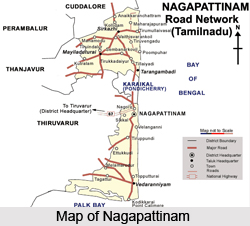
Nagapattinam covers an area of 14.92 square kilometres. This census town is situated at a distance of 350 kilometres from Chennai, 14 kilometres from Karaikal, 40 kilometers from Mayiladuthurai, 40 kilometres from Kumbakonam, 80 kilometers from Thanjavur and 25 km from Thiruvarur.

Nagapattinam became the important centre in trade and commerce during the period of Chola rule in South India. This town at that time served as their important port for commerce and east-bound naval expeditions.

The Chudamani Vihara in Nagapattinam was constructed by the Sri Lankan king with the help of the ruler of Chola kingdom. Chudamani Vihara is an important Buddhist monastery of the times.

Nagapattinam was settled by the Portuguese trader in the early phase of modern age. Later, the Dutch East India Company made Nagapattinam as the capital of Dutch Coromandel from 1660 to 1781.

In November 1781, Nagapattinam was conquered by the colonial army of British East India Company. Nagapattinam served as the capital of Tanjore district from 1799 to 1845 under Madras Presidency of the British East India Company. Nagapattinam continued to be a part of Thanjavur district in India. In 1991, Nagapattinam was made as the headquarters of the newly created Nagapattinam District.

The census town of Nagapattinam is located at 10.77 degree north to 79.83 degree east. The town is bounded by Bay of Bengal in the east, Uppanar River in the south, Thiruvarur district in the west, Thanjavaur district in the North West and Karaikkal and Puducherry in the north. The town lies in the sea level.

Nagapattinam covers the pilgrimage tourism sites. The major temples in Nagapattinam are Nagore Durgah, Kayarohanaswami Temple and Soundararajaperumal Temple. There are other major Hindu pilgrimage sites located in this town adds the tourism sector to the national and international level tourists. Sikkal, Velankanni, Poompuhar, Kodikkarai, Vedaranyam, Mannargudi and Tharangambadi are the popular tourist spots in Nagapattinam town.

Nagapattinam is easily connected with the roadways, railways and waterways. The roadway is the major mode of transport to Nagapattinam.
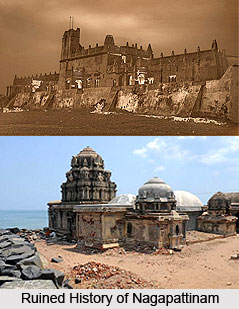
History of Nagapattinam

History of NagapattinamHistory of Nagapattinam covers the ancient and medieval rulers of South India and the glorious rule of the South Indian Dynasties. To the national and international level tourists, Nagapattinam is famous for its pilgrimage tourism sites.
Early History of Nagapattinam : During the Sangam period, Nagapattinam became the centre of arts and architecture Nagapattinam was ruled by the Sangam dynasty from 3rd century BC to 3rd century AD. There are urn burials excavated in and around the city of Nagapattinam from the Sangam period indicating some level of human habitation. The neighbouring port, Kaveripoompattinam, which is known as the modern day Poompuhar, was the capital of the Chola kingdom. Nagapattinam was referred widely in Tamil scriptures like "Pa??inappalai", an ancient scripture of Tamil Era.

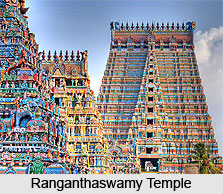
The early works of Tevaram by the 7th-century poets Appar and Sambandar mention the existence of Nagapattinam. Nagapattinam at that time was built with fortified walls, busy road building and a busy port. The inscriptions from the Kayarohanswami temple indicate the construction was initiated during the reign of the Pallava king, Narasimha Pallava II, who ruled this region from 691-729AD. A Buddhist Pagoda was built under Chinese influence by the Pallava king and town was frequented by Buddhist travellers. Thirumangai Azhwar, Vaishnavite Saint Poet of 9th Century is believed to have stolen the golden Buddha statue to fund the Ranganthaswamy Temple at Srirangam. In the 11th century, Chudamani Vihara, a Buddhist monastery was built by Javanese king Sri Vijaya Soolamanivarman with the patronage of Raja Raja Chola of Chola Dynasty. In the early phase of medieval period, Nagapattinam was the prominent port of Cholas for trade and conquering gateway to the east.History of Nagapattinam

Medieval History of Nagapattinam : In the early 16th century the traders of Portuguese East India Company started business with the town. There they established a commercial centre in 1554. The Portuguese also conducted missionary enterprise here. In 1658, the Dutch East India Company established an agreement between King Vijaya Nayakkar of Thanjavur on 5th January 1662. About ten villages were transferred from the Portuguese to the Dutch. These included the Nagapattinam Port, Puthur, Muttam, Poruvalancheri, Anthanappettai, Karureppankadu, AzhingiMangalam, Sangamangalam, Thiruthinamangalam, Manjakollai, Nariyankudi. The Christian churches and a hospital were built by the Dutch traders. They released coins with the name Nagapattinam engraved in Tamil. As per agreement between the first Maratha King Egoji of Thanjavur and the traders of Dutch East India Company, Naagapattinam and surrounding villages were handed over to the Government of Dutch East India Company on 30 December 1676. In 1690, the capital of Dutch Coromandel changed from Pulicat to Nagapattinam.

Modern History of Nagapattinam : Nagapattinam fell into the hands of the British East India Company in the year 1781. British East India Company annexed Nagapattinam after two naval battles between British East India Company and French East India Company fleets were fought off the coast of "Negapatam" or Nagapattinam. The town was taken by the British navel forces from the Dutch in 1781. When the Dutch and British reached a peace agreement in 1784, Nagapattinam was formally ceded to the British East India Company. From the year 1799 to 1845, Nagapttinam was the headquarters of Tanjore district. Nagapattinam and Nagore were incorporated as a single municipality in 1866. The town remained one of the chief ports to the Madras Presidency. The port suffered decline after the inclusion of Tranquebar and Tuticorin ports. After the Independence of India, Nagapattinam is directly included in Nagapattinam District in the year 1991.

Tourism in Nagapattinam

Tourism in NagapattinamTourism in  Nagapattinam covers with the pilgrimage tourism sites like Nagore Durgah, Kayarohanaswami Temple, Soundararajaperumal Temple, Velankanni Church and many others. In Nagapattinam, there are other temples of pilgrimage importance like Sikkal Singaravelan Temple at Sikkal, Vedaranyeswarar Temple at Vedaranyam, Ettukudi Murugan Temple and Koothanur Maha Saraswathi Temple.
Tourism in Nagapattinam plays a vital economic role for the town of Nagapattinam. Nagapattinam is the place of the historical tourist importance like Nagore, Velankanni, Sikkal, Kodiyakkarai, Vedaranyam, Mannargudi and Tharangambadi.

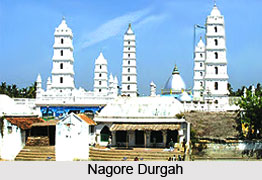
Nagore Durgah : Nagore Durgah was built in the medieval period of 16th century. It is one of the major landmarks of Nagore Durgah. It is a minaret located in Nagore. It is one of the important pilgrimage centres of the town. Kanduri festival is a 14 days festival celebrated annually for the Saint Hajrath Shahul Hamid (1490-1579), after whom the minaret was built. The festival is celebrated in commemoration of the anniversary of the Saint`s death, and pilgrims from various religions participate in the rituals and rites. Kanduri festival is also seen as a sacred exchange between Hindus community and Muslim community expressing solidarity of mixed faith in the region. It is believed that 60 percent of the shrines were built by Hindus and historically the minaret garners lot of domestic and international visitors.

Kayarohanaswami Temple : Kayarohanaswami Temple is an ancient Hindu temple dedicated to Lord Shiva. The temple has been in existence from the 6th century and has been revered by the verses of Tevaram, the 7th-8th century Shaiva canonical work by Appar, Campantar and Sundarar. Kayarohanaswami Temple is one of the seven temples of the Thyagaraja cult, classified as Saptha Vidangam, where the presiding deity Thyagaraja is believed to portray different dance styles. The temple is also known for the shrine of Neelayadakshi, the consort of Kayarohanaswami.

Soundararajaperumal Temple : Soundararajaperumal temple is another ancient Hindu shrine in Nagapattinam. This temple is dedicated to Lord Vishnu. It is one of the "Divya Desams", the 108 temples of Lord Vishnu revered in Nalayira Divya Prabandham by Thirumangai Azhwar, one of the 12 poet saints called Azhwars belonging to the 6th-9th century.

Velankanni Church : Velankanni Church is a pilgrimage centre located in 10 kilometres from Nagapattinam. This Roman Catholic Church was built during the 17th century. The pilgrimage to the Basilica is common during September when people of many faiths, especially Hindus, Muslims and Christians of all denominations visit the Basilica.

Recently updated articles in Cities of India

Deoghar in Jharkhand
Deoghar in Jharkhand Thumbnail

Deoghar in Jharkhand

Deoghar is the divisional headquarters of Santhal Parganas located in Jharkhand and is popular for the famous Baidyanath temple and Shiva Temples.

The Asiatic Society of Mumbai
The Asiatic Society of Mumbai Thumbnail

The Asiatic Society of Mumbai

Asiatic Society in Mumbai is the temple of Asian Studies from the time of British rule in India.

Vasco da Gama / Vasco City
Vasco da Gama / Vasco City Thumbnail

Vasco da Gama / Vasco City

Vasco da Gama / Vasco is the biggest city of Goa and is one of the most visited for its perfect amalgamation of business as well as leisure options.

Agriculture of Ladakh
Agriculture of Ladakh Thumbnail

Agriculture of Ladakh

Agriculture in Ladakh is primarily practiced in the short summer season due to its cold desert climate. Farmers grow hardy crops like barley, wheat, p...