
The nineteenth yoga sutra explains about the essential difference of the seer with the consciousness, though there exists but a thin line for a commonplace man. Consciousness can be seen, the seer cannot, consciousness is foreseeable and perceptible, the seer is not- it is self-illuminative. Consciousness shines in the borrowed light of the seer; the seer is thus absolute. The level of seer and consciousness varies and increases, according to the capability of an individual. The seer can be object and subject simultaneously, consciousness cannot.
na not
tat that
svabhasam self-illuminative
drsyatvat because of its knowability or perceptibility
Consciousness cannot illumine itself, because it is a knowable object.
Consciousness can be seen as an object. It is knowable and perceptible. It is not self-illuminative like the seer.
Consciousness being the seedling of the seer, its growth and luminosity depends upon the seed - the light of the seer. Its own light is like that of the moon, which is reflected light from the sun. The seer represents the sun, and consciousness the moon. As a child feels strong and secure in the presence of its parents, consciousness, the child of the seer, draws its strength from the seer.
Consciousness, like the senses of perception, can generally see an object but not its own form. For an average person, the eyes pose as the seer when comprehending worldly objects. For an intellectual person, the eyes become the seen, and the mind the seer. For an enlightened person, mind and intelligence become objects for the consciousness. But for the wise seer, consciousness itself becomes the object perceived.
The seer can be subject and object at the same time; consciousness cannot. It may hence be deduced that consciousness has no light of its own. When the borrowed light of consciousness is drawn back to its source, the seer, or soul, glows brilliantly. (II. 19-20.)
Na tat svabhasam drsyatvat
This is the nineteenth yogic sutra, which is incorporated in the fourth phase of the Patanjali Yoga Sutras.
Recently updated articles in Yoga
Khanda Manda Yoga
Khanda Manda Yoga is a difficult form of yoga where the Yogi cuts off his own arms and legs with a sharp cleaver, that is axe-like knife, and throws t...
Kaivalya Pada
Kaivalya Pada, the fourth chapter of Patanjali Yoga Sutra denotes an absolute, indivisible state of existence of the Yogi. The Kaivalya Pada is someti...
Vibhuti Pada
Vibhuti is the Sanskrit term for “power” or “manifestation.” In this third chapter, Patanjali introduces the final three limbs of Aṣṭanga Yoga, collec...

Sadhana Pada
Sadhana Pada in Patanjali Yoga Sutra denotes the idea of practicing yoga that leads to spiritual illumination. Sadhana, the Sanskrit term for “practic...
Samadhi Pada
Samadhi Pada is the first chapter of Patanjali Yoga Sutra. In this chapter, the author explains the essence of yoga, the nature of samadhi, and the me...
Related articles in Yoga
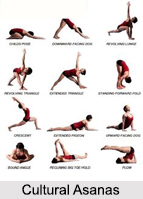
Cultural Asanas
Cultural Asanas refer to the daily physical exercise postures that train the body and mind in Yoga Practice.
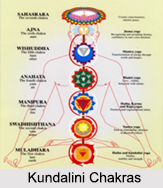
Kundalini Chakras
Kundalini Chakras are psychic energy centres or vortices, which connect between our psychic and physical energy systems.
Patanjali Yoga Sutras
Patanjali’s Yoga Sutras presents a foundational guide to the philosophy and practice of yoga. Through concise aphorisms, it outlines the nature of the...
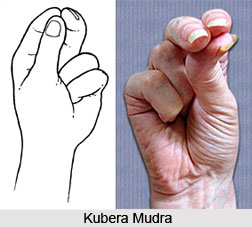
Kubera Mudra
Kubera Mudra, a form of Hatha Yoga, leads to the elevation of mental peace and physical relief by proper practice and cleanses frontal sinuses.