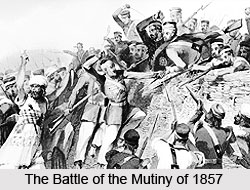
 Mutinies in Indian Army were widespread rebellions against the British administration in the country. The mutiny of 1857 which sparked off in Bengal and later spread to the whole of north India has been correctly termed as the first organised fight for independence. As far as the army raised by the British East India Company was concerned, there were several records of a number of mutinies both by Europeans and Indian troops. The causes behind the mutinies were always far and wide, and poor allowances and low pay rates have always been the cause of discontent. In the year 1764 Bengal Sepoys rebelled for higher rates of pay and gratuities. In between 1765-66, officers in Bengal Army rebelled against the British Government for more allowances.
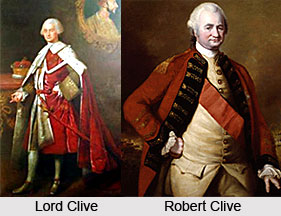
In the year 1765, Robert Clive issued orders that double-batta be withdrawn except to the brigade stationed at Allahabad. The old single-batta was to be issued to the troops in cantonments or in garrisons until they were recalled back within the Presidency. The rest of the army was to receive single-batta when marching or in the field and half single-batta when in cantonments or in garrisons. While within the Presidency officers were to receive no batta at all but free quarters in lieu. Double-batta had been granted by Mir Jafar to all officers of the Company after the Battle of Plassey. His successor Mir Qasim continued to pay the allowance. On receipt of the latest order there was great dissatisfaction in all the cantonments and out-posts. They had their headquarters in almost all the outposts namely Murshidabad, Munger, Allahabad, Surajpur and Bankipur. Even the civil services contributed rupees one lakh and 40 thousand to aid the movement. Two hundred English officers were determined to resign their commission unless their demands were fully met. As soon as Lord Clive came to know of this he took immediate measures to meet the threat. Stringent measures were adopted and even Indian troops were employed to force the Europeans into submission. Some officers were court-martialled while others were deported. The majority were pardoned on promise of good behaviour. The European officers in the south also mutinied openly at Masulipatam, Seringapatam, Hyderabad and other places when their Tent Contract.
In 1806 there was a serious mutiny of the Madras Sepoys at Vellore when they suddenly rebelled and massacred most of the European officers and men in the fort.
 Little regard was paid to the religious feelings and customs of the soldiers and under the prevailing conditions they took the law into their own hands. The immediate causes were the new regulations in respect of change in dress and wearing of the hair. Christianity was spreading fast in the country and the missionaries received all the protection in their activities. They were given a free hand even in Indian regiments. A soldier who became a Christian received quick promotion. Many more benefits were showered on them as an incentive. As time went on the authorities became less careful of offending the religious customs of the men. Even though the sepoys did not rise in revolt each time such a measure was enforced, this constant interference in their personal affairs created a hostile feeling.
The Barrackpore mutiny of 1824 in which the 47th native infantry was virtually massacred for refusing to March without proper clothing and other essential facilities, is another notable event. Service conditions in the Bengal army were comparatively poor. In Bengal army families were not permitted to stay in the regimental lines. Accommodation was provided for a certain percentage in the Bombay army while in the Madras army all the men`s families accompanied the unit, wherever they moved. Hutting money an allowance unknown in the Bengal army was paid to the Madras sepoys. The Bombay sepoys were given presents on Christmas day, New Year`s Day and King`s birthday but not so the Bengal sepoys. And last of all the sepoys, in addition to providing all the other amenities and necessaries of life, had to arrange their own mode of conveyance during a move. This was the immediate and direct cause of the mutiny.
Unlike the sepoys of the Bombay and Madras armies, Bengal Sepoys were exempted from liabilities of overseas service. A petition was put up and demand made for batta. General Sir Edward Paget, the Commander-in-Chief was also informed of the situation. The authorities were adamant. Two English infantry regiments, a troop of the Governor-General`s Bodyguard and some guns were moved into Barrackpore. The battalion was ordered on parade. When all the men were assembled they were surrounded by the English troops and fire opened upon them by the guns. The sepoys were soon in flight. Throwing their arms and equipment they ran towards the Hooghly River. They offered no resistance at all. All the weapons recovered later from the parade ground were found to be unloaded, as the men had no ammunition with them.
Side by side with this general disaffection was the fact that the army had increased to tremendous proportions and problems also increased. If troops served outside a Presidency they were granted batta and some compensation for the absence from their homes. This allowance was stopped in peace-time even though troops continued to stay away in far off places. After the conquest of Sind in 1843 Bengal troops then in Firozpur were ordered to garrison that area. As they were to receive none of the allowances as on field-system they revolted and refused to serve there. A Madras battalion ordered in relief also mutinied on the way, on learning of the stoppages of the allowances. There were many cases of open revolt after the annexation of Punjab when many concessions normally granted during operations were withdrawn.
Army service offered little prospect to Indians who did not have a share in the command and administration of the troops. A European non-commissioned officer, though much lower in rank to the Indian officer was considered much superior and enjoyed many privileges as he belonged to the ruling race. There was also an immeasurable distance between the senior-most of these Indian officers and the youngest British officer. The bravest of these Indian soldiers could not claim professional equality with the lowest English other rank in the army.