
Music in Nautanki resembles other South Asian theatrical music in general ways, it also possesses a distinctive blueprint: a configuration in sound that immediately labels this genre Nautanki, even when compared to neighbouring theatres such as Haryanvi Sang or Rajasthani Khyal. This blueprint is the music used for the ten-line stanza known as dohd-chaubola-daur, the basic building block of Nautanki composition. It is significant that this identifying unit issues from the narrative level of the text, not the lyric.
Nautanki performance freely borrows lyric genres from various sources and incorporates them according to current fashion and the taste of the actors and audience. In older texts we find Hindi folk songs and semi-classical genres such as Dadra, Savan and Mana as well as the Urdu Shayeri, Ghazal, Qawali and so forth. Nowadays film tunes of Bollywood versions of the above genres tend to predominate. Popular songs are not exclusive to Nautanki; they turn up in many performance contexts classified as "folk." Film-based musical quotations may lend a performance verve and status, but they do not distinguish Nautanki as the old meters Doha and Chaubola do.
In any case, nineteenth-century Sangit texts reveal that the doha-chaubola alone dominates Swang composition from about 1850 to 1890. Beginning in the 1890s the six lines of doha-chaubola commonly add on an asymmetrical quatrain called Daur to form a ten-line unit; in the Hathras texts this becomes the standard. Doha, chaubola and daur are scanned according to rules of Hindi prosody, by which every syllable bears either a short weight or measure, indicated by the symbols. The long weight counts as two measures, twice the short weight. Each line contains a fixed number of measures (Matras) that vary in their arrangements of short and long but have specific patterns at line ends.
Nautanki, a shorter stanza useful for dialogue, known as bahr-e-tavti, was introduced around 1910. This meter is based on Urdu prosody rather than Hindi, indicating the mixed linguistic heritage of this region and the presence of both Hindi and Urdu prototypes in the oral stratum
Melodic Contours of Music in Nautanki
Music in Nautanki has many layers. There are distinctive types that add a certain dimension to the scene of the narrative play.
Recently updated articles in Indian Dances
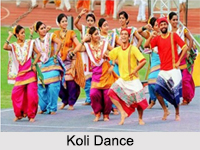
Koli Dance
A folk-dance form of Maharashtra, the Koli dance is mainly performance by the Koli community of the region. Known for their primary profession of fish...
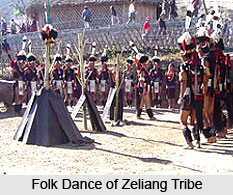
Folk Dances of Nagaland
Folk Dances of Nagaland reflects the naga tradition and culture of the local habitants. In most of the cases, naga dances are monopoly of men with som...
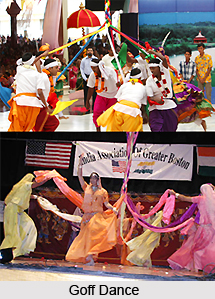
Goff Dance
Goff dance of Goa is performed during the Shigmo festival in the month of Phalgun in Hindu calendar. Goan peasants mainly practice this dance after th...
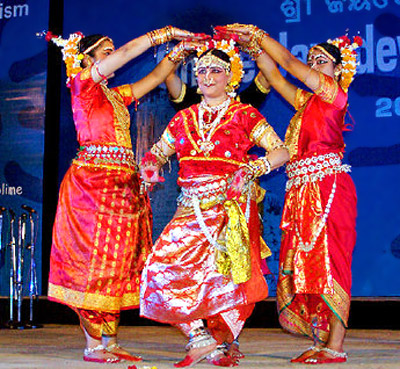
Abhinaya Chandrika
Abhinaya Chandrika is an ancient text on Odissi dance that explain every minute details of Odissi performance. The text explains about different mudra...
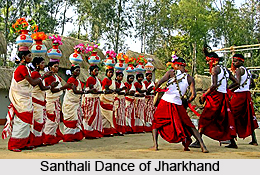
Santhali Dance
Santhali dance is a vibrant folk tradition of the Santhal tribe, reflecting the deep connection of the Santhal tribe with nature, community, and celeb...
Related articles in Indian Dances
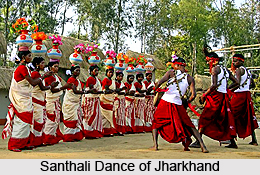
Santhali Dance
Santhali dance is a vibrant folk tradition of the Santhal tribe, reflecting the deep connection of the Santhal tribe with nature, community, and celeb...
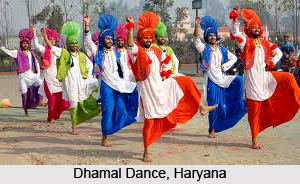
Dhamal Dance
A folk dance form of Haryana, the Dhamal Dance has its roots in the days of the Mahabharata. This dance form is primarily performed by men in the outd...
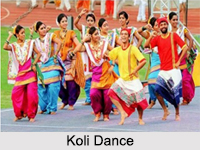
Koli Dance
A folk-dance form of Maharashtra, the Koli dance is mainly performance by the Koli community of the region. Known for their primary profession of fish...
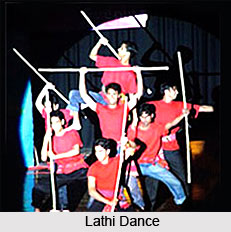
Lathi Dance
Lathi dance is a dance form of West Bengal performed on the occasion of Muharram.
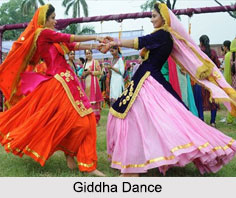
Giddha Dance
Giddha Dance of Punjab, performed only by the women, is a very popular folk art form in India. During Lohri, the Punjabi women reveal their joy throug...