
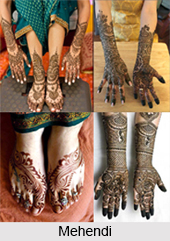
 Mehendi is believed to be an ancient Indian body art. It is used in creating sophisticated ethnic or contemporary designs and striking patterns on various parts of the body. Conventionally, mehendi was applied on the hands and feet of Indian bride and women preparing for special festive ceremonies. Today both men and women are finding it a nice alternative to permanent tattoos.
The art of applying henna in this manner is called Mehendi, it is an ancient ritual and art form. No Indian wedding can be ever completed without the mehendi ceremony. The ritual of mehendi is followed in every part of India where the hands of the bride are adorned with the lovely reddish hue of the mehendi. Henna designs can be used as armlets, bracelets, anklets, and general designs on hands and feet; these are also done in beauty parlors these days.
Various kinds of designs can be made depending on the occasion, either marriage, parties or pujas. In wedding ceremonies mostly customary Indian designs are made on the hands of the bride. These traditional designs are elaborate and detail. Other than the ethnic and conventional designs for the bride you can opt for contemporary designs, which are glossy and fashionable. Today brides also opt for Arabic designs, ornamental designs and tattoo designs that are adorned with sparkles and shining elements. The mehendi can also be in form of necklace tattoos, anklet tattoos and navel tattoos.
Henna is a natural product that forms the mehendi. Its leaves are dried and grinded to make the henna powder. Since it is a natural product and not with a single side effect. It usually takes many hours to get a good henna stain on the skin, and that stain is harmless. The shade varies according to the quality of the henna powder used. The henna design should last at a minimum of 1 and a maximum of 4 weeks that depends on the thickness of the epidermis of your skin and on where the design is located.
To have the best result one should leave the henna paste for eight hours and more. The longer the paste is kept on, the darker the design will be. It is said that the darker the stain, more love will be showered on the bride in her in laws house. The less exposed to water, soap or rubbing, the longer the designs will stay. For the wedding day, it is better to go for simple and detailed designs on your hands and feet. The designs should not be overdone and mixed up only then will that should look pretty.
More on Wedding Decorations
| Sagan Decorations | Engagement Decorations | Mehendi Decorations | Wedding Stage Decorations |
| Mandap Decoration | Car Decorations | Sangeet Decorations |
More on Indian Wedding Accessories
| Wedding Music | Wedding Songs | Traditional Indian Wedding Dresses |
| Bridal Jewelry | Bridal Make Up |
More on Indian Religious Weddings
| Sikh Wedding | Buddhist Wedding | Christian Wedding Rituals |
| Sindhi Wedding | Jain Wedding | Hindu Wedding Rituals |
| Parsi Wedding | Jewish Wedding | Muslim Wedding Rituals |
More on Types of Marriages
| Prajapatya Marriage | Gandharva Marriage | Asura Marriage |
| Rakshacha Marriage | Paishacha Marriage | Arsha Marriage |
| Daiva Marriage | Brahma Marriage |
See also
Recently updated articles in Weddings in India

Iron pillar of Delhi
The iron pillar of Delhi is a structure 7.21 metres (23 feet 8 inches) high with a 41-centimetre (16 in) diameter that was constructed by Chandragupta...
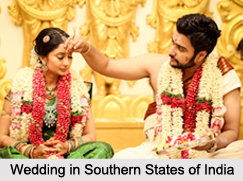
Wedding in Southern States of India
Wedding in Southern States of India depicts fun, revelry and extravagance along with following the basic tenets of the Hindu traditions.
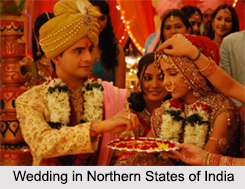
Wedding in Northern States of India
Wedding in Northern States of India includes many customs and rituals performed on the wedding day.

Koachitu Poorathu
Koachitu Poorathu is an Indian traditional form of sport. It is mostly played by the bride and the grooms during the time of marriage.
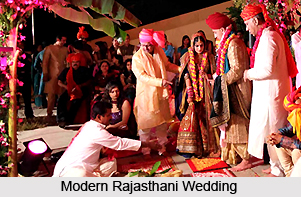
Modern Rajasthani Wedding
Modern Rajasthani wedding comprises vibrant celebrations and exquisite rituals which make the event greatly enjoyable. Dazzling and colourful decorati...
Related articles in Weddings in India
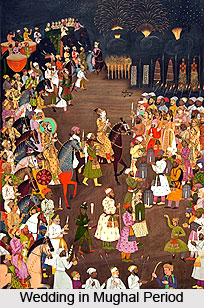
Wedding in Mughal Period
Wedding in Mughal period were a matter of pomp, show and extravagance of the interesting period of Indian History.
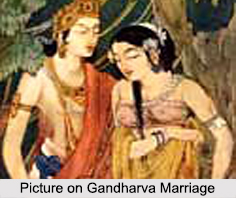
Gandharva Marriage
Gandharva marriage finds enough mention in Hindu mythologies and epics and involves exchange of garlands.

Prajapatya Marriage
Prajapatya marriage is a type of Hindu marriage which includes performance of religious duties jointly by a man and a woman.
History of Indian Wedding
History of Indian Wedding dates back to the 4th century. Several historical records say that marriage makes the society smoother to function.